IV Therapy

IV Therapy in Chicago, IL — Hydration and Vitamin Infusions at Hermosa Medical Center

You've seen the ads. IV therapy for hangovers, for energy, for skin glow, for everything. And you're probably wondering: is this actually medicine, or is it marketing with a needle?

Here's the straight answer. IV therapy is a real medical treatment that's been used in hospitals for decades. When it's administered by trained medical professionals for the right reasons, it works faster than anything you can swallow — because it bypasses your digestive system entirely and delivers fluids, vitamins, and medications directly into your bloodstream.

At Hermosa Medical Center in Chicago, we offer IV therapy as a medical service — not a spa trend. Our infusions are supervised by licensed providers at 2004 N Pulaski Rd. Whether you're dehydrated, recovering from illness, or looking for a wellness boost, we'll figure out what your body actually needs.

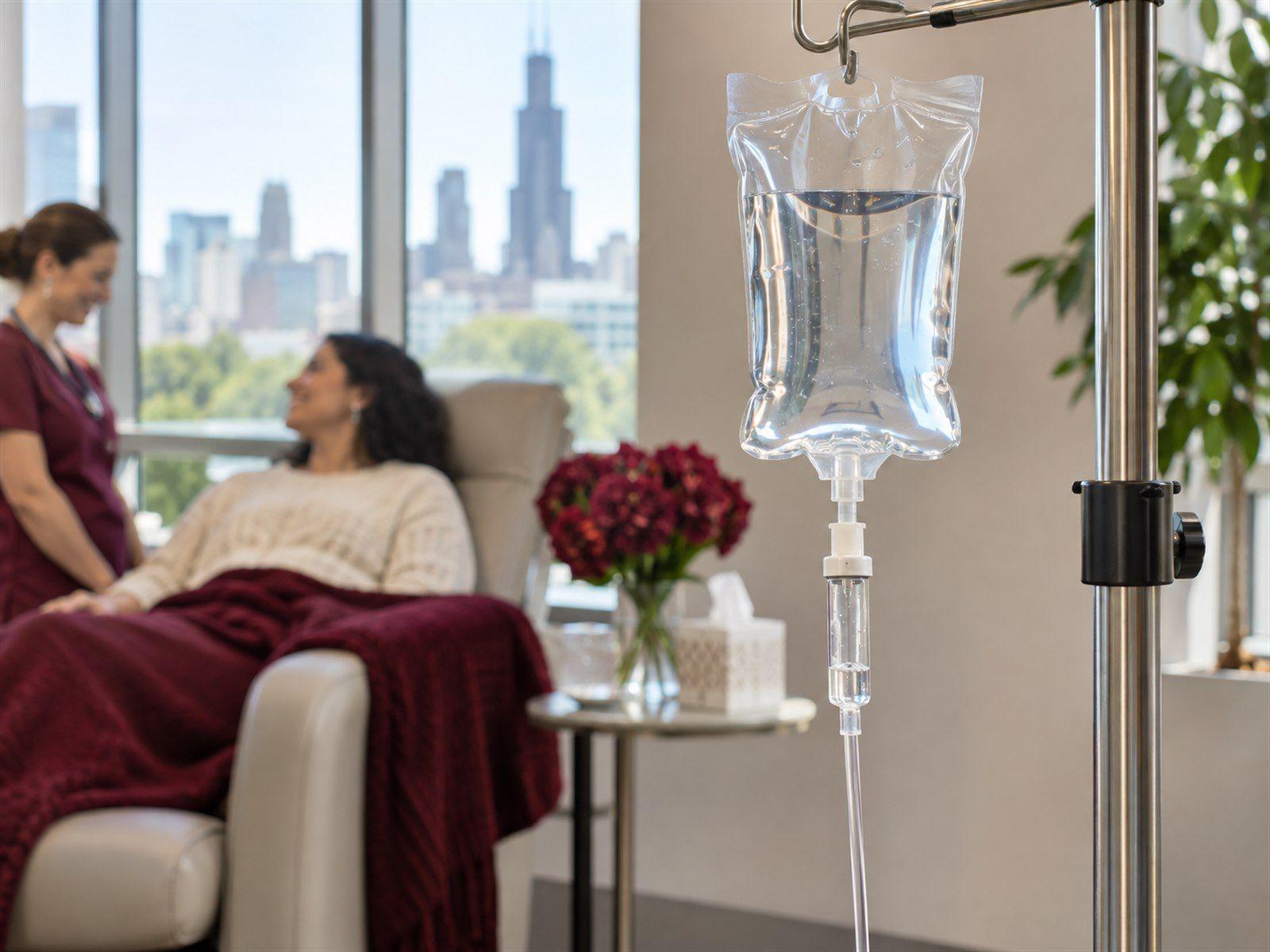
IV Therapy - image 1
01 / 02

What Is IV Therapy?

IV therapy — short for intravenous therapy — is the administration of fluids, vitamins, minerals, or medications directly into a vein through a small catheter. It's the fastest way to deliver these substances to your body because they enter your bloodstream immediately, bypassing the digestive tract where absorption can be slow or incomplete.

Hospitals have used IV therapy for everything from dehydration to chemotherapy for over a century. What's changed in recent years is that outpatient clinics now offer IV infusions for hydration, vitamin supplementation, immune support, and general wellness — and there's good reason for that.

When you take a vitamin pill, your body absorbs somewhere between 20% and 50% of it, depending on your gut health, the formulation, and what else you've eaten. With IV delivery, bioavailability is close to 100%. That's a significant difference when you're depleted and need to recover quickly.

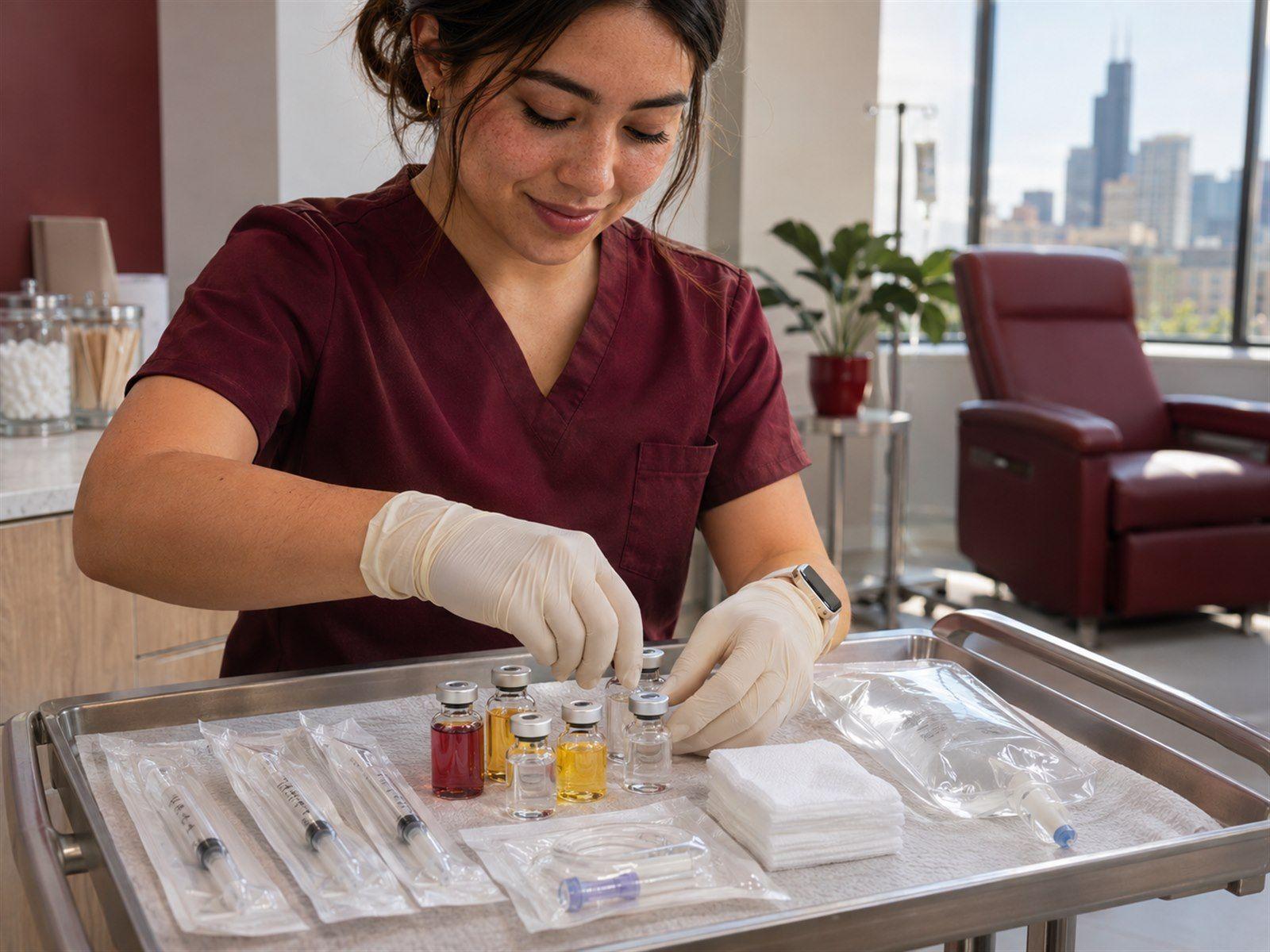
At Hermosa Medical Center, every IV therapy session starts with a medical assessment. We don't just hook you up to a bag of vitamins and send you on your way. Your provider reviews your symptoms, medical history, and current medications before recommending a specific infusion. That's the difference between medical IV therapy and a drip bar.

What Is IV Therapy? - image 1

What to Expect During Your IV Therapy Session

IV therapy sounds more intense than it actually is. Here's the real experience.

You'll check in at the front desk and complete a brief health questionnaire if it's your first visit. Bring your insurance card and ID — we accept Medicaid, Medicare, most insurance plans, and cash. Our staff speaks English, Arabic, and Spanish.

A provider reviews your health history, current symptoms, and any medications you're taking. Based on that assessment, they recommend a specific IV formulation. You'll know exactly what's going into the bag and why.

A nurse inserts a small IV catheter — usually in your forearm or the back of your hand. It's a quick pinch, and once the catheter is in place, you shouldn't feel it. The infusion drips slowly over 30 to 60 minutes depending on the type and volume.

During the infusion, you sit comfortably. Some people read, scroll their phone, or close their eyes. Our team monitors you throughout the session. If you feel any discomfort — cold sensation, lightheadedness, or nausea — let the nurse know immediately. Side effects are uncommon, but we watch for them.

When the infusion is complete, the catheter comes out, a small bandage goes on, and you're free to go. Most people feel the effects within hours — better hydration, more energy, reduced headache or nausea. There's no recovery time. You can drive, eat, and go back to your day.

That's it. Simple, supervised, and done in about an hour.

What to Expect During Your IV Therapy Session - image 1

Is IV Therapy Safe?

When administered by trained medical professionals in a clinical setting, IV therapy is very safe. It's the same technique used in every hospital and emergency department in the country. At Hermosa Medical Center, our nursing staff and providers have extensive experience with IV access and infusion monitoring.

Risks are minimal but include mild bruising at the injection site, temporary coolness or tingling during the infusion, and very rarely, infection at the catheter site. Serious complications are extremely uncommon in a supervised medical environment.

The safety concern with IV therapy isn't the procedure itself — it's where and how it's done. IV drip bars and mobile IV services that operate outside of medical oversight don't have the same safeguards. At Hermosa Medical Center, every infusion is ordered by a licensed provider, prepared according to pharmacy standards, and monitored by medical staff. That's how it should be done.

Who Can Benefit from IV Therapy?

IV therapy isn't for everyone, and it isn't needed for everything. But there are specific situations where it makes a real difference.

People who are acutely dehydrated from illness, heat, or inadequate fluid intake. Patients recovering from the flu, COVID, food poisoning, or other debilitating illnesses. Those with documented vitamin or mineral deficiencies that haven't responded adequately to oral supplements. Migraine sufferers who need fast relief. People managing chronic fatigue alongside other treatments. Athletes or active individuals recovering from intense physical stress. Pre- and post-surgical patients who need optimized hydration and nutrition.

What it's not for: replacing a balanced diet, substituting for proper medical treatment, or treating conditions that require medication or specialist care. If you're coming in expecting a miracle cure for a complex health issue, we'll be honest with you about what IV therapy can and can't do. Our job is to help, not oversell.

Your general physician or primary care doctor can help determine whether IV therapy is appropriate for your situation. In many cases, blood work helps guide the decision — and we do that on-site too.

More type of

Treatments

Hermosa Medical Center facility and patient care team

Medical Hydration Therapy

Dehydration is more common than most people realize, and it hits harder than you'd expect. When you're dehydrated — from illness, heat exposure, intense exercise, or simply not drinking enough — your body can't regulate temperature, deliver nutrients to cells, or flush waste efficiently. Symptoms include fatigue, headaches, dizziness, dry mouth, and dark urine.

Hermosa Medical Center facility and patient care team

Vitamin and Nutrient Infusions

Vitamin deficiencies are surprisingly common, even in people who eat well. Iron, B12, vitamin D, magnesium, and vitamin C deficiencies can cause symptoms that mimic other conditions — chronic fatigue, brain fog, muscle weakness, poor immunity, and mood changes.

Hermosa Medical Center facility and patient care team

Immune Support IV Therapy

When your immune system is under stress — during cold and flu season, after exposure to illness, or during periods of high stress and poor sleep — an immune support IV can give your body what it needs to fight back.

Hermosa Medical Center facility and patient care team

Energy and Performance IV Therapy

Persistent fatigue that doesn't improve with sleep is one of the most common complaints in primary care. And while there are many possible causes — thyroid issues, anemia, depression, poor sleep quality — nutrient depletion is often part of the equation.

Hermosa Medical Center facility and patient care team

Post-Illness Recovery IV Therapy

After a bad flu, COVID, food poisoning, or any illness that knocked you down for days, your body is depleted. You've lost fluids, electrolytes, vitamins, and calories. Your gut may not be absorbing nutrients efficiently. And you feel like you're running at 60%.

Hermosa Medical Center facility and patient care team

Migraine and Headache IV Therapy

Severe migraines and persistent headaches often involve dehydration, electrolyte imbalances, and inflammation. IV therapy for migraines typically includes fluids, magnesium, anti-nausea medication, and anti-inflammatory agents — delivered directly to your system for fast relief.

IV Therapy Services We Offer in Chicago

We offer several types of IV therapy depending on what your body needs. Here's what's available at Hermosa Medical Center.

Medical Hydration Therapy

IV hydration delivers saline solution directly into your bloodstream, rehydrating you far faster than drinking water. While oral rehydration takes hours as your body slowly absorbs fluid through the gut, IV hydration starts working within minutes.

This isn't just for extreme cases. If you've been sick with the flu, had a stomach bug with vomiting or diarrhea, or you're recovering from a medical procedure, IV hydration can cut your recovery time significantly. Our urgent care team sees dehydrated patients regularly and can administer IV fluids same-day.

Vitamin and Nutrient Infusions

Our vitamin IV infusions deliver therapeutic doses of key nutrients directly into your bloodstream. Common formulations include high-dose vitamin C for immune support, B-complex vitamins for energy and metabolism, magnesium for muscle function and relaxation, and combinations tailored to your specific lab results.

If your primary care doctor or internal medicine physician has identified a nutrient deficiency through blood work, IV supplementation can correct it faster than oral supplements — sometimes in a single session versus weeks of pills.

Immune Support IV Therapy

These infusions typically include vitamin C, zinc, B vitamins, and glutathione — antioxidants and immune-boosting nutrients that your body burns through quickly when it's fighting off infection. Getting them intravenously means your cells have access to therapeutic levels immediately.

This isn't a replacement for vaccines or antibiotics when you have a confirmed infection. But as a supportive measure alongside conventional treatment, or as a preventive boost when everyone around you is getting sick, it's a tool worth having.

Energy and Performance IV Therapy

Energy-focused IV infusions combine B vitamins, amino acids, and minerals that support cellular energy production. They're popular with people who are burning the candle at both ends, recovering from illness, or managing chronic conditions that drain their reserves.

A word of honesty here: IV therapy isn't a substitute for fixing the underlying cause of your fatigue. If you're exhausted because your thyroid is off or you're sleeping four hours a night, an IV won't fix that on its own. But it can bridge the gap while your doctor works on the bigger picture. And sometimes, when you've been running on empty for months, that boost is exactly what you need to start feeling human again.

Post-Illness Recovery IV Therapy

Recovery IV therapy combines hydration with targeted nutrients to replenish what illness took. It's particularly effective after gastrointestinal illnesses where vomiting and diarrhea make oral rehydration difficult.

Our providers at Hermosa Medical Center assess your recovery status and customize the infusion to match what your body needs. If you've been sick and you're struggling to bounce back, this is a faster path to feeling normal.

Migraine and Headache IV Therapy

This approach is used routinely in emergency departments for migraine patients. At Hermosa Medical Center, you can get the same treatment in a calmer, quieter environment without the ER wait time and cost.


Why Choose Hermosa Medical Center for IV Therapy in Chicago?

  • Medical-grade IV therapy, not a drip bar. Every infusion is prescribed by a licensed provider based on your health assessment. This is healthcare, not a trend.
  • On-site labs and diagnostics. We can run blood work before your infusion to identify exactly which nutrients you're low on. No guessing, no one-size-fits-all bags.
  • Same building as your doctor. If your IV therapy is part of a larger treatment plan for chronic fatigue, dehydration-prone conditions, or post-illness recovery, your primary care doctor and our specialists are right here. Continuity of care under one roof at 2004 N Pulaski Rd.
  • Affordable and insurance-friendly. Medicaid, Medicare, most insurance plans, and cash accepted. Medical IV therapy for documented conditions is often covered by insurance.
  • Experienced nursing staff. Our nurses perform IV insertions and monitor infusions daily. Comfortable, efficient, and professional.
  • Multilingual care. English, Arabic, and Spanish. You'll understand exactly what's in your IV and why.
  • On-site pharmacy. If your provider recommends follow-up oral supplements or medications after your infusion, our pharmacy can fill them before you leave.
  • Walk-in friendly. For acute dehydration or post-illness recovery, our urgent care team can evaluate you and start IV fluids same-day without an appointment.

FAQs

Frequently Asked Questions

Most IV therapy sessions take 30 to 60 minutes from the start of the infusion. Including check-in, assessment, and the infusion itself, expect to be at the clinic for about 60 to 90 minutes total.

The only discomfort is a brief pinch when the IV catheter is inserted — similar to having blood drawn. Once the catheter is in place, you shouldn't feel it. The infusion itself is painless. If you're uncomfortable with needles, let your nurse know and they'll work with you.

Most patients notice effects within a few hours — improved energy, reduced headache, better hydration. Some people feel better during the infusion itself. The speed of response depends on the type of infusion and your starting level of depletion.

Medical IV therapy for documented conditions — such as dehydration, nutrient deficiency, or migraine treatment — is often covered by insurance, including Medicaid and Medicare. Wellness-focused infusions may not be covered. Our front desk team can check your coverage before your session.

Frequency depends on your medical needs. Acute situations like dehydration or post-illness recovery may require just one or two sessions. Chronic nutrient deficiencies or ongoing wellness support might benefit from monthly infusions. Your provider will recommend a schedule based on your blood work and symptoms.

IV hydration is commonly used during pregnancy for severe morning sickness (hyperemesis gravidarum) and dehydration. However, specific vitamin infusions require your OB-GYN's approval. Our gynecology team can coordinate with your provider to ensure safety.

At Hermosa Medical Center, IV therapy is administered under a physician's order. Your provider assesses your health and symptoms before prescribing a specific infusion. This ensures safety and appropriate treatment. You don't need an outside referral — our providers can evaluate and order during your visit.

That depends on the type of infusion prescribed. Common components include normal saline for hydration, vitamin C, B-complex vitamins (B1, B2, B3, B5, B6, B12), magnesium, zinc, calcium, and glutathione. Your provider selects the formulation based on your individual needs and lab results.

Book Your IV Therapy Session in Chicago

Ready to feel better, faster? Call us at 773-772-8876, book online, or walk in to 2004 N Pulaski Rd, Chicago, IL 60639. We're open Monday through Friday, 9 AM to 5 PM. Medicaid, Medicare, most insurance, and cash accepted.

Book an

Appointment

After you book an appointment, we will call or message you to confirm the day and time.

Prefer to call?773-772-8876