EKG / ECG

EKG Testing in Chicago, IL — Same-Day Heart Screening at Hermosa Medical Center

Your heart does its job every second of every day without you thinking about it. But when something feels off — a flutter, a racing pulse, chest tightness, dizziness — you start thinking about it a lot. And that's when an EKG matters.

At Hermosa Medical Center in Chicago, we offer on-site EKG testing with same-day results. No waiting weeks for a cardiology appointment just to get a basic heart screening. We're at 2004 N Pulaski Rd, and our team can perform your EKG during a regular office visit.

EKG / ECG - image 1
01 / 02

What Is an EKG?

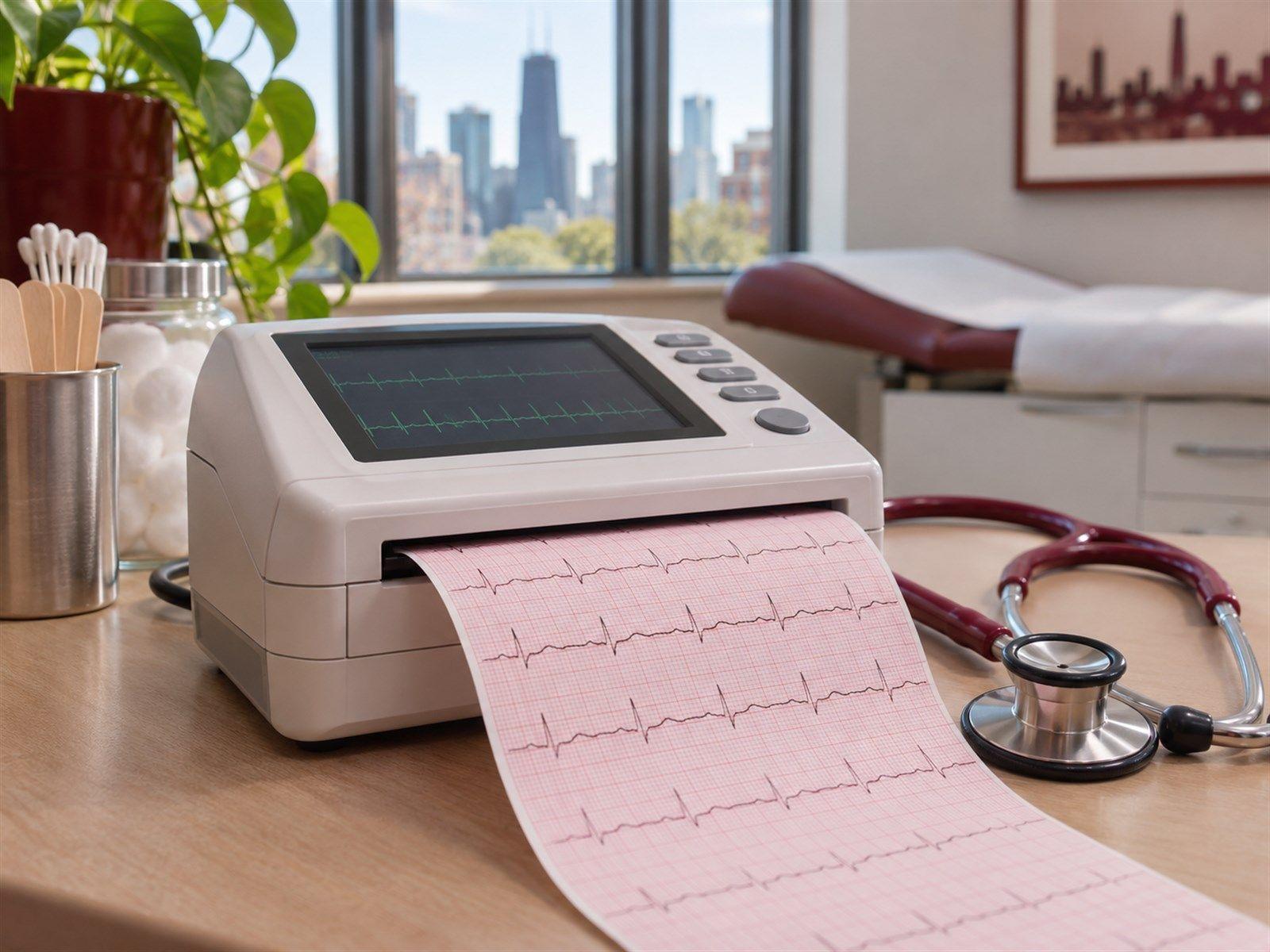
An EKG — also called an ECG or electrocardiogram — is a quick, painless test that records the electrical activity of your heart. Every time your heart beats, an electrical signal travels through it. An EKG captures those signals and displays them as a pattern of waves on paper or a screen.

That wave pattern tells your doctor a lot. It shows whether your heart is beating at a normal rate and rhythm, whether the electrical signals are traveling through your heart correctly, and whether there are signs of damage or strain. An abnormal EKG doesn't always mean something serious, but it does tell your doctor where to look next.

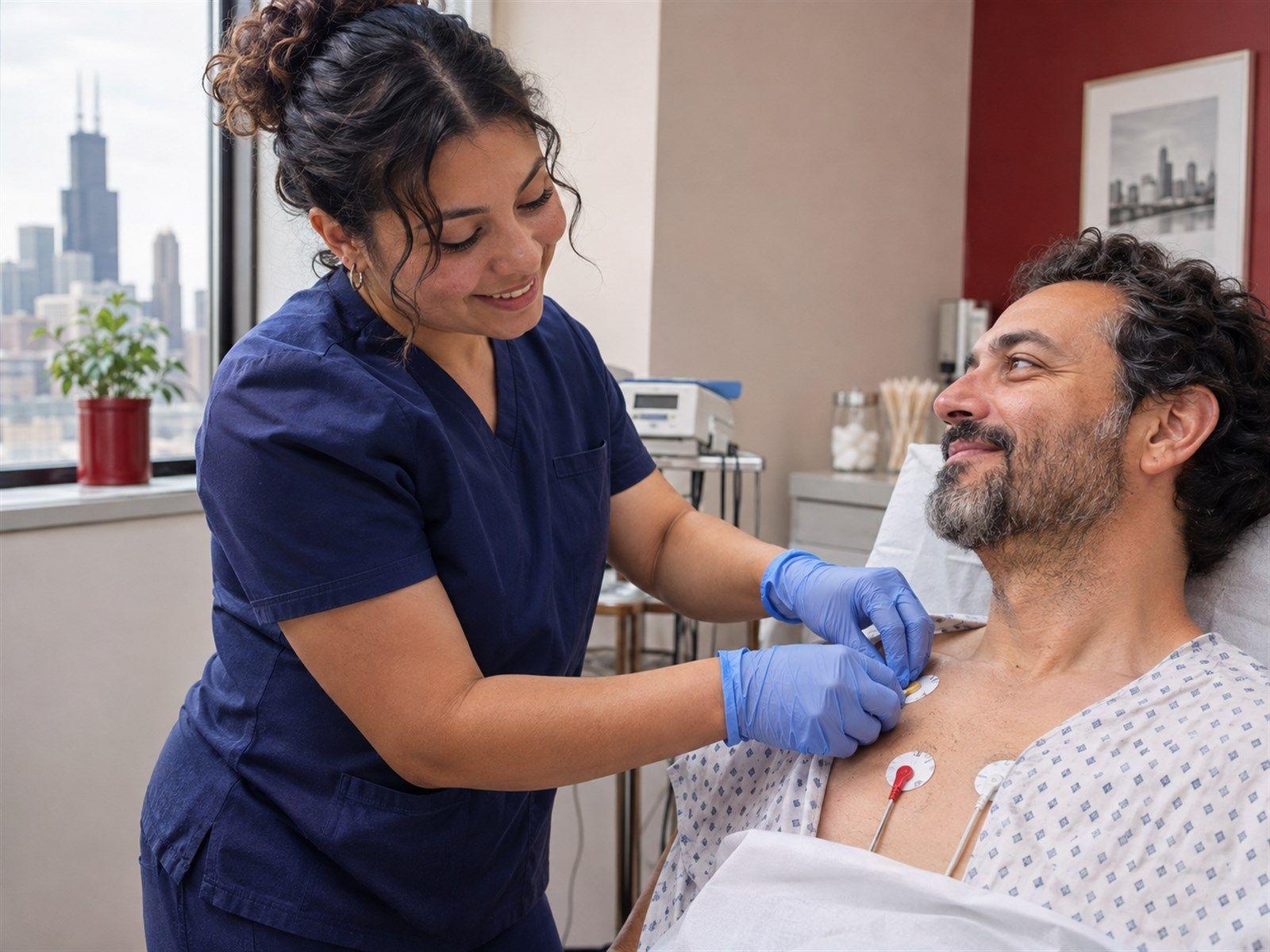
The test itself takes about 10 minutes. A technician places small adhesive sensors — called electrodes — on your chest, arms, and legs. These electrodes connect to the EKG machine through thin wires. You lie still for a few seconds while the machine records your heart's activity. That's it. No needles, no injections, no discomfort.

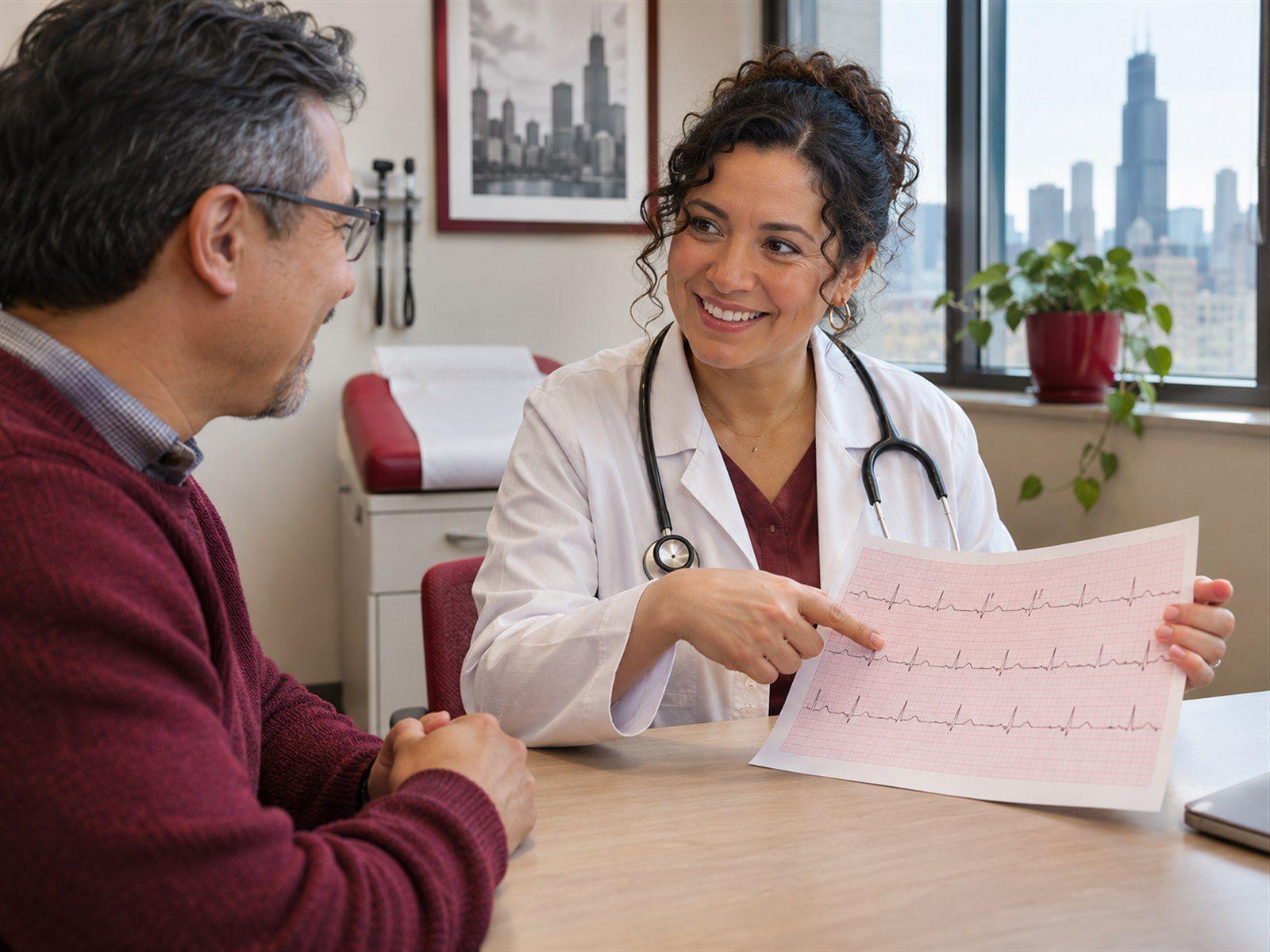
The American Heart Association recommends EKGs as a standard part of cardiac evaluation. At Hermosa Medical Center, our physicians review your EKG results right away — often while you're still in the office — so you don't leave with more questions than you came in with.

What Is an EKG? - image 1

What to Expect During Your EKG at Hermosa Medical Center

Here's how the whole thing works, step by step.

You'll check in at the front desk like any other appointment. Bring your insurance card and ID. We accept Medicaid, Medicare, most insurance plans, and cash payments.

When it's your turn, a technician takes you to the exam room. You'll be asked to remove clothing from the waist up — women are given a gown for privacy. The technician cleans small areas on your chest, wrists, and ankles where the electrodes will go. If there's body hair in those spots, they may shave a small patch so the electrodes stick properly.

Ten small adhesive electrode patches are placed on your skin. Wires connect each electrode to the EKG machine. Then you lie still and breathe normally for about 10 seconds while the machine records.

And that's the test. The electrodes come off, you get dressed, and your doctor reviews the results — usually before you leave the building.

The entire process, from walking into the room to walking out, takes about 10 to 15 minutes. There's no prep required. You don't need to fast. You can drive yourself home afterward. There are no side effects.

If your doctor needs more detailed cardiac information, they may recommend additional testing — like a stress test (an EKG performed while you walk on a treadmill), a Holter monitor (a portable EKG worn for 24 to 48 hours), or an echocardiogram. All of these can be coordinated through our cardiology department without leaving Hermosa Medical Center.


Who Should Get an EKG?

An EKG isn't just for people who already have heart problems. It's also a smart preventive measure. Here's who benefits most.

Anyone experiencing chest pain, heart palpitations, shortness of breath, dizziness, or fainting spells. These symptoms deserve immediate evaluation, and an EKG is usually the first test ordered.

Adults over 40 who haven't had a baseline EKG. Having a "normal" EKG on file gives your doctor something to compare against if something changes later. It's one of those tests that's most useful when you're healthy.

Patients with high blood pressure, diabetes, high cholesterol, or a family history of heart disease. These are all risk factors for cardiac problems, and regular EKG monitoring can catch early changes before they become serious.

People starting a new medication that affects the heart. Your doctor may order a baseline EKG before starting the medication and a follow-up EKG to make sure it's not causing electrical changes.

Pre-surgical patients. Many surgical procedures require a pre-operative EKG to make sure your heart can handle anesthesia safely. We provide pre-surgical clearance EKGs at Hermosa Medical Center.

Athletes and active adults who want cardiac screening. If you're starting a new exercise program, recovering from illness, or have a family history of sudden cardiac events, an EKG provides peace of mind backed by actual data.

How Often Should You Get an EKG?

There's no universal rule, because it depends on your age, risk factors, and symptoms. But here are some general guidelines.

If you have no heart-related symptoms and no risk factors, a baseline EKG at age 40 is a reasonable starting point. Your primary care doctor or general physician can advise whether you need periodic follow-ups based on your health profile.

If you have risk factors — high blood pressure, diabetes, smoking history, family history of heart disease, obesity — your doctor may recommend an EKG annually or every two years as part of your routine care.

If you're actively managing a heart condition or taking cardiac medications, your cardiologist will set the monitoring schedule. That might mean an EKG every few months or more frequently depending on your situation.

And if you develop new symptoms — chest pain, palpitations, shortness of breath, unexplained fatigue — don't wait for your next scheduled checkup. Come in for an EKG right away.

More type of

Treatments

Hermosa Medical Center facility and patient care team

Arrhythmias (Irregular Heartbeat)

An arrhythmia means your heart beats too fast, too slow, or with an irregular rhythm. Some arrhythmias are harmless. Others — like atrial fibrillation — can increase your risk of stroke and heart failure if left untreated. An EKG is the primary tool for detecting rhythm abnormalities.

Hermosa Medical Center facility and patient care team

Heart Attack — Current or Previous

An EKG can show signs of a heart attack that's happening right now, which is why emergency rooms run one within minutes of chest pain. But it can also detect evidence of a previous heart attack you might not have known about. Certain wave patterns indicate scarring or damage to heart muscle tissue that occurred in the past.

Hermosa Medical Center facility and patient care team

Heart Muscle Abnormalities

Thickened heart walls, enlarged chambers, and other structural changes can show up on an EKG as altered wave patterns. These findings might lead your doctor to order additional tests — like an echocardiogram or a cardiac ultrasound — to get a more detailed view.

Hermosa Medical Center facility and patient care team

Electrolyte Imbalances

This one surprises people. Your heart's electrical system depends on electrolytes like potassium, calcium, and magnesium. When those levels are off — from dehydration, medication side effects, or kidney issues — it can change your EKG pattern. Your doctor can catch these imbalances early and correct them before they cause problems.

Hermosa Medical Center facility and patient care team

Effects of Medications on the Heart

Some medications — including certain antidepressants, antibiotics, and blood pressure drugs — can affect your heart's electrical conduction. An EKG helps your doctor monitor whether a medication is causing any cardiac side effects, especially if you're on multiple prescriptions.

Hermosa Medical Center facility and patient care team

Coronary Artery Disease Indicators

While an EKG alone can't diagnose coronary artery disease, it can show patterns that suggest reduced blood flow to parts of the heart. These findings prompt further testing — stress tests, cardiac imaging, or a referral to our cardiologist, Dr. Eliyazar Gaddam, MD — to determine the extent of the issue.

Conditions an EKG Can Detect

An EKG isn't just a test — it's a window into how your heart is functioning. Here's what it can reveal.

Arrhythmias (Irregular Heartbeat)

If you've been feeling your heart skip beats, race unexpectedly, or pound in your chest, an EKG can determine whether those sensations match an actual rhythm disturbance or whether your heart's electrical system is working normally.

Heart Attack — Current or Previous

This is one reason why baseline EKGs are valuable. When your doctor has a normal EKG on file for comparison, changes become easier to spot.

EKG vs. Echocardiogram — What's the Difference?

People confuse these two tests all the time, so here's the distinction.

An EKG measures the electrical activity of your heart. It tells you about rhythm, rate, and whether the electrical signals are conducting normally. Think of it as checking the heart's wiring.

An echocardiogram is an ultrasound of the heart. It uses sound waves to create a moving picture of your heart's structure — the chambers, valves, walls, and blood flow. Think of it as checking the heart's plumbing and architecture.

Both tests are non-invasive and painless. They answer different questions, and your doctor may order both if they're evaluating a complex cardiac concern. An EKG is usually done first because it's faster and cheaper, and the results help determine whether an echocardiogram is needed.

At Hermosa Medical Center, we perform both on-site. No referral to a separate cardiology center. No waiting weeks between tests.

Why Choose Hermosa Medical Center for EKG Testing in Chicago?

  • Same-day EKG with immediate results. No waiting days for your doctor to review the recording. Our physicians interpret your EKG during your visit in most cases.
  • On-site cardiologist. Dr. Eliyazar Gaddam, MD, is our board-certified cardiologist right here at 2004 N Pulaski Rd. If your EKG shows something that needs specialist follow-up, you're already in the right building.
  • Full cardiac diagnostic suite. EKG, echocardiogram, Doppler ultrasound, and advanced imaging including MRI — all available on-site. Comprehensive heart evaluation without multiple appointments at multiple locations.
  • No referral needed for screening. Your primary care doctor or general physician can order an EKG during a routine visit. Walk-in patients with acute symptoms can also be evaluated and tested same-day through our urgent care.
  • Affordable and accessible. Medicaid, Medicare, most insurance plans, and cash accepted. A basic EKG is one of the most affordable cardiac tests available.
  • Multilingual care. English, Arabic, and Spanish. Every patient deserves to understand their heart health in a language they're comfortable with.
  • Community-rooted clinic. Serving Hermosa, Logan Square, Humboldt Park, and Chicago's West Side with accessible, comprehensive cardiac care.

FAQs

Frequently Asked Questions

An EKG takes about 10 minutes from start to finish. The actual recording is only about 10 seconds — the rest of the time is spent placing and removing the electrode patches. Results are typically available within minutes.

No. An EKG is completely painless. Small adhesive patches are placed on your skin to detect electrical signals — there are no needles, no shocks, and no discomfort. The patches peel off easily when the test is done.

No fasting is required for an EKG. You can eat, drink, and take your medications as normal before the test. The only thing to avoid is applying lotions or oils to your chest, as they can prevent the electrodes from sticking.

EKG costs vary, but a standard resting EKG is one of the most affordable cardiac tests. At Hermosa Medical Center, we accept cash payments and can discuss pricing with you before the test. Call 773-772-8876 for current pricing.

Yes. An EKG can show signs of a heart attack in progress and evidence of a previous heart attack. Characteristic wave pattern changes help your doctor determine whether heart muscle has been damaged or is currently receiving insufficient blood flow.

An abnormal EKG can indicate many things — some serious, some not. It could mean an arrhythmia, an electrolyte imbalance, a medication side effect, or a structural heart change. Your doctor will interpret the results in context with your symptoms, history, and other test results before recommending next steps.

No external referral is needed. Any physician at Hermosa Medical Center can order an EKG during your visit. If you have acute symptoms like chest pain or palpitations, our urgent care team can evaluate you and perform an EKG same-day.

They're the same test. EKG comes from the German spelling (Elektrokardiogramm), and ECG comes from the English spelling (electrocardiogram). Both refer to the same procedure that records your heart's electrical activity.

Get Your Heart Checked at Hermosa Medical Center

Don't wait on heart symptoms. Call us at 773-772-8876, book online, or walk in to 2004 N Pulaski Rd, Chicago, IL 60639. Same-day EKG testing available Monday through Friday, 9 AM to 5 PM. Medicaid, Medicare, most insurance, and cash accepted.

Book an

Appointment

After you book an appointment, we will call or message you to confirm the day and time.

Prefer to call?773-772-8876