


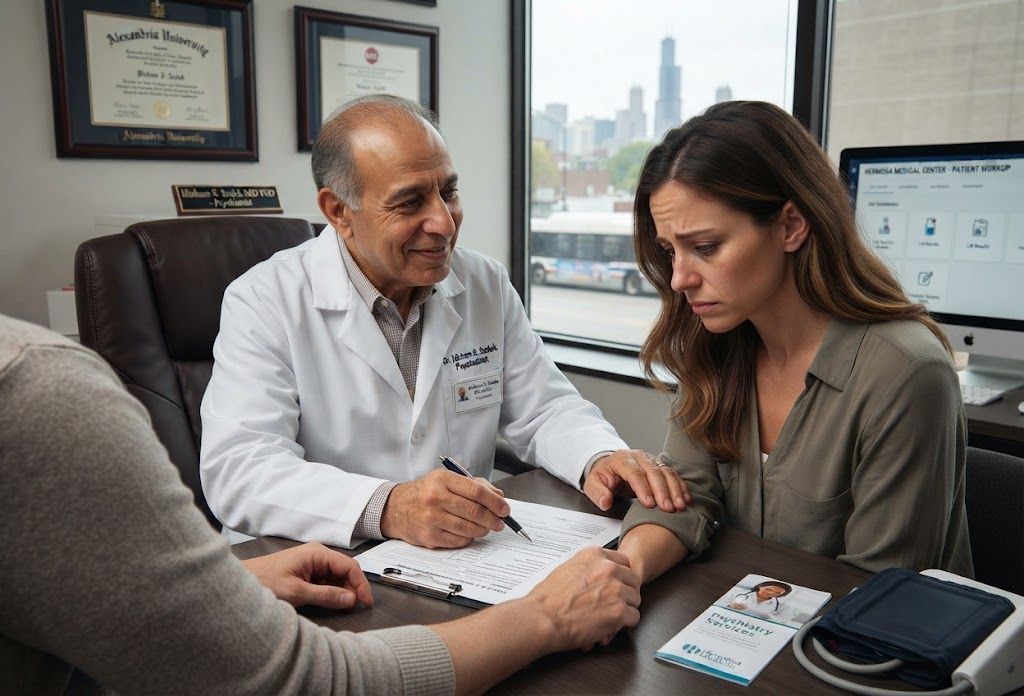
When To See a Doctor for Stress and Anxiety
When To See a Doctor for Stress and Anxiety
Reviewed by Hisham S. Sadek MD PhD Psychiatrist at Hermosa Medical and Diagnostic Center
Last updated: September 2026
Key takeaways
- The most common mistake is going straight to a therapist before ruling out physical causes.
- 8 medical conditions produce symptoms that are indistinguishable from anxiety.
- Start with primary care. It can order the workup prescribe first line treatment and refer onward.
- 6 months of most day worry that is hard to control meets the clinical threshold.
- Chest pain and breathlessness need a cardiac assessment before anything is blamed on anxiety.
The most common mistake people make with anxiety is treating it before checking what is causing it.
Someone books a therapist spends four months in weekly sessions feels no better and concludes therapy does not work for them. Then a blood test ordered for something unrelated shows an overactive thyroid. The racing heart the tremor the sweating and the restlessness were never psychological. They were endocrine.
That sequence is common enough to be worth naming. Anxiety is a symptom before it is a diagnosis. The first job is to find out which one you have.
Start with a primary care doctor. Primary care can order the workup that excludes physical causes prescribe first line treatment and refer to psychiatry or therapy when either is needed.
Which clinician to see and what each one does
|
Clinician |
Can prescribe |
Typical wait |
Best for |
Limitation |
|
Primary care physician |
Yes |
Days to a week |
First presentation. Ruling out thyroid anemia cardiac and sleep causes |
Less suited to treatment resistance or complex regimens |
|
Psychiatrist |
Yes |
Weeks |
Severe symptoms. Two failed medication trials. Possible bipolar or psychotic features |
Longer wait. Usually not the first stop |
|
Psychiatric nurse practitioner |
Yes |
Often shorter than psychiatry |
Evaluation diagnosis and prescribing |
Scope varies by state |
|
Psychologist or licensed therapist |
No in most states |
Days to weeks |
Cognitive behavioral therapy which is first line for most anxiety disorders |
Cannot order blood work or prescribe |
|
Emergency department |
Yes |
Same day |
Safety concerns. Chest pain or breathlessness needing cardiac exclusion |
Not a route to ongoing care |
Not sure whether this is stress a thyroid problem or an anxiety disorder? One visit with blood work separates them. Call 773 772 8876 or book an appointment online.
Stress and anxiety are not the same thing
Stress is a response to an identifiable external demand and it resolves when the demand resolves. Anxiety persists after the trigger is gone or arrives without a proportionate trigger at all. The practical test is simple. If the source disappeared tomorrow would the feeling disappear with it.
If yes you are dealing with stress. If the worry would simply relocate to the next available subject you are dealing with anxiety.
Stress is adaptive. It sharpens focus and mobilizes energy and a life with none of it is not a goal worth having. Anxiety is anticipatory and it focuses on future harm that may never arrive.
Both respond to treatment. They respond to different treatment which is why the distinction is worth making before anyone writes a prescription.
Eight physical conditions that imitate anxiety
Eight medical conditions produce symptoms clinically indistinguishable from an anxiety disorder. Excluding them is the single most important reason to involve a medical doctor early rather than going straight to a therapist or an app. A basic workup covering thyroid function blood count metabolic panel and vitamin levels catches most of them.
Hyperthyroidism. Racing heart tremor sweating weight loss and restlessness. Frequently misdiagnosed as anxiety for months. A thyroid panel settles it in one draw.
Anemia. Fatigue palpitations breathlessness and poor concentration.
Cardiac arrhythmia. Atrial fibrillation and supraventricular tachycardia produce sudden episodes that feel exactly like panic attacks.
Sleep apnea. Fragmented sleep produces irritability poor concentration and physiological arousal that looks like generalized anxiety.
Low blood sugar. Shakiness sweating and a sense of dread particularly in people on diabetes medication.
Vitamin B12 or vitamin D deficiency. Both are associated with mood and cognitive symptoms and both are common.
Medication and substance effects. Stimulants decongestants steroids thyroid replacement excess caffeine nicotine withdrawal and alcohol withdrawal all produce anxiety symptoms directly.
Asthma and COPD. Breathlessness triggers anxiety and anxiety worsens breathlessness which creates a genuine loop. Our internal medicine team assesses both sides of it.
Clear thresholds for making an appointment
Book an appointment if worry occurs most days for 6 months or longer and is hard to control. Book sooner if anxiety is affecting work school or relationships if you are avoiding places you previously managed if sleep is disrupted most nights or if you are using alcohol or cannabis to bring the feeling down.
Other triggers for a visit. Physical symptoms that persist including chest tightness stomach upset headaches muscle tension or jaw clenching. Panic attacks with sudden intense fear racing heart and a sense of losing control. Appetite change in either direction. Having stopped doing things you used to enjoy.
Seek care the same day for thoughts of harming yourself or ending your life. Call or text 988 in the United States to reach the Suicide and Crisis Lifeline at any hour. Also seek same day care for inability to care for yourself or dependents for severe panic that does not settle and for chest pain breathlessness or fainting that has not been medically evaluated.
Panic attacks deserve their own explanation
A panic attack is a sudden surge of intense fear that peaks within about 10 minutes. It commonly brings a pounding heart sweating trembling breathlessness chest tightness nausea dizziness numbness and a powerful sense that something catastrophic is happening. The physical symptoms are real and the sense of doom is a symptom rather than evidence.
Two features drive repeated emergency visits. The chest symptoms feel cardiac. The dread feels like information.
The first panic attack should be medically evaluated. Chest pain and breathlessness genuinely require exclusion of cardiac and pulmonary causes and nobody should self diagnose panic on a first episode. Once a cardiac cause is excluded later attacks usually do not need emergency assessment.
Panic disorder is diagnosed when attacks recur and fear of the next one changes behavior. That behavioral change is the disorder. People stop driving on the expressway stop going to crowded places or stop being alone. The avoidance shrinks life faster than the attacks do.
Treatment works well. Cognitive behavioral therapy with interoceptive exposure has strong evidence and works by deliberately provoking the physical sensations under control until the body stops reading them as danger.
What treatment actually looks like
Cognitive behavioral therapy is first line for most anxiety disorders and typically runs 12 to 20 sessions. Selective serotonin reuptake inhibitors and serotonin norepinephrine reuptake inhibitors are the standard first line medications and take 2 to 6 weeks to work. For moderate to severe anxiety the combination outperforms either alone.
Buspirone is an option for generalized anxiety and works differently from the antidepressant classes.
Benzodiazepines deserve a direct comment. Xanax and Ativan are brand names for alprazolam and lorazepam and both work within the hour. That speed is exactly why they are difficult. Tolerance dependence cognitive effects and falls in older adults are all real. Current practice restricts them to short term or situational use rather than ongoing management. If you have been on one continuously for months that is worth raising rather than continuing by default. Our article on psychiatric medication management covers how dosing decisions get made over time.
Three lifestyle interventions have genuine evidence rather than wellness marketing behind them. Regular aerobic exercise has trial effect sizes that compare respectably with medication for mild to moderate anxiety. Sleep regularization matters because sleep loss amplifies anxiety directly and measurably. Caffeine reduction helps more people than expected particularly those with panic symptoms.
Anxiety in Chicago winter
Chicago sunset falls before 4:30 in the afternoon through December and early January. Short daylight compressed outdoor time and months of indoor isolation reliably worsen mood and anxiety symptoms for a share of patients every year. This is a local pattern worth planning around rather than reacting to.
Two practical consequences follow. People who are stable through summer sometimes destabilize in December and a medication review in October is better timed than one in January. And exercise plans built around outdoor activity collapse in February which removes one of the few interventions with real evidence behind it.
We see this cycle every year across Hermosa Belmont Cragin and Logan Square. Anticipating it beats treating it after the fact. If you have a history of winter worsening bring it up at an autumn visit rather than waiting for the symptoms to arrive.
A typical case we see
A man in his fifties from Humboldt Park came to urgent care three times in six weeks with chest tightness and breathlessness. Each visit found nothing cardiac. He left each time with reassurance and no plan.
On the fourth visit the workup was widened. An electrocardiogram and blood work were normal. A careful history found the episodes peaked within 10 minutes clustered after his shift and had started after a workplace incident. He had stopped driving on the expressway.
The diagnosis was panic disorder with avoidance. Treatment was a serotonin reuptake inhibitor plus a referral for exposure based therapy. The point of the case is the three earlier visits. Ruling out the dangerous thing is necessary and it is not the same as making a diagnosis.
*Illustrative example. Composite of common presentations. Not a specific individual and not a testimonial. replace with a real anonymized case from clinic records.*
### Talk to someone about stress and anxiety
Walk ins are welcome at 2004 N Pulaski Rd in Chicago. No appointment needed.
Call 773 772 8876 or book an appointment online
See our Psychiatry services page for what the visit covers
*Hablamos español. Llame al 773 772 8876 para programar su cita.*
Anxiety in specific groups
Presentation changes by group and treatment changes with it. Older adults frequently present with physical complaints rather than stated worry. Adolescents present with irritability stomach aches and school avoidance. Pregnancy and the postpartum period carry high rates and real treatment options. People with chronic illness have substantially elevated rates that affect adherence and outcomes.
Older adults. Medication side effects and thyroid disease are more common causes in this group. Benzodiazepines carry higher fall and cognitive risk and are generally avoided.
Pregnancy and postpartum. Anxiety is common and treatable in both periods. Several medications have reassuring safety data and untreated anxiety carries its own risks for parent and baby. Do not stop medication abruptly on discovering a pregnancy. Raise it first. Our gynecology team coordinates with psychiatry on this directly.
Adolescents. Somatic complaints and school refusal are more common presentations than a stated feeling of worry.
Chronic illness. Rates are substantially higher and it is worth treating rather than accepting as an understandable reaction.
What happens at your appointment
Expect 30 to 60 minutes for a first visit. The sequence is predictable and knowing it removes a good deal of the anticipatory dread that keeps people from booking.
Check in. Photo identification insurance card and your medication list including supplements. Staff speak English Spanish and Arabic.
Screening forms. The GAD seven and the PHQ nine. Two minutes each. They produce a number that can be tracked across visits so improvement becomes visible rather than a matter of memory.
The conversation. When symptoms started what they feel like physically what triggers them what you avoid how sleep and appetite are and how daily function is affected. Expect questions about alcohol cannabis and caffeine. Answer accurately because these change the plan.
Physical assessment. Blood pressure pulse weight and an electrocardiogram when palpitations are part of the picture.
Blood work. Drawn on site the same day. Thyroid function complete blood count metabolic panel and vitamin levels.
The plan. Usually a combination. A therapy referral a first line medication if indicated and a follow up in 2 to 4 weeks. You leave with it in writing.
Pharmacy. Filled at the on site pharmacy before you leave the building.
What Medicaid and Medicare cover for stress and anxiety care in Chicago
Coverage depends on whether a service is medically necessary or cosmetic and it varies by plan. The summary below reflects how Illinois Medicaid and Medicare generally treat these services. Confirm your own plan before the visit because benefits differ between managed care plans.
Generally covered
- Outpatient behavioral health evaluation and follow up visits
- Medication management and most generic psychiatric medications on formulary
- Blood work ordered to exclude thyroid anemia and metabolic causes
- Psychotherapy sessions under both Illinois Medicaid and Medicare Part B
- Annual depression screening in primary care is a covered preventive service
Generally not covered
- Brand name medication where a generic exists unless prior authorization is approved
- Some therapy modalities and session counts beyond plan limits
- Wellness apps coaching and non clinical services
Worth bundling into the same visit
- Annual wellness visit or physical in the same trip
- Thyroid panel complete blood count and metabolic panel
- Blood pressure check and electrocardiogram when palpitations are present
- Prescription pickup at the on site pharmacy
We accept Medicaid and Medicare. Call 773 772 8876 to confirm your plan before the visit. Coverage varies by plan so call to confirm rather than assuming.
Frequently asked questions
What kind of doctor should I see for stress?
Start with a primary care doctor. Primary care can exclude thyroid anemia cardiac and sleep causes prescribe first line treatment and refer to psychiatry or therapy when needed.
When does stress become a medical problem?
When it persists after the trigger resolves when it interferes with work sleep or relationships or when physical symptoms appear. Six months of most day worry that is hard to control meets criteria for generalized anxiety disorder.
What physical conditions look like anxiety?
Hyperthyroidism anemia cardiac arrhythmia sleep apnea low blood sugar and vitamin B12 or D deficiency. Stimulants decongestants steroids caffeine and alcohol withdrawal do as well.
Do I need medication or is therapy enough for anxiety?
Mild anxiety often responds to therapy and lifestyle change alone. Moderate to severe anxiety responds best to combined therapy and medication.
How long does anxiety medication take to work?
Two to six weeks for meaningful effect with first line antidepressants. Early side effects often appear before the benefit does which is why the first month needs support.
When should I seek same day care for anxiety?
For thoughts of self harm inability to care for yourself severe panic that does not settle or chest pain and breathlessness that have not been medically evaluated. Call or text 988 for crisis support at any hour.
Is anxiety treatment covered by Medicaid in Illinois?
Yes. Outpatient behavioral health evaluation medication management and psychotherapy are covered benefits under Illinois Medicaid and under Medicare Part B. Call 773 772 8876 to confirm your specific plan.
Can I be seen in Spanish or Arabic?
Yes. Our staff and providers include English Spanish and Arabic speakers. Language concordant mental health care measurably improves engagement and outcomes.
About the reviewer
Hisham S. Sadek MD PhD | Psychiatrist | Hermosa Medical and Diagnostic Center
Dr Sadek has over twenty years of experience treating psychiatric disorders and specializes in addiction psychiatry. He earned his Doctor of Medicine degree at Alexandria University Faculty of Medicine in Egypt and completed his residency at UIC and the Illinois State Psychiatric Institute where he graduated as chief resident. He has also served as a psychiatrist for the City of Chicago Department of Public Health. He sees patients in English and Arabic.
Next step
If chest symptoms have never been formally evaluated start there. If they have and the feeling persists a single visit with blood work and a screening questionnaire gives you an answer rather than another round of reassurance.
Go to Psychiatry services to see what we offer and how to book.
Visit Hermosa Medical and Diagnostic Center
Hermosa Medical and Diagnostic Center has served the Chicago West Side for 33 years. Primary care specialty care laboratory services imaging and an on site pharmacy sit in one building so most visits finish in one trip.
Address 2004 N Pulaski Rd Chicago IL 60639
Phone 773 772 8876
Hours Call 773 772 8876 to confirm current hours
Walk ins Welcome. No appointment needed.
Insurance Medicaid Medicare and most major plans accepted
Languages English Spanish and Arabic
We serve Hermosa Belmont Cragin Humboldt Park Logan Square and Austin.
Hablamos español. Llame al 773 772 8876 para programar su cita. Se habla español.
Getting here
We are at 2004 N Pulaski Rd in the Hermosa neighborhood just north of Armitage Ave. Street parking is available on Pulaski Rd and on the surrounding side streets. The CTA 53 Pulaski bus stops directly outside and the 73 Armitage bus runs east from the corner toward the Blue Line.
Embedded Google Map of 2004 N Pulaski Rd Chicago IL 60639. Open in Google Maps (the map embed code is in the markdown version of this file).
Sources
- National Institute of Mental Health | Anxiety Disorders
- 988 Suicide and Crisis Lifeline
- Centers for Disease Control and Prevention | Mental Health