


Understanding MRI Results: A Plain Guide to What Your Scan Is Telling You
Understanding MRI Results: A Plain Guide to What Your Scan Is Telling You
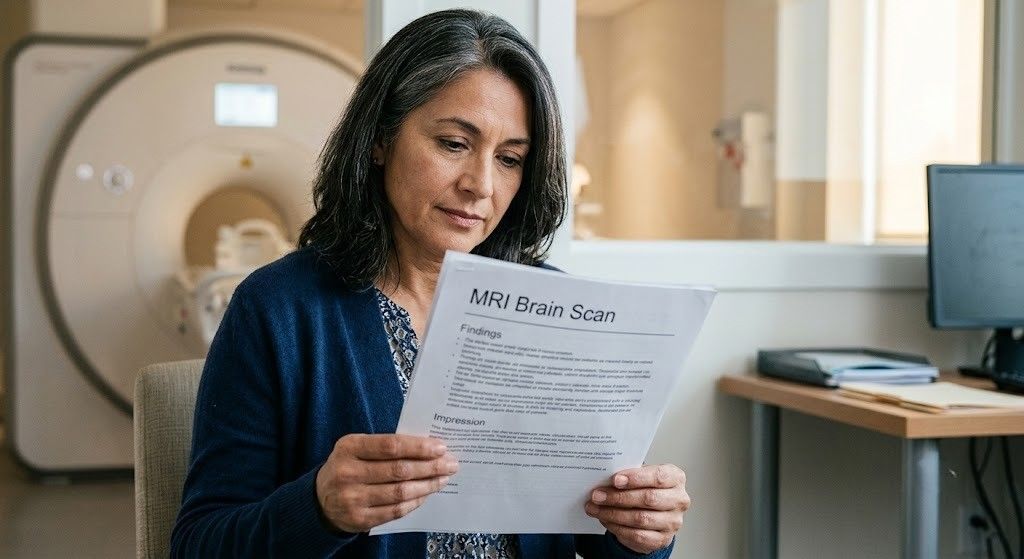
Your phone buzzes. The patient portal says your MRI is ready. You open it expecting a simple yes or no and instead you get a page full of words like impression and findings and mild degenerative changes. Now what.
This happens to almost everyone who has ever had an MRI. The scan itself is quick and painless for most people but the report that comes after can feel like it was written in a different language. And in a way it was. Radiologists write these reports for other doctors not for patients sitting at home trying to figure out if they should be worried.
Here is the thing. Most of what shows up on an MRI report is not an emergency. A lot of it is normal wear that comes with being a human body that has lived a few decades. But some findings do need a closer look and knowing the difference matters. This guide walks through every part of a typical MRI report in plain everyday language so you know what you are actually looking at and what to do next.
What Is an MRI and What Does It Actually Show
An MRI or magnetic resonance imaging scan uses a strong magnetic field and radio waves to build detailed pictures of the inside of your body. There is no radiation involved which is one reason doctors reach for MRI when they need a close look at soft tissue like the brain spinal cord muscles or organs.
The machine itself is a large tube with a powerful magnet. When you lie inside it the magnet lines up water molecules in your body and the radio waves knock them slightly out of place. As they settle back the machine picks up the signal and turns it into an image. Some exams use contrast dye injected into a vein to make certain structures show up more clearly and your provider will tell you ahead of time if that applies to you.
How MRI Is Different From an X Ray or CT Scan
X rays and CT scans use ionizing radiation and they are excellent at showing bone. MRI does not use radiation at all and it shines when the question involves soft tissue such as ligaments cartilage nerves or brain tissue. A broken bone shows up clearly on an X ray. A torn ligament or a disc pressing on a nerve root shows up far better on MRI. Doctors often choose the imaging test based on what they suspect is going on rather than picking one over the other across the board.
What Body Parts and Conditions MRI Can Detect
MRI can be used almost anywhere in the body. Brain MRI can pick up strokes tumors bleeding and changes tied to memory or neurological symptoms. Spine MRI shows disc problems spinal stenosis and nerve root irritation. MRI is also used on joints like the knee and shoulder as well as the abdomen and pelvis. Because it produces such detailed images doctors often order an MRI when a physical exam or an X ray does not fully explain a patient's symptoms.
How to Read an MRI Report Section by Section
A written MRI report almost always follows the same basic structure no matter which body part was scanned. Once you know the pattern the whole document gets a lot less intimidating.
- Patient and exam information. This section lists your name date of birth the date of the scan and which body part was imaged.
- Clinical history. This is the reason your doctor ordered the MRI in the first place such as back pain or a neurological symptom.
- Technique. A short note on how the scan was performed including whether contrast was used.
- Findings. The detailed section describing everything the radiologist observed on the images.
- Impression. A short summary at the end that pulls together the most important points from the findings.
Patient and Exam Information
This part is mostly administrative. It confirms who you are what was scanned and when. Not much to interpret here beyond double checking the details match your visit.
Clinical History and Reason for Scan
Right under the exam details you will usually see a short line describing why the scan was ordered. If your doctor sent you in for lower back pain that radiates down your leg this section might say something like low back pain with radiculopathy. This gives context for everything that follows.
Findings Section Explained
The findings section is the longest part of the report and it goes structure by structure describing what the radiologist sees. For a brain MRI this might include comments on brain volume the ventricles and any areas of unusual signal. For a spine MRI it usually goes level by level through each disc space. Terms like T2 sagittal and axial refer to the imaging technique and the angle the pictures were taken from not to anything being wrong.
Impression or Conclusion Section Explained
If you only read one part of your report read this one. The impression is where the radiologist boils everything down into the key takeaways. It is written to be the quick summary a busy doctor can scan in a few seconds and it is usually the most useful section for a patient trying to understand the big picture.
Common Words on MRI Reports and What They Mean
Terms That Sound Scary But Are Often Normal
Words like degenerative changes mild bulge and age related findings show up constantly on spine reports especially in older adults. These almost always describe the kind of gradual wear that comes from years of normal use rather than a serious disease. A normal variant simply means a shape or structure that differs slightly from average but carries no medical significance.
Degenerative Changes Mild Bulge Age Related Wear
If your report mentions mild disc bulging or degenerative disc disease that does not automatically mean surgery or even treatment. Many adults over 40 have some of these findings without any symptoms at all. Loss of disc height and decreased water content in a disc are also part of normal aging and typically requires no treatment on their own.
Terms That Usually Need Follow Up
On the other side words like mass cyst significant stenosis or nerve root compression usually mean your doctor will want to talk with you directly. This does not mean panic. It means the finding is specific enough that it needs a clinical conversation rather than a quick portal message.
What Counts as an Abnormal MRI Result
An abnormal MRI result simply means something on the images falls outside what is considered typical for someone your age and health history. That covers a wide range from something completely harmless to something that needs prompt attention. Context always matters more than the word abnormal by itself.
Incidental Findings and Why They Are Common
An incidental finding is something the radiologist notices that has nothing to do with the reason you got the scan. Maybe you had a knee MRI and the images happen to catch a small cyst nearby. These pop up often because MRI is so detailed and the body is full of small variations that never cause a problem. Your healthcare provider will let you know if an incidental finding needs monitoring or if it can be safely ignored.
When a Radiologist Flags Something for Further Testing
Sometimes the impression will include a line recommending follow up imaging or a specialist referral. That is not the radiologist being overly cautious for no reason. It usually means the finding was not fully clear from this one scan and a repeat image or a different type of test would give a more complete picture.
Brain MRI Results Explained
Brain MRI is one of the most detailed imaging tests available for looking at brain tissue and it comes up often for headaches dizziness memory concerns or after a possible stroke.
What a Normal Brain MRI Report Looks Like
A normal brain MRI report often uses the phrase within normal limits which means the radiologist did not find anything outside the expected range for your age. It will typically confirm normal brain volume no signs of bleeding or stroke and no masses or unusual signal.
What Abnormal Brain MRI Findings Can Mean
Abnormal brain MRI findings can range from small areas of brain volume loss that are common with aging to more specific findings like vascular malformations or signs of a prior small stroke. Brain tumors can also show up on MRI though the majority of brain scans never reveal one. If contrast enhanced MRI or magnetic resonance angiography was used your report might describe blood vessel detail as well. Any of these findings should be reviewed directly with your provider so they can explain what it means for your particular situation and your treatment plan going forward.
Spine MRI Results Explained
Reading Disc and Nerve Findings on a Spine MRI
Spine reports go level by level through the neck or lower back describing each disc and the space around it. You might see terms like spinal stenosis which describes narrowing of the spinal canal or nerve root involvement which means a disc or bone spur is close enough to a nerve to potentially cause symptoms like pain numbness or tingling. Not every disc finding lines up with your actual symptoms which is part of why your provider looks at the whole picture including your exam and history rather than the MRI alone.
MRI vs X Ray for Diagnosis: Which One Fits Your Situation
| Factor | MRI | X Ray |
|---|---|---|
| Radiation | None | Low dose ionizing radiation |
| Best for | Soft tissue nerves brain spinal cord | Bones and fractures |
| Scan time | 20 to 60 minutes | A few minutes |
| Contrast use | Sometimes for vascular or tumor detail | Rarely |
| Common uses | Back pain brain symptoms joint injuries | Broken bones chest checks |
When Your Doctor Might Order Both
It is common to start with an X ray because it is fast and can rule out a fracture right away. If the X ray comes back normal but symptoms continue or point toward a soft tissue problem your provider may then order an MRI for a closer look. Using both together often gives a more complete diagnosis than either test alone.
What Happens After You Get Your MRI Results
Getting the report is only half the process. What happens next depends on what the images showed and how it fits with your symptoms.
Who Reviews Your Results With You
Your ordering provider is the one who puts the radiology report into context with your exam and your history. A written report on its own rarely tells the full story which is why a follow up conversation with your healthcare provider matters even when the findings look minor.
Questions to Ask Your Provider About Your Report
A few good questions to bring to that appointment: what does the impression section mean for me specifically. Do any of these findings explain my symptoms or are they unrelated. Do I need any follow up imaging or a specialist referral. Is this something to monitor over time or does it need treatment now. Are there lifestyle changes that could help. Bringing a short list like this keeps the conversation focused and makes sure nothing gets glossed over.
Why Choose Hermosa Medical Center for Your MRI and Results Review
Getting a scan is stressful enough without adding a long wait for someone to explain it to you. That is where having imaging and your medical team under one roof makes a real difference.
On Site MRI and X Ray With Same Day Access to Your Doctor
At Hermosa Medical Center's MRI and X Ray services patients can get imaging done and have their results reviewed by a provider who already knows their history without being bounced between separate facilities. If your MRI points toward a heart related issue our cardiology team can step in directly and if ongoing management is needed our internal medicine providers are right here to help build a plan.
33 Plus Years Serving Chicago Families Walk In Friendly
Hermosa Medical Center has served the Chicago community for more than 33 years from our location at 2004 N Pulaski Rd. We are a walk in friendly practice which means you do not always need to wait weeks for an appointment when something is bothering you. Whether it is a primary care visit to talk through your MRI results or urgent care for a symptom that cannot wait we built this practice so Chicago families have one place to turn.
Book Your MRI or Results Review Appointment Today
If you have an MRI scheduled or if you already have results sitting in your portal and no clear answers our team can help you make sense of them and plan the right next step. Call us at 773 772 8876 or walk in during our hours 9 AM to 5 PM at 2004 N Pulaski Rd Chicago IL 60639. We accept Medicaid Medicare BCBS Aetna Cigna Tricare Wellcare and cash so cost should never be the reason you put off getting answers.
Insurance Accepted Including Medicaid Medicare and Major Plans
Hermosa accepts a wide range of coverage including Medicaid Medicare BCBS Aetna Cigna Tricare and Wellcare along with cash pay options for patients without insurance. Our front desk team can help verify your coverage before your visit so there are no surprises.
Frequently Asked Questions
How long does it take to get MRI results back?
Turnaround time depends on the facility and the complexity of the scan but many patients get their written report within a day or two. At Hermosa our on site imaging means your provider can often review the images and talk through next steps at the same visit or shortly after.
What does impression mean on an MRI report?
The impression is the radiologist's summary at the end of the report. It pulls together the most important findings into a short conclusion and it is usually the fastest way to understand the overall result of your scan.
Is it normal to have findings on an MRI?
Yes. Most MRI reports include some findings even in healthy people because MRI is detailed enough to pick up small age related changes or minor variations that never cause a problem. Having findings does not automatically mean something is wrong.
Can I read my own MRI report without a doctor?
You can access your report through your patient portal but reading it alone often leaves out important context. A healthcare provider can explain how the findings relate to your actual symptoms and history which the written report by itself cannot do.
What is the difference between MRI and X ray results?
MRI results focus on soft tissue detail like nerves discs and brain tissue while X ray results focus on bone. The two tests answer different clinical questions so your provider chooses based on what they are trying to rule in or out.
What does a mass on an MRI mean?
Mass is a general radiology term for any area that looks different from the surrounding tissue. It does not automatically mean cancer. Many masses turn out to be harmless cysts or benign growths but any mass finding should be discussed with your provider for proper evaluation.
Why does my MRI report mention an old injury I forgot about?
MRI is sensitive enough to pick up signs of healed injuries from years earlier even if you do not remember them causing symptoms at the time. These are usually just noted for completeness and do not need any action.
Do abnormal MRI results always mean surgery?
No. Most abnormal findings especially degenerative changes in the spine are managed with conservative options first such as physical therapy medication or lifestyle changes. Surgery is typically considered only when symptoms are severe or other treatments have not helped.
How do I know if my MRI results are serious?
The seriousness of a finding depends on what it is and whether it matches your symptoms. This is exactly why a follow up visit with your provider matters. They can tell you whether a finding needs monitoring immediate treatment or nothing at all.
Where can I get an MRI and have someone explain the results the same week in Chicago?
Hermosa Medical Center offers on site MRI and X ray imaging along with same practice access to primary care and specialist providers so Chicago patients are not left waiting weeks between the scan and a real conversation about what it means.