

Ultrasound Near Me in Chicago: How to Find Same-Day Diagnostic Imaging at Hermosa
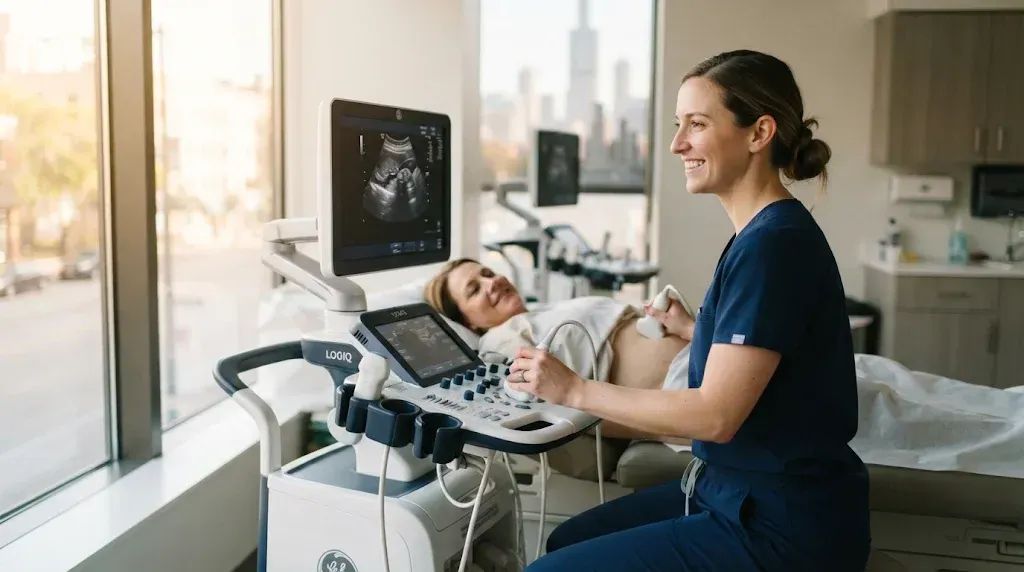
Ultrasound Near Me in Chicago: How to Find Same-Day Diagnostic Imaging at Hermosa
You've been told you need an ultrasound. Maybe your doctor ordered one after a physical exam or maybe you're dealing with unexplained pain and you just want answers. Either way you're probably doing what most people do: searching "ultrasound near me" and hoping to find somewhere close and affordable and available soon.
At Hermosa Medical Center in Chicago we offer on-site diagnostic ultrasound imaging for patients across the city's Northwest Side and surrounding neighborhoods. Our team provides abdominal and pelvic and thyroid and vascular and obstetric ultrasound studies. For a lot of patients same-day appointments are possible. We accept Medicaid and Medicare and most private insurance plans and cash so cost doesn't have to be the thing standing between you and a diagnosis.
Here's what you need to know about finding an ultrasound near you and what to expect and how to get one scheduled at Hermosa.
What Is a Diagnostic Ultrasound?
A diagnostic ultrasound is a non-invasive imaging procedure that uses high-frequency sound waves to produce real-time pictures of the structures inside your body. It doesn't use radiation. That's one of the reasons it's been a go-to imaging tool for decades especially during pregnancy.
The way it works is straightforward. A technician (called a sonographer) applies a thin layer of gel to the area being examined then moves a handheld device called a transducer across your skin. That transducer sends sound waves into your body. When those waves bounce off organs and tissues and fluid the machine translates the echoes into images on a monitor.
And that's the part most people don't realize: ultrasound isn't just for pregnancy. It's used to evaluate the heart and liver and kidneys and thyroid and blood vessels and joints and more. If your doctor needs a quick real-time look at what's going on inside you there's a good chance ultrasound is the first tool they'll reach for.
According to the Cleveland Clinic there are three main categories of ultrasound imaging: pregnancy (prenatal) ultrasound and diagnostic ultrasound and ultrasound guidance for procedures like biopsies and fluid drainage.
Types of Ultrasound Available in Chicago
Not all ultrasounds are the same. The type you need depends entirely on what your doctor is looking for. Here's a breakdown of the most common diagnostic ultrasounds offered at clinics like Hermosa Medical Center.
|
Ultrasound Type |
What It Examines |
Common Reasons Ordered |
Typical Duration |
|
Abdominal |
Liver, gallbladder, pancreas, spleen, kidneys |
Abdominal pain, gallstones, kidney stones, liver disease |
20 to 30 minutes |
|
Pelvic |
Uterus, ovaries, bladder, prostate |
Fibroids, ovarian cysts, abnormal bleeding, fertility concerns |
20 to 30 minutes |
|
Thyroid |
Thyroid gland in the neck |
Nodules, cysts, goiter, biopsy guidance |
15 to 20 minutes |
|
Vascular/Doppler |
Arteries and veins |
Blood clots (DVT), carotid blockages, peripheral artery disease |
30 to 45 minutes |
|
Obstetric |
Fetus and uterus during pregnancy |
Pregnancy confirmation, fetal development, due date estimation |
20 to 40 minutes |
|
Musculoskeletal |
Muscles, tendons, ligaments, joints |
Sprains, tears, inflammation, soft tissue injuries |
15 to 30 minutes |
Abdominal Ultrasound
An abdominal ultrasound examines organs in the upper belly including the liver and gallbladder and pancreas and spleen and kidneys. It's one of the most frequently ordered imaging studies for patients with unexplained abdominal pain according to the Mayo Clinic.
Doctors typically order one when they suspect gallstones or kidney stones or liver disease or pancreatitis or an abdominal aortic aneurysm. If you've been having persistent pain in your upper right side after eating for instance your provider might want to check for gallbladder stones. An abdominal ultrasound is usually the first step.
Pelvic Ultrasound
A pelvic ultrasound evaluates organs in the lower abdomen including the uterus and ovaries and bladder in women and the bladder and prostate in men. This scan helps diagnose conditions like fibroids and ovarian cysts and pelvic pain and abnormal bleeding and fertility concerns.
There are two common approaches:
-
Transabdominal pelvic ultrasound is done through the skin of the lower abdomen with a full bladder
-
Transvaginal ultrasound uses a slender internal probe for more detailed views and is often used for early pregnancy monitoring or to get a closer look at the uterus and ovaries
Thyroid Ultrasound
A thyroid ultrasound creates detailed images of the thyroid gland in your neck. Providers use it to measure the gland's size and check for nodules or cysts and evaluate lumps and guide fine-needle biopsies when needed.
The good thing about thyroid ultrasounds is that they don't require any special preparation. No fasting. No full bladder. You show up and lie down and the scan takes around 15 to 20 minutes.
Vascular Ultrasound and Doppler Studies
Vascular ultrasound combined with Doppler technology assesses blood flow through your arteries and veins. It's the standard imaging tool for detecting blood clots (deep vein thrombosis) and evaluating carotid artery blockages that could lead to stroke and checking for peripheral artery disease and assessing abdominal aortic aneurysms.
If you've been experiencing leg swelling or numbness or your doctor heard something unusual in your neck arteries during a stethoscope exam a vascular Doppler study might be what they order. Hermosa Medical Center provides same-day ultrasound in Chicago as part of our comprehensive diagnostic imaging program.
Obstetric Ultrasound
Obstetric ultrasound monitors fetal development during pregnancy. Early scans confirm pregnancy and estimate due dates and detect ectopic pregnancies. Later scans (the anatomy scan around 18 to 22 weeks) assess fetal organs and growth and placenta position.
If you're expecting and looking for prenatal ultrasound services in Chicago it helps to find a provider who can coordinate your imaging with your OB-GYN care. Our primary care in Chicago team works alongside specialists to make sure your care isn't fragmented across multiple locations.
Musculoskeletal Ultrasound
This type of ultrasound evaluates muscles and tendons and ligaments and joints. It's useful for diagnosing sprains and tears and inflammation and soft tissue injuries particularly in the shoulder and knee and ankle and elbow.
Athletes and workers who deal with repetitive motion injuries tend to benefit from musculoskeletal ultrasound because it provides real-time imaging during movement. Your provider can see exactly where the problem is as you flex or extend the joint.
How to Prepare for Your Ultrasound
Preparation is the part that trips people up the most and I get it. The instructions vary depending on the scan. Getting the prep wrong is actually one of the most common reasons ultrasound appointments get rescheduled.
Preparation Requirements by Scan Type
|
Ultrasound Type |
Fasting Required? |
Full Bladder Needed? |
Special Instructions |
|
Abdominal |
Yes. 6 to 8 hours before exam |
No |
No food or drinks besides water |
|
Pelvic (Transabdominal) |
No |
Yes. Drink 32 oz water 1 hour before |
Do not empty bladder before scan |
|
Pelvic (Transvaginal) |
No |
No (empty bladder preferred) |
Follow your provider's specific instructions |
|
Thyroid |
No |
No |
None. Just wear comfortable clothing |
|
Vascular/Doppler |
No |
No |
None. Wear loose clothing |
|
Musculoskeletal |
No |
No |
None. Wear clothing that allows access to the area |
|
Obstetric |
No |
Varies by trimester |
Follow your OB-GYN's instructions |
Step-by-Step: How to Prepare for Your Ultrasound Appointment
-
Confirm your scan type with your doctor's office. Ask specifically which type of ultrasound was ordered so you know the exact preparation requirements.
-
Follow the fasting instructions if needed. For abdominal ultrasounds stop eating and drinking (except water) 6 to 8 hours before the exam. If your appointment is in the morning fast overnight. For afternoon appointments eat a light early breakfast and then stop.
-
Drink water for pelvic scans. If you're having a transabdominal pelvic ultrasound drink about 32 ounces of water one hour before your appointment. Do not use the restroom until after the scan is complete.
-
Gather your documents. Bring your insurance card and a photo ID and the referral or order from your doctor if you have one.
-
Wear the right clothing. Choose loose and comfortable clothing that allows easy access to the area being scanned. Leave heavy jewelry at home.
-
Take your regular medications. Continue taking your prescribed medications as usual unless your doctor specifically tells you otherwise.
-
Arrive 15 minutes early. Give yourself time to complete any paperwork and check in with the front desk before your appointment time.
What Happens During an Ultrasound Exam
If you've never had an ultrasound before here's what the experience actually looks like step by step.
Step-by-Step: What to Expect During Your Ultrasound
-
Check in and registration. You'll arrive at the clinic and check in at the front desk. Staff will verify your insurance and any referral paperwork.
-
Preparation in the exam room. A sonographer will take you to a private exam room and ask you to lie on a padded table. Depending on the scan type you may need to change into a gown.
-
Gel application. The sonographer will apply a clear water-based gel to the area of your body being scanned. The gel might feel cold at first but it's harmless and washes off easily.
-
Transducer scanning. The sonographer presses a handheld transducer against your skin and moves it slowly to capture images from different angles. You might feel some pressure but it shouldn't be painful.
-
Breathing instructions. For abdominal scans they'll ask you to hold your breath briefly at certain points to get clearer images.
-
Image capture and review. The sonographer takes multiple images from different positions to make sure the radiologist has enough views to work with.
-
Cleanup and departure. After the scan you wipe off the gel and get dressed. There's no recovery time and no side effects and no restrictions on eating or activity afterward.
The whole process typically takes between 15 and 45 minutes depending on the type of scan.
Here's the thing most patients want to know: the sonographer probably won't give you results on the spot. The images get sent to a radiologist who reviews them and sends a formal report to your ordering physician. That usually takes 24 to 48 hours. Your doctor's office will contact you to discuss the findings.
Why Location and Access Matter When Choosing an Ultrasound Provider
When you're searching for "ultrasound near me" you're not just looking for the closest facility. You're looking for the one that can actually get you in quickly and accept your insurance and provide the type of scan you need.
Not every clinic offers every type of ultrasound. Some imaging centers don't do vascular Doppler studies. Others can't handle obstetric scans. And quite a few don't accept Medicaid or Medicare which can be a serious barrier for patients in neighborhoods like Hermosa and Belmont Cragin and Logan Square and Humboldt Park.
What to Look for in an Ultrasound Provider
-
On-site imaging equipment so you don't get referred out to another facility
-
Same-day or next-day scheduling for faster answers
-
Insurance acceptance including Medicaid and Medicare
-
Multiple scan types available at one location
-
Multilingual staff so communication isn't a barrier
-
Coordination with specialists if follow-up care is needed
Hermosa Medical Center was built with exactly that kind of accessibility in mind. We're a multi-specialty clinic at 2004 N Pulaski Rd which means diagnostic imaging and MRI and X-ray imaging in Chicago and lab work and specialist care are all under one roof. You don't need to drive across the city to get a scan at one facility and then go somewhere else for a follow-up. We accept Medicaid and Medicare and most insurance plans and cash payments and we serve patients in English and Arabic and Spanish.
Ultrasound vs. Other Imaging: When Is Ultrasound the Right Choice?
Your doctor has several imaging tools to choose from. Here's how ultrasound compares to the alternatives.
|
Feature |
Ultrasound |
MRI |
CT Scan |
X-Ray |
|
Radiation |
No (uses sound waves) |
No (uses magnetic fields) |
Yes |
Yes |
|
Typical Cost Range |
$150 to $330 |
$500 to $3,000+ |
$300 to $1,500+ |
$50 to $300 |
|
Scan Duration |
15 to 45 minutes |
30 to 90 minutes |
5 to 30 minutes |
Under 5 minutes |
|
Best For |
Soft tissues, organs, blood flow, pregnancy |
Brain, spine, joints, complex structures |
Bones, lungs, cross-sectional anatomy |
Broken bones, chest conditions |
|
Contrast Dye Needed? |
No |
Sometimes |
Sometimes |
No |
|
Real-Time Imaging |
Yes |
No |
No |
No |
|
Safe During Pregnancy |
Yes |
Generally yes (no contrast) |
No |
No |
In most cases your doctor picks the imaging study that answers the clinical question with the least amount of risk and cost. Ultrasound often wins that comparison which is why it's one of the most commonly ordered diagnostic studies across all specialties.
If your provider decides you need additional imaging after your ultrasound Hermosa Medical Center also offers on-site open MRI and X-ray and EKG services. Having everything in one location means faster answers and fewer appointments you have to juggle.
How Much Does an Ultrasound Cost in Chicago?
Cost is a real concern especially if you're uninsured or underinsured. The truth is ultrasound pricing varies widely depending on where you go and what type of scan you need.
Average Ultrasound Costs in the Chicago Area
|
Ultrasound Type |
Outpatient Clinic (Self-Pay) |
Hospital Outpatient Department |
|
Abdominal |
$150 to $250 |
$300 to $600+ |
|
Pelvic |
$150 to $275 |
$300 to $650+ |
|
Thyroid |
$100 to $200 |
$250 to $500+ |
|
Vascular/Doppler |
$200 to $330 |
$400 to $800+ |
|
Obstetric |
$150 to $300 |
$300 to $700+ |
|
Musculoskeletal |
$150 to $250 |
$300 to $600+ |
Hospital-based outpatient departments tend to charge more because of facility fees that get added on. Standalone clinics and multi-specialty medical centers like Hermosa often provide the same quality imaging at a lower overall cost.
If you have Medicaid or Medicare your diagnostic ultrasound may be fully covered or require only a small copay.
The bottom line: don't assume you can't afford imaging. Call ahead and ask about pricing and check whether your insurance is accepted. At Hermosa Medical Center our team can walk you through your coverage options before your appointment so there aren't any surprises.
What Conditions Can an Ultrasound Detect?
Ultrasound is remarkably versatile as a diagnostic tool. Here's what different types of ultrasound can help identify.
|
Ultrasound Type |
Conditions It Can Detect |
|
Abdominal |
Gallstones, kidney stones, liver masses, fatty liver disease, pancreatitis, spleen enlargement, abdominal aortic aneurysms |
|
Pelvic |
Ovarian cysts, uterine fibroids, endometrial polyps, ectopic pregnancies, pelvic inflammatory disease |
|
Thyroid |
Nodules, cysts, goiter, suspicious areas that may need biopsy |
|
Vascular/Doppler |
Deep vein thrombosis (DVT), carotid artery stenosis, peripheral artery disease, blood flow abnormalities |
|
Obstetric |
Pregnancy confirmation, fetal growth tracking, amniotic fluid levels, placenta health |
|
Musculoskeletal |
Rotator cuff tears, tendinitis, bursitis, ligament injuries, joint effusions |
And it's not just about finding problems. Ultrasound is also used to guide procedures like needle biopsies and fluid drainage and catheter placements because it shows real-time images that help providers place instruments accurately.
But here's what I always tell people: ultrasound is one piece of the puzzle. It's incredibly useful but it doesn't replace a thorough clinical evaluation. A finding on ultrasound often leads to additional testing or follow-up imaging or a specialist referral. That's normal and it's how medicine is supposed to work. One step informing the next.
When Should You See a Doctor About Getting an Ultrasound?
Don't wait for pain to become unbearable or symptoms to get worse before you act. If you're experiencing any of the following it's worth talking to a doctor about whether an ultrasound could help.
Symptoms That May Require an Ultrasound
-
Persistent or worsening abdominal pain especially on the right side or under the ribs or in the lower belly
-
Unexplained bloating that doesn't go away
-
Changes in urination patterns or frequency
-
Abnormal vaginal bleeding or pelvic pain
-
A palpable lump in the neck or throat area
-
Leg swelling on one side (possible blood clot)
-
Numbness and tingling in the extremities
-
Shortness of breath with leg swelling
Pregnant patients should follow their OB-GYN's recommended ultrasound schedule which typically includes a dating scan in the first trimester and an anatomy scan around 18 to 22 weeks.
If you don't have a primary care doctor who can write the order that's okay. Hermosa Medical Center's urgent care in Chicago can evaluate you on a walk-in basis and our internal medicine team provides full primary care services including imaging referrals.
For patients with heart-related concerns like chest pain or shortness of breath or irregular heartbeat our cardiologist in Chicago can order specialized cardiac imaging including echocardiograms which are ultrasounds of the heart.
Understanding Your Ultrasound Results
After your ultrasound the images are interpreted by a radiologist who specializes in reading diagnostic imaging. They'll write a detailed report and send it to the doctor who ordered your scan.
Most results come back within 24 to 48 hours. In urgent or emergent situations preliminary findings can be communicated to your physician sooner. Your doctor will then contact you to explain the results and discuss next steps.
What Your Results Mean
|
Result Category |
What It Means |
Typical Next Steps |
|
Normal |
Nothing unusual was seen |
No further imaging needed. Continue routine care |
|
Benign finding |
Non-cancerous cyst or nodule or minor abnormality |
May need monitoring with a follow-up ultrasound in 6 to 12 months |
|
Indeterminate |
Finding needs further evaluation to determine significance |
Additional imaging (such as MRI) or specialist referral |
|
Abnormal/Suspicious |
Mass or growth or area of concern that needs further testing |
Biopsy or advanced imaging or specialist consultation |
An abnormal result doesn't automatically mean something serious. Many findings are benign and just need monitoring.
If anything needs further evaluation your doctor might order additional imaging (like an MRI for more detail) or refer you to a specialist for further testing.
The part that frustrates patients the most is waiting. Two days feels like a long time when you're worried about what the scan might show. If you haven't heard back within 48 hours don't hesitate to call your doctor's office and ask for an update.
How to Book an Ultrasound at Hermosa Medical Center
Step-by-Step Booking Process
-
Get a referral or order from your primary care doctor or specialist. If you don't have one you can visit Hermosa Medical Center's internal medicine team or urgent care to get evaluated and referred on the same visit.
-
Call to schedule. Phone 773-772-8876 and let the team know what type of ultrasound was ordered. Ask about same-day availability if you need your scan quickly.
-
Verify your insurance. Our staff will verify your coverage before the appointment. We accept Medicaid and Medicare and most private insurance plans and cash.
-
Receive preparation instructions. The scheduling team will tell you exactly how to prepare based on your specific scan type.
-
Arrive for your appointment. Come 15 minutes early with your insurance card and photo ID and referral paperwork. Our clinic is located at 2004 N Pulaski Rd, Chicago, IL 60639.
-
Complete your scan. The exam typically takes 15 to 45 minutes. You can resume normal activities immediately afterward.
-
Receive your results. Your radiologist's report is sent to your ordering physician within 24 to 48 hours. Your doctor's office will call you to discuss the findings and any next steps.
Or you can book an appointment online anytime.
Frequently Asked Questions About Ultrasound in Chicago
Where can I get an ultrasound near me in Chicago?
Hermosa Medical Center at 2004 N Pulaski Rd in Chicago offers on-site diagnostic ultrasound imaging including abdominal and pelvic and thyroid and vascular and obstetric scans. Same-day appointments are available depending on scheduling. Call 773-772-8876 to book.
Do I need a referral to get an ultrasound?
In most cases yes. A physician's order or referral is required for a diagnostic ultrasound. Your primary care doctor can provide one or you can visit Hermosa Medical Center's primary care or urgent care team to get evaluated and referred during the same visit.
How much does an ultrasound cost in Chicago without insurance?
Ultrasound costs in the Chicago region typically range from $150 to $330 per scan for out-of-pocket patients depending on the type of exam. Prices at hospital-based facilities can run higher. Hermosa Medical Center accepts Medicaid and Medicare and most insurance plans and cash.
Does Hermosa Medical Center accept Medicaid for ultrasound?
Yes. Hermosa Medical Center accepts Medicaid and Medicare and most private insurance plans and cash for all diagnostic imaging services including ultrasound.
Can I get a same-day ultrasound in Chicago?
Yes. Hermosa Medical Center offers same-day ultrasound appointments when availability allows. Call 773-772-8876 to check the current schedule and confirm any preparation instructions.
What types of ultrasound are available at Hermosa Medical Center?
Hermosa offers abdominal ultrasound and pelvic ultrasound and thyroid ultrasound and vascular and Doppler ultrasound and obstetric ultrasound and musculoskeletal ultrasound as part of its on-site diagnostic imaging program.
How do I prepare for an ultrasound?
It depends on the scan. Abdominal ultrasounds require 6 to 8 hours of fasting. Pelvic ultrasounds require drinking about 32 ounces of water one hour before the exam without emptying your bladder. Thyroid and vascular and musculoskeletal ultrasounds need no preparation.
How long does an ultrasound take?
Most scans take between 15 and 45 minutes. The exact duration depends on the body area being examined and whether the study requires multiple views.
Is ultrasound safe?
Ultrasound is one of the safest imaging methods available. It uses sound waves not radiation to create images. It's routinely used during pregnancy and for children with no known harmful side effects.
What is the difference between an ultrasound and a sonogram?
An ultrasound is the procedure that uses sound waves to image the body. A sonogram is the image produced by that procedure. People use the terms interchangeably and either one is correct in casual conversation.
When will I get my ultrasound results?
Results are usually available within 24 to 48 hours. A radiologist reviews the images and sends a formal report to your ordering physician. Your doctor's office will contact you to discuss the findings.
Can an ultrasound detect cancer?
Ultrasound can identify abnormal masses and cysts and growths in organs like the thyroid and liver and kidneys and pelvis. It can't definitively diagnose cancer by itself but it plays a critical role in identifying areas that need further evaluation such as a biopsy.
What is an abdominal ultrasound used for?
An abdominal ultrasound evaluates the liver and gallbladder and pancreas and kidneys and spleen and abdominal aorta. It's commonly used to investigate abdominal pain and gallstones and kidney stones and liver disease and organ enlargement.
Do I need to fast before an ultrasound?
You'll need to fast for abdominal ultrasounds. No food or drink except water for 6 to 8 hours before the scan. Pelvic and thyroid and vascular and musculoskeletal ultrasounds typically don't require fasting.
What should I wear to an ultrasound appointment?
Wear loose and comfortable clothing that allows easy access to the area being scanned. You may be given a gown to change into depending on the type of ultrasound. Leave jewelry at home particularly around the neck or abdomen.
Can I eat before a pelvic ultrasound?
Yes. Fasting isn't required for a standard pelvic ultrasound. But you do need a full bladder. Drink about 32 ounces of water approximately one hour before the exam and avoid using the restroom until after the scan.
Does Hermosa Medical Center offer walk-in ultrasound?
Hermosa Medical Center's urgent care accepts walk-ins and our imaging department can accommodate same-day ultrasound requests when clinically indicated and scheduling allows. Call ahead at 773-772-8876 so we can confirm prep requirements and availability.
Book Your Ultrasound at Hermosa Medical Center
Getting an ultrasound doesn't have to be complicated. You don't have to wait weeks for an appointment or drive across the city or wonder if your insurance will cover it.
Hermosa Medical Center is located at 2004 N Pulaski Rd, Chicago, IL 60639. We're open Monday through Friday, 9:00 AM to 5:00 PM and we accept Medicaid, Medicare, most insurance plans, and cash. Our staff speaks English, Arabic, and Spanish.
To schedule your ultrasound or ask about same-day availability call 773-772-8876 or book an appointment online.