


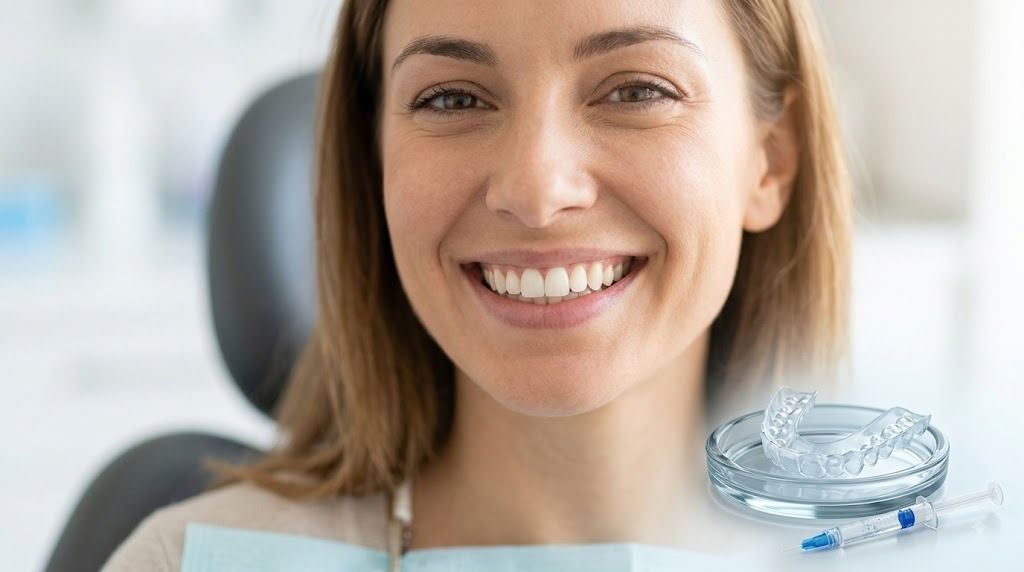
Teeth Whitening Options: What Actually Gets Your Teeth Whiter
Teeth Whitening Options: What Actually Gets Your Teeth Whiter
You catch a photo of yourself smiling and something feels off. Your teeth look duller than you remember and honestly it is bugging you more than you expected. That moment sends most people straight to the toothpaste aisle and then straight into confusion because every box on that shelf claims to be the best one.
Here is the thing. Not every whitening product does the same job and picking blindly can waste money or leave your teeth sensitive for days. This article walks through every real option strips trays kits and in office whitening so you know exactly what fits your teeth your budget and your patience level.
Why Teeth Stain in the First Place
Stains show up in two different ways and knowing which one you have changes everything about which product will actually work for you.
Surface Stains vs Deeper Discoloration
Surface stains sit on top of the enamel and come from things you eat and drink every day. These respond well to most whitening products because the stain never sank into the tooth. Deeper discoloration is a different story. It happens inside the tooth structure and can come from aging certain medications or an old injury to the tooth. Over the counter products barely touch this kind of staining. A dentist can tell you which type you are dealing with in a quick visual check.
Common Culprits: Coffee Wine and Aging
Coffee tea red wine and dark sauces are the usual suspects behind surface staining and most people already know it. Smoking adds another layer of yellowing that builds up slowly over years. And then there is simple aging. Enamel thins as you get older and the yellow dentin underneath starts showing through more. None of this means your teeth are unhealthy. It just means the whitening approach you choose needs to match the cause.
Teeth Whitening Options Explained
There are four main paths patients take when they want a brighter smile and each one works differently.
- Whitening toothpaste and rinses for light daily maintenance
- Over the counter whitening strips for a stronger at home boost
- At home whitening kits with custom trays from a dentist
- In office professional whitening for the fastest most controlled results
Over the Counter Whitening Strips
Whitening strips are thin flexible pieces coated with a peroxide based gel that you press onto your teeth for a set amount of time each day. Most kits use hydrogen peroxide at a lower concentration than what a dentist would use in office. They work fine on surface stains and a lot of people see a noticeable difference within a week or two. The tradeoff is that results are less predictable because strips do not always sit evenly against every tooth. Gaps crooked teeth and uneven pressure can leave some spots whiter than others.
Whitening Toothpaste and Rinses
Whitening toothpaste works through mild abrasives and sometimes a small amount of peroxide to lift surface stains during normal brushing. It will not bleach your teeth in the way strips or in office treatment can. Think of it as maintenance rather than a fix. If your teeth are already a shade you like whitening toothpaste can help keep them that way. If you are starting from noticeably yellow or stained teeth it will move slowly and the results are subtle at best.
At Home Whitening Kits with Trays
These kits usually come from a dentist and include a custom fitted tray built from an impression of your actual teeth. You fill the tray with a whitening gel typically carbamide peroxide or hydrogen peroxide and wear it for a set time each day or overnight depending on the strength. Because the tray fits your mouth exactly the gel touches every tooth evenly which strips often cannot match. Results tend to be more consistent than strips and closer to what you would get in a dental chair though it usually takes longer to reach that final shade.
In Office Professional Whitening
This is the fastest option by far. A dentist applies a stronger whitening gel directly to your teeth often with a protective barrier over your gums to prevent irritation and the process is done in a single visit. Many patients walk out several shades brighter the same day. It costs more than at home options but you are paying for speed control and a professional watching for any sensitivity issues along the way.
Professional Whitening vs Home Whitening
If you want a straight answer here it is. Professional in office whitening gets you noticeably whiter teeth in one visit using a stronger peroxide concentration under a dentists supervision while at home options take longer and use gentler formulas you manage yourself. Both can work well. The right choice depends on your timeline your sensitivity level and your budget.
Speed and Results
In office whitening can brighten teeth several shades in about an hour. At home trays from a dentist usually take one to two weeks of daily use to reach a similar shade. Over the counter strips can take even longer and the ceiling on how white they can get you is generally lower than professional treatment.
Cost Breakdown
| Option | Typical Cost Range | Time to Results |
|---|---|---|
| In office professional whitening | Higher one time cost | Same day |
| Dentist provided at home trays | Moderate cost | One to two weeks |
| Over the counter strips | Lower cost | Two to four weeks |
What a Dentist Visit Typically Costs
In office whitening costs more upfront because it includes the dentists time the professional grade gel and the safety measures used to protect your gums. Many patients see it as worth the price simply because of how fast and even the results turn out.
What Strips and Kits Typically Cost
Strips are the cheapest option and widely available without an appointment. Dentist provided trays cost more than strips but less than in office treatment and you keep the tray so future touch ups only require buying more gel.
Safety and Sensitivity Differences
Tooth sensitivity is the most common side effect no matter which method you choose. In office whitening uses a stronger gel but a dentist also applies protective measures for your gums and can adjust the treatment on the spot if you feel discomfort. At home products leave that judgment call to you which is why following the instructions closely matters so much. If sensitivity gets severe or does not fade within a day or two after treatment it is worth talking with your dentist.
Whitening Strips Comparison: What to Look For
Not all strips are built the same and a few details make a real difference in how well they work.
Peroxide Concentration Explained
The percentage of hydrogen peroxide or carbamide peroxide listed on the box tells you how strong the whitening agent is. Higher concentrations whiten faster but also raise the chance of gum irritation or tooth sensitivity. Lower concentrations are gentler and better suited for people with sensitive teeth even if it means a slower path to results.
Application Time and Wear
Some strips need thirty minutes a day while others are designed for shorter fifteen minute sessions. Longer wear time is not automatically better since it can increase sensitivity without necessarily boosting results any faster. Checking the ADA Seal of Acceptance on the packaging is a simple way to know the product has been reviewed for safety and effectiveness.
Best Teeth Whitening Method for Your Situation
The best teeth whitening option is the one that matches your sensitivity level your timeline and your budget rather than whatever product happens to be trending.
If You Have Sensitive Teeth
Lower concentration gels longer treatment windows spread over more days and a dentist provided desensitizing option are usually the safer route. In office whitening can still work for sensitive teeth but a dentist will often use a milder formula or apply a desensitizing gel first.
If You Want Fast Results Before an Event
In office whitening is built for this exact situation. A single appointment can get you several shades brighter before a wedding interview or big event without the days of waiting that at home products require.
If You Are on a Budget
Over the counter strips or whitening toothpaste offer a lower cost entry point. Results build slower and the final shade may not match professional treatment but for light surface staining they can still make a real difference.
What Happens During an In Office Whitening Visit
Walking into a whitening appointment without knowing what to expect can feel intimidating so here is the general flow.
Step by Step Walkthrough
- The dentist checks your teeth and gums to confirm you are a good candidate for whitening
- A barrier gel or shield is placed to protect your gums from the whitening agent
- The whitening gel is applied directly to the front surfaces of your teeth
- The gel stays on for a set amount of time and may be reapplied depending on the product used
- Your teeth are rinsed and the dentist checks the shade and discusses aftercare
The entire process usually takes about an hour and most patients feel little to no discomfort during the visit itself.
How to Keep Your Smile White After Whitening
Whitening is not permanent and the habits you keep afterward decide how long the results actually last.
Foods and Drinks That Cause Relapse
Coffee tea red wine and dark sauces will start staining teeth again the same way they did before. Teeth are especially porous in the first forty eight hours after whitening so it helps to go easy on these during that window.
Touch Up Habits That Work
Brushing twice a day rinsing after dark colored drinks and scheduling regular dental checkups all help maintain your results. A lot of patients keep their dentist provided tray and do a short touch up treatment every few months instead of starting over from scratch.
Why Choose Hermosa Medical Center for Teeth Whitening
Getting your teeth whitened somewhere that also handles the rest of your health care has real advantages. Hermosa Medical Center has served Chicago for more than thirty three years and keeps dentistry under the same roof as primary care internal medicine and other specialties which means you can get a routine health check and a whitening consultation without juggling two separate offices. Walk in convenience means you do not need to plan weeks ahead and the practice accepts Medicaid Medicare BCBS Aetna Cigna Tricare Wellcare and cash so cost does not have to be a guessing game before you even book. If cosmetic goals go beyond whitening the Hermosa Cosmetic team is available in the same building as well.
Book Your Teeth Whitening Consultation Today
If your smile has been bothering you in photos or just in the mirror it might be time to talk with a dentist about what will actually work for your teeth. Hermosa Medical Center is located at 2004 N Pulaski Rd Chicago IL 60639 and is open 9 AM to 5 PM. Call 773 772 8876 to schedule a visit or walk in during business hours to get started.
Frequently Asked Questions
How long does professional teeth whitening last?
Results from in office whitening typically last several months to a year depending on your diet and oral hygiene habits. Avoiding heavy staining foods and drinks and keeping up with regular brushing helps extend how long your teeth stay bright.
Are whitening strips actually safe for enamel?
Whitening strips that carry the ADA Seal of Acceptance are generally considered safe for enamel when used as directed. Overusing them or leaving them on longer than instructed can raise the risk of temporary sensitivity or gum irritation.
What is the difference between whitening toothpaste and real whitening treatment?
Whitening toothpaste uses mild abrasives and sometimes a small amount of peroxide to remove surface stains during brushing. Real whitening treatment whether at home trays or in office gel actually changes the shade of the tooth itself rather than just polishing the surface.
Can you whiten teeth with sensitive gums or teeth?
Yes though a dentist will often recommend a lower concentration gel or a desensitizing treatment beforehand. Talking with your dentist before starting any whitening product is the safest way to avoid unnecessary discomfort.
How much does teeth whitening cost at a dentist?
In office whitening costs more than over the counter products because it includes professional grade gel and a dentists supervision. Dentist provided at home trays usually fall in the middle price range between strips and a full in office visit.
Do at home whitening kits from a dentist work as well as in office treatment?
They can reach a similar final shade but it takes longer since the gel used at home is typically gentler than what is used in office. The custom fit tray also spreads the gel more evenly across your teeth than most drugstore strips.
How soon will I see results from whitening strips?
Many people notice a difference within a week or two of daily use though the exact timeline depends on the strength of the product and how stained the teeth were to begin with.
Can whitening fix yellow teeth from coffee and tea stains?
Surface stains from coffee and tea usually respond well to most whitening methods including strips and in office treatment. Deeper discoloration from aging or certain medications may need a conversation with your dentist about realistic expectations.
Is teeth whitening safe to do at home without a dentist?
Over the counter products approved by the ADA are generally safe when used exactly as directed. Skipping the instructions or combining multiple whitening products at once raises the risk of gum irritation and enamel sensitivity.
What should I avoid eating right after whitening treatment?
Teeth are more porous right after whitening so it helps to avoid coffee tea red wine and dark sauces for about forty eight hours. Sticking to lighter colored foods during that window helps your results last longer.