


5 Warning Signs You May Need a Root Canal
5 Warning Signs You May Need a Root Canal
You bite into a piece of bread and a jolt runs straight up your jaw. Or maybe you wake up at two in the morning because a tooth is throbbing on its own with nothing touching it. Most people push through moments like this for weeks. They tell themselves it will pass. Sometimes it does. Often it does not and the tooth is trying to tell you something serious is happening underneath the surface.
A lot of patients hear the words root canal and picture the worst case. In reality a root canal is usually the thing that saves your tooth instead of losing it. This article walks through the real signs that your tooth may need dental treatment what causes those signs and what happens once you come in to get checked.
What a Root Canal Actually Treats
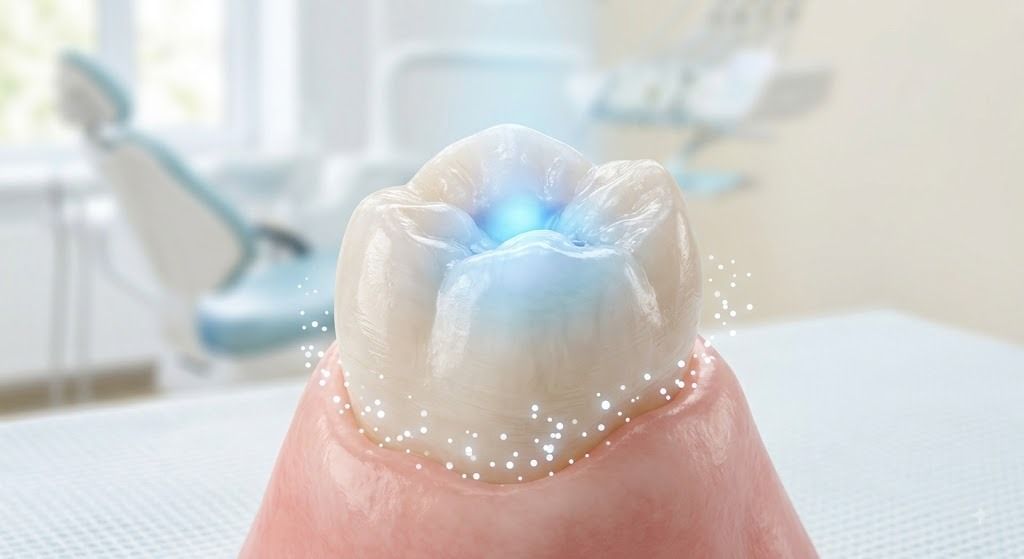
Inside every tooth sits a soft layer called the pulp. It is packed with nerves and blood vessels and it sits underneath the enamel and a harder layer called dentin. When that pulp becomes infected or inflamed from deep decay a crack or an old filling that has failed the tooth cannot heal itself the way skin or bone can.
Where the Infection Lives
The pulp runs from the crown of the tooth down through the root and into the bone. Bacteria can reach it through a cavity that has gone untreated a chip that exposed the inner layer or trauma from a fall or an accident. Once bacteria get inside there is no way for your body to flush it out on its own. The infection just keeps building.
Why the Tooth Reacts the Way It Does
Because the pulp is full of nerve endings any pressure from swelling inside that enclosed space causes real pain. Unlike a cut on your arm which has room to swell a tooth does not. The pressure has nowhere to go and that is exactly why an infected tooth can hurt so much more than the size of the problem might suggest.
5 Warning Signs You May Need a Root Canal
Some signs are obvious and some are easy to brush off. Here are the five that dentists see most often in patients who end up needing root canal treatment.
1. Persistent Tooth Pain That Does Not Let Up
This is usually the first thing people notice. The pain might start mild and come and go with chewing. Over days or weeks it becomes constant. It can sit deep in the tooth or spread toward the ear jaw or even the opposite side of your face. Pain that wakes you up at night is a strong signal that something inside the tooth needs attention rather than pain that only shows up when you bite down.
2. Sensitivity to Hot and Cold That Lingers
Everyone feels a quick zing from ice cream or hot coffee now and then. That is normal. What is not normal is sensitivity that lingers for thirty seconds or longer after the hot or cold is gone. That lingering ache is often a sign the nerve inside the tooth is inflamed or dying and it needs a dentist to look at it.
3. Swelling in the Gum or Face
When infection spreads past the root it can cause visible swelling in the gum around the tooth or in the face itself. The area might feel tender warm or even look slightly red. Facial swelling paired with tooth pain is one of the more urgent combinations and it usually means the infection has already moved into the surrounding tissue.
4. Discoloration of the Tooth
A tooth that has turned gray yellow or almost black compared to the teeth around it is often a dying or dead nerve. This can happen slowly over months after an injury even if the original injury did not seem serious at the time. Discoloration alone without pain still deserves an exam because damage can be happening quietly.
5. A Pimple or Bump on the Gum
A small bump on the gum near the affected tooth is called a dental abscess and it is one of the clearest signs of infection. It might drain fluid on its own and the pain may actually ease up for a while. That relief is misleading. The infection has not gone anywhere. It has just found a path to release pressure and it will keep causing damage until it is treated.
Signs of an Infected Tooth That Get Missed
A few signs slip past people because they seem like good news instead of bad news.
Why Pain That Suddenly Stops Can Mean the Nerve Has Died
Patients often assume that when tooth pain disappears the problem fixed itself. In many cases the opposite is true. When the nerve inside the tooth finally dies the pain signal stops because there is nothing left to send it. The infection is often still active in the bone around the root even though the tooth itself has gone quiet.
Bad Taste or Breath That Will Not Go Away
If brushing flossing and mouthwash are not solving a bad taste or odor coming from one specific area of your mouth that can point to an abscess draining slowly. This symptom gets dismissed as normal bad breath far too often when it is actually a sign of active infection.
What Happens If You Wait
Putting off treatment does not make the infection go away. It gives it more time to spread.
How a Small Infection Can Spread to the Jaw or Bloodstream
An untreated dental infection can move from the tooth into the jawbone and from there into deeper tissue in the face and neck. In rare but serious cases infection can enter the bloodstream. Healthcare providers commonly recommend treating dental infections early precisely because the mouth sits so close to major blood vessels and airways and your primary care provider can help monitor any broader health impact alongside your dentist.
When Urgent Care Becomes the Only Option
Severe facial swelling fever or difficulty swallowing or breathing are signs that a dental infection has become a medical emergency. At that point a same day visit to urgent care is not optional. Hermosa Medical Center offers walk in urgent care alongside dentistry so patients are never stuck choosing between the two.
How Dentists Determine If a Root Canal Is Needed
Diagnosis is not guesswork. Dentists rely on a few specific checks to confirm whether the pulp is infected or damaged beyond repair.
X Ray and Imaging Findings
An X ray shows what the eye cannot see. It reveals decay that has reached the pulp bone loss around the root tip and the shape of the root canals themselves. This image is often what confirms a root canal is necessary rather than a filling being enough.
The Cold Test and Bite Test Explained
A cold test applies a small amount of cold to the tooth to see how the nerve responds. A healthy tooth reacts briefly and settles. An infected or dying tooth either overreacts with lingering pain or does not respond at all. A bite test checks whether pressure on the tooth triggers pain which can point to inflammation or a crack that has reached the pulp.
What to Expect During a Root Canal Procedure
Modern root canal treatment is far more comfortable than its reputation suggests. Here is how it generally goes.
| Step | What Happens |
|---|---|
| 1. Numbing and Access | The area is numbed and a small opening is made in the top of the tooth to reach the pulp chamber |
| 2. Cleaning Out the Infected Pulp | The infected or damaged soft tissue inside the tooth is removed and the canals are cleaned and shaped |
| 3. Sealing and Protecting the Tooth | The cleaned space is filled and sealed to prevent bacteria from getting back in |
| 4. Crown Placement if Needed | A crown is often placed on top to restore strength since a tooth that has had root canal therapy can become more brittle over time |
Most patients describe the actual procedure as feeling similar to getting a deep filling once the area is numb.
Root Canal vs Tooth Extraction Which Saves More
Some patients ask why not just pull the tooth and be done with it. It is a fair question and the answer usually comes down to long term function.
| Factor | Root Canal | Extraction |
|---|---|---|
| Keeps natural tooth | Yes | No |
| Chewing function | Restored close to normal | Requires bridge or implant to restore |
| Long term cost | Often lower once replacement teeth are factored in | Extraction is cheaper upfront but replacement adds cost later |
| Healing time | A few days of mild soreness | Longer socket healing plus additional procedures if replacing the tooth |
| Impact on nearby teeth | Minimal | Neighboring teeth can shift over time |
Why Dentists Try to Save the Natural Tooth First
Nothing replaces a natural tooth as well as the tooth itself. Saving it with a root canal keeps your bite jaw alignment and chewing pressure working the way they were designed to. Extraction is sometimes unavoidable but it is generally treated as a last resort rather than a first choice.
Root Canal Recovery What Normal Healing Feels Like
Recovery is usually simple and most people are back to normal eating within a few days.
Mild Soreness vs Signs Something Is Wrong
Some tenderness around the tooth and gum for two to three days is expected especially when chewing on that side. What is not expected is severe pain that gets worse fever or swelling that spreads. Those symptoms mean you should be seen again rather than waiting it out.
Aftercare Tips for the First 48 Hours
Stick to softer foods for the first day or two. Avoid chewing directly on the treated tooth until any temporary filling or crown is fully set. Over the counter pain relief is usually enough to manage soreness and the on site pharmacy makes it easy to pick up what you need on the same visit. Most patients are comfortable returning to their normal routine within a couple of days.
Why Chicago Patients Choose Hermosa Medical Center for Dental Care
Dealing with tooth pain is stressful enough without also juggling referrals and separate appointments across town.
Walk In Dentistry Alongside Urgent Care Under One Roof
Hermosa Medical Center has been part of the Chicago community for more than 33 years offering Primary Care Internal Medicine Urgent Care Cardiology Gynecology Psychiatry Allergy and Immunotherapy MRI and X Ray Dentistry STD Screenings Pharmacy and Cosmetic services all in one building. If a tooth infection needs imaging or if swelling raises broader health concerns those services are available on site instead of sending you somewhere else.
Accepts Medicaid Medicare BCBS Aetna Cigna Tricare Wellcare and Cash
Cost should not be the reason someone waits until an infection becomes an emergency. Hermosa accepts Medicaid Medicare BCBS Aetna Cigna Tricare Wellcare and cash payment so patients can get evaluated without wondering first whether they can afford to walk through the door.
Frequently Asked Questions
How do I know if I need a root canal or just a filling?
A filling works when decay has not reached the pulp inside the tooth. Once pain lingers after hot or cold or the decay has gone deep an X ray and exam will show whether a filling is still enough or whether the infection has already reached the nerve.
What does an infected tooth feel like?
Most patients describe a deep throbbing ache that gets worse with pressure or chewing. Pain can radiate toward the jaw ear or side of the face and it often feels different from normal tooth sensitivity because it does not fully go away between meals.
Can a root canal be done in one visit?
Many cases are completed in a single visit especially when the infection is caught early. More complex cases involving heavy infection or curved canals sometimes need a second visit to fully clean and seal the tooth.
Is a root canal painful?
The procedure itself is done under local numbing so patients generally feel pressure rather than pain. Most of the discomfort people associate with root canals actually comes from the infection beforehand rather than the treatment itself.
How much does a root canal cost without insurance?
Cost varies depending on which tooth is treated and whether a crown is needed afterward. Hermosa accepts cash payment along with Medicaid Medicare BCBS Aetna Cigna Tricare and Wellcare so patients can ask about pricing directly before treatment begins.
What happens if I ignore root canal symptoms?
The infection does not resolve on its own. Left untreated it can spread into the jawbone and surrounding tissue and in some cases lead to tooth loss or a more serious medical infection that needs emergency care.
How long does root canal recovery take?
Most patients feel mild soreness for two to three days and are back to eating normally shortly after. Full healing of the surrounding tissue can take a bit longer but daily activities are rarely affected for more than a couple of days.
Can a tooth still get infected after a root canal?
It is uncommon but possible if bacteria find a new way into the tooth or if a small canal was missed during the original treatment. Ongoing pain swelling or a returning bump on the gum after treatment should be checked right away.
Do I need a crown after a root canal?
Back teeth that handle heavy chewing pressure usually need a crown to prevent cracking since the tooth structure can become more brittle after treatment. Front teeth sometimes only need a filling depending on how much of the tooth remains.
Does Hermosa Medical Center offer same day root canal appointments?
Hermosa offers walk in dental care at the Pulaski Road location so patients dealing with tooth pain can often be seen the same day rather than waiting weeks for an opening.
Schedule Your Root Canal Consultation at Hermosa Medical Center
Tooth pain that lingers is not something to sit with for weeks hoping it fades. If any of the signs above sound familiar the sooner a dentist looks at the tooth the more likely it can be saved with a straightforward root canal instead of a bigger procedure down the road. Hermosa Medical Center offers walk in Dentistry alongside Urgent Care Primary Care and an on site Pharmacy at 2004 N Pulaski Rd Chicago IL 60639. Call 773 772 8876 or walk in today between 9 AM and 5 PM to get checked.
