


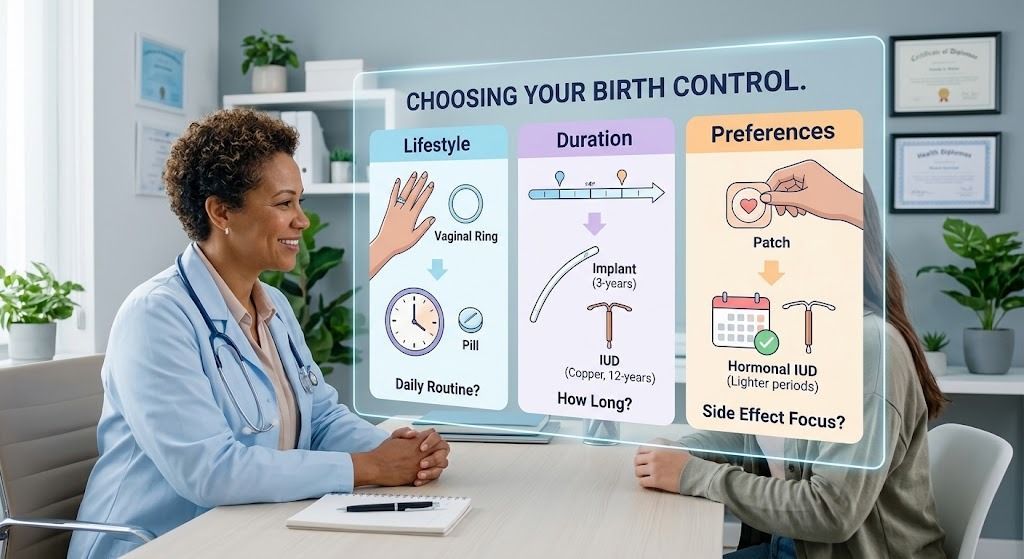
Birth Control Options for Women: How to Choose the Right Method
Birth Control Options for Women: How to Choose the Right Method
A patient sat in our office last month holding a printout with six different birth control names circled and crossed out twice. She wasn't confused about wanting birth control. She was confused about which one made sense for her. That's the situation most women land in at some point. There are pills and patches and rings and implants and shots and devices that sit inside the uterus for years at a time and every friend or forum post seems to have a different opinion about which one is "the best."
Here's the thing though. There is no single best method. There's a method that fits your body, your schedule, your health history and what you want out of it right now, whether that's preventing pregnancy for a few months or for the next decade. This guide walks through every real option, what each one actually involves, the side effects worth knowing about and how to think through the decision without getting lost in the noise. And if you'd rather skip the research and just talk it through with someone, our gynecology team can walk you through it in a single visit.
What Birth Control Actually Does
Birth control works by stopping one of three things from happening. It can stop ovulation so there's no egg released. It can block sperm from reaching an egg in the first place. Or it can prevent a fertilized egg from implanting in the uterus. Hormonal methods like the pill or the shot usually work by stopping ovulation. Barrier methods like condoms work by physically blocking sperm. Devices like the copper IUD work in a way that makes the uterus a hostile environment for sperm, no hormones involved at all.
Knowing which mechanism a method uses matters because it tells you what kind of side effects to expect and how quickly fertility returns once you stop using it.
Types of Birth Control Methods
Birth control generally falls into five buckets: barrier methods, hormonal methods, long acting reversible contraception known as LARC, permanent methods and fertility awareness. Each one comes with its own tradeoffs around effectiveness, convenience and what your body has to deal with.
Barrier Methods
Barrier methods physically stop sperm from reaching an egg. They don't touch your hormones at all, which is why a lot of women choose them even alongside another method, just for the added STI protection.
Condoms
External condoms go over the penis and internal condoms go inside the vagina. Used correctly every single time, they're around 98 percent effective. Used the way people actually use them in real life, that number drops closer to 85 percent. They're also the only birth control method that helps protect against sexually transmitted infections, which is why a lot of providers recommend pairing them with another method rather than relying on them alone. If it's been a while since your last screening, our STI testing services are available as a walk in.
Diaphragm and Cervical Cap
Both of these are small silicone devices you insert before sex to cover the cervix. They're usually used with spermicide and need to be fitted by a provider first. Typical use effectiveness sits around 88 percent for the diaphragm, a bit lower for the cervical cap in women who've given birth before.
Sponge and Spermicide
The sponge is a soft foam disc with spermicide built in. It's sold over the counter and doesn't need a prescription. On its own it's one of the less effective options, somewhere in the 76 to 88 percent range depending on prior pregnancy history. Spermicide alone is even less reliable and works best combined with another barrier method.
Hormonal Methods
Hormonal birth control uses estrogen progestin or progestin alone to stop ovulation and thicken cervical mucus. These are short acting, meaning you have to keep up with them daily weekly or monthly depending on the method.
Birth Control Pills
Oral contraception is still the most commonly used hormonal method. There are combination pills with estrogen and progestin and progestin only pills sometimes called the mini pill for women who can't take estrogen for medical reasons. Perfect use puts effectiveness at over 99 percent. Real world use, where a pill gets missed here and there, brings that down to around 91 percent. Common side effects include nausea in the first few weeks, spotting between periods and breast tenderness, most of which settle down after two or three cycles.
Birth Control Patch
The patch releases hormones through the skin and gets replaced weekly for three weeks with a patch free week to allow a period. It works the same way the combination pill does but takes the daily memory factor out of the equation.
Vaginal Ring
The flexible ring sits inside the vagina and releases hormones locally, replaced monthly or in some newer versions left in place for up to a year. Some women prefer it because they don't have to think about it every day and it doesn't involve a patch showing on the skin.
Birth Control Shot
The shot goes into the upper arm or hip every three months and only contains progestin, making it an option for women who can't take estrogen. One tradeoff worth knowing is that fertility can take several months to return to normal after stopping, longer than with pills or the ring.
Long Acting Reversible Contraception
LARC methods are the most effective reversible options available, mainly because they take user error out of the picture entirely. Once it's in place, there's nothing to remember day to day.
IUD: Hormonal vs Copper
An intrauterine device sits inside the uterus and can stay there for anywhere from three to twelve years depending on the type. Hormonal IUDs release a small amount of progestin locally and often make periods lighter or stop them altogether. The copper IUD is hormone free and works as a spermicide of sorts but it can make periods heavier and more crampy, especially in the first few months.
| Feature | Hormonal IUD | Copper IUD |
|---|---|---|
| Hormones | Yes low dose progestin | None |
| Lasts | 3 to 8 years depending on brand | Up to 12 years |
| Effect on periods | Often lighter or stopped | Often heavier |
| Can be used as emergency contraception | No | Yes within 5 days |
| Return to fertility | Quick after removal | Quick after removal |
Birth Control Implant
The contraceptive implant is a small flexible rod placed under the skin of the upper arm. It releases progestin and lasts up to three years. It's over 99 percent effective and one of the few methods where user error basically isn't a factor. Irregular bleeding is the most common reason women discontinue it early.
Permanent Methods
Sterilization is meant for people who are certain they don't want future pregnancies. It should be treated as permanent even though reversal procedures exist, because they aren't always successful.
Tubal Ligation
Tubal ligation closes or blocks the fallopian tubes so eggs can't reach the uterus. It's a surgical procedure typically done under general anesthesia and is considered permanent.
Vasectomy for Partners
For couples where the male partner is the one pursuing permanent contraception, a vasectomy is a simpler outpatient procedure than tubal ligation, with a shorter recovery. It's worth mentioning as an option during any conversation about long term family planning decisions.
Fertility Awareness Methods
Fertility awareness means tracking your cycle, basal body temperature and cervical mucus to figure out which days you are fertile and avoiding unprotected sex on those days. Done carefully it can be around 76 to 88 percent effective but it takes consistency and a predictable cycle and it offers no protection against STIs.
Emergency Contraception
Emergency contraceptive pills, sometimes known by brand name, can lower the chance of pregnancy if taken within a few days of unprotected sex, with effectiveness dropping the longer you wait. The copper IUD placed within five days works even better as emergency contraception and then continues working as a long term method afterward.
IUD vs Pill: Side by Side Comparison
Quick answer: The IUD is a set it and forget it device placed once and effective for years with no daily routine, while the pill needs to be taken at roughly the same time every day and offers more control if you want to stop or switch quickly.
| Factor | IUD | Pill |
|---|---|---|
| Effectiveness typical use | Over 99 percent | Around 91 percent |
| Daily action needed | None | Yes |
| Duration | 3 to 12 years | Refilled monthly |
| Insertion or prescription | In office procedure | Prescription only |
| Reversibility | Removed anytime by a provider | Stop anytime on your own |
| Effect on periods | Varies by type | Usually regulated and lighter |
| Upfront visit needed | Yes for placement | Yes for prescription |
Birth Control Side Effects: What to Expect by Method
Every hormonal method can cause some combination of nausea, headaches, breast tenderness or mood changes in the first few months while your body adjusts. Copper IUDs tend to bring heavier periods and cramping rather than hormonal side effects. Implants and hormonal IUDs commonly cause irregular spotting for the first three to six months before things settle into a lighter or absent period. The shot is the one method associated with possible bone density changes with long term use, which is something to bring up with a provider if you plan to use it for several years. None of these side effects are universal. Plenty of women notice almost nothing beyond a lighter period.
How to Pick the Right Method for Your Body and Life
There isn't a formula for this but a few honest questions tend to point people in the right direction.
If You Want Low Maintenance
An IUD or implant removes the daily decision entirely. Once it's placed you genuinely don't have to think about it again until it's time for removal.
If You're Not Ready for Kids Yet But Want It Reversible
Pills, the patch, the ring or a hormonal IUD are all fully reversible methods that don't affect long term fertility once stopped.
If You're Done Having Kids
Permanent methods like tubal ligation or a vasectomy for a partner, make sense once you're confident about not wanting future pregnancies. A long acting IUD or implant is also a reasonable middle ground if you want something reversible just in case plans change.
If You Also Want STI Protection
No hormonal method or IUD protects against sexually transmitted infections. Condoms are the only method that does, so pairing one with another form of birth control gives you both pregnancy prevention and a layer of STI protection.
Does Birth Control Protect Against STIs
Most birth control methods, including the pill, IUD, implant, patch, ring and shot, do not provide protection against sexually transmitted infections. Condoms, both external and internal, are currently the only birth control method that reduces the risk of STI transmission. If STI protection matters to you, condoms should be part of the plan regardless of what other method you're using.
Common Myths About Birth Control
A lot of what people believe about birth control comes from secondhand stories rather than how these methods actually work. Birth control pills don't cause infertility down the road, fertility typically returns within a cycle or two of stopping. IUDs don't wander around inside the body or get lost, they stay anchored in place until a provider removes them. And weight gain, while it does happen for some women on certain hormonal methods, isn't a guaranteed side effect and varies a lot person to person.
Why Choose Hermosa Medical Center for Birth Control Care
Picking a method is only half the equation. Getting it fitted, prescribed or placed by someone who knows your full health picture matters just as much. At Hermosa we've been part of the Chicago community for over 33 years and our gynecology department handles everything from the initial conversation to IUD placement to follow up care, all without needing a referral. Because we're a multi specialty walk in center, if bloodwork or other testing comes up during your visit, our on site pharmacy and internal medicine team are right down the hall, not a separate appointment across town. We also accept Medicaid, Medicare, BCBS, Aetna, Cigna, Tricare, Wellcare and cash pay, so cost doesn't have to be a guessing game before you even walk in. And if something comes up unexpectedly outside our regular hours planning, our urgent care is there as a backup option too.
Schedule Your Birth Control Consultation Today
If you're ready to talk through options with someone who can look at your actual health history instead of a general list, walk in or call us at 773 772 8876. Hermosa Medical Center is located at 2004 N Pulaski Rd Chicago IL 60639, open daily from 9 AM to 5 PM. You can also book an appointment online ahead of time if you'd rather skip the wait.
Frequently Asked Questions
What is the most effective birth control method?
IUDs and the implant are the most effective reversible methods available, both over 99 percent effective because there's no daily action required to keep them working. Permanent methods like tubal ligation are even more effective but aren't reversible.
Can I switch birth control methods anytime?
Yes in most cases. Some methods need a short overlap period when switching to avoid a gap in protection, so it's worth checking with a provider before stopping one method and starting another.
Does birth control cause weight gain?
For most methods research doesn't show a consistent link to weight gain. The shot is the one exception some women report noticing changes with but it varies a lot from person to person.
How soon does birth control start working?
It depends on the method and when in your cycle you start it. Pills started within five days of your period typically protect right away, otherwise most providers recommend a backup method for the first week.
What birth control has the least side effects?
The copper IUD is hormone free so it avoids hormonal side effects entirely, though it can affect period flow and cramping. For hormone free options without a device, condoms and diaphragms are the other route.
Can I get pregnant right after stopping birth control?
With pills, the patch, the ring and IUDs, fertility usually returns within a cycle or two. The shot is the exception, it can take several months longer for ovulation to return to normal.
Is the IUD painful to get inserted?
Most women describe a sharp cramp during insertion that passes within a few minutes, followed by mild cramping for a day or two after. Providers can discuss pain management options ahead of the appointment if you're concerned.
What is the difference between the pill and the patch?
Both deliver similar hormones and work the same way, the difference is just how you take them. The pill is a daily tablet while the patch is changed weekly and absorbed through the skin, which some women find easier to remember.
Can teenagers or young women use IUDs?
Yes, IUDs are considered safe and effective for teenagers and young women and major health organizations including ACOG support them as a first line option regardless of age or whether someone has had children before.
Does insurance cover birth control?
Most insurance plans including Medicaid and Medicare cover birth control with little to no out of pocket cost and Hermosa also accepts BCBS, Aetna, Cigna, Tricare and cash pay for patients without coverage.