


Anxiety vs Stress How to Tell the Difference and When to See a Doctor
Anxiety vs Stress How to Tell the Difference and When to See a Doctor
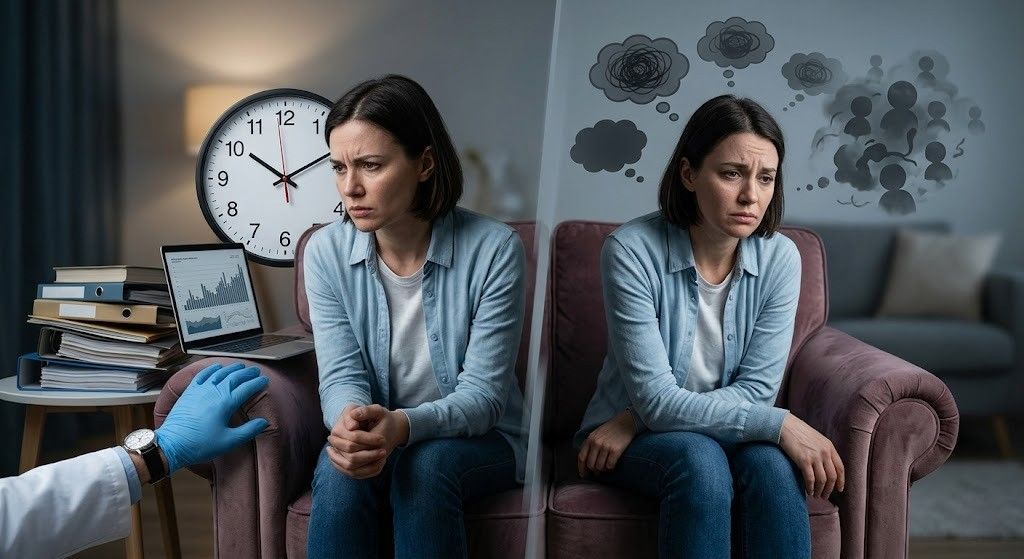
Your heart is pounding before a big presentation. Your stomach is in knots the night before a deadline. That feeling fades once the moment passes and life goes back to normal.
Now picture the opposite. Your heart pounds for no clear reason at all. You cannot pin down what is bothering you but the worry sticks around anyway. Days pass and it does not let up.
That difference right there is what this article is about. A lot of people spend months wondering if what they feel is just stress or something more. That uncertainty on its own can wear a person down. Below you will find the real signals that separate everyday stress from an anxiety disorder and what to actually do once you notice them.
What Everyone Experiences Stress Explained
What Stress Is
Stress is your body doing exactly what it is built to do. Something demanding shows up. Your body responds with a burst of hormones like cortisol and adrenaline. Your heart rate climbs and your muscles tense and your focus sharpens. This is the same stress response your ancestors relied on to react fast to danger.
Here is the thing though. Stress is tied to something specific. A work deadline. A fight with a family member. Money problems. Once that stressor gets resolved or you get some distance from it your body calms back down. That is a normal part of life and honestly it is not something you need to fix.
Common Everyday Triggers
Most stress traces back to a handful of familiar sources. Job pressure and long hours. Family responsibilities. Financial strain. Health scares for yourself or someone you love. Big life changes like moving or starting a new job. None of that means something is wrong with you. It means you are human and life is asking a lot of you right now.
What Anxiety Is and How It Differs From Stress
The Core Difference Between Stress and Anxiety
Stress is your response to a clear outside pressure and it usually eases once that pressure lifts. Anxiety is a persistent feeling of worry or fear that often shows up without a clear reason and tends to stick around even after the original stressor is long gone.
That is the short version. Stress points at something. Anxiety just sits there.
How Anxiety Disorders Develop
Anxiety does not always come out of nowhere. Chronic stress that goes unmanaged for a long stretch can wear down the nervous system to the point where it starts reacting even when nothing is actively threatening you. Genetics play a role too. So does brain chemistry and life experience.
An anxiety disorder is diagnosed when that persistent worry becomes excessive and hard to control and starts interfering with daily life. Generalized anxiety disorder is one form of it. Panic attacks are another. Social anxiety disorder or social phobia shows up specifically around social situations. There is a real difference between having an anxious week and living with a mental health condition and that difference usually comes down to how long it lasts and how much it interferes.
Symptoms of Anxiety vs Stress Side by Side
Physical Symptoms Comparison
Anxiety and stress can look a lot alike on the outside. Both can raise your heart rate and tighten your chest and disrupt your sleep. The table below breaks down where they tend to differ.
| Symptom | Stress | Anxiety |
|---|---|---|
| Trigger | Tied to a specific event or deadline | Often no clear trigger |
| Duration | Fades once the stressor ends | Lingers for weeks or months |
| Heart rate | Rises during the stressful moment | Can spike with no obvious cause |
| Sleep | Trouble sleeping before a big event | Ongoing trouble sleeping most nights |
| Shortness of breath | Occasional during high pressure moments | Can happen during panic attacks with no warning |
| Muscle tension | Comes and goes with the stressor | Often constant |
Emotional and Mental Symptoms Comparison
Stress usually feels like pressure. You feel overwhelmed and a little frazzled and maybe short tempered. But there is a sense that once this one thing is over you will feel like yourself again.
Anxiety feels different. It is a persistent feeling of worry that does not attach itself to one single cause. People with anxiety disorders often describe a sense of dread that hangs around even on a day when nothing bad is actually happening. Avoidance creeps in too. You start skipping things. Social events. Phone calls. Situations that make you anxious even if you cannot explain exactly why.
Signs of an Anxiety Disorder You Shouldnt Ignore
When Worry Becomes Constant
Everyone worries sometimes. That is normal. What is different with an anxiety disorder is that the worry does not turn off. It follows you from one thing to the next even after the original concern gets resolved.
When Symptoms Interfere With Daily Life
This is one of the clearest signs something has crossed into a mental health condition and away from ordinary stress. Are you avoiding work tasks. Skipping social situations. Struggling to concentrate. Snapping at people you care about for no real reason. When anxiety starts shaping your choices instead of just showing up as background noise it becomes a problem worth addressing.
Physical Warning Signs That Need Medical Attention
A pounding heart. Shortness of breath. Chest tightness. Stomach issues that will not quit. These symptoms deserve attention on their own merit because anxiety can mimic other physical health conditions and sometimes it is genuinely hard to tell the difference without a professional evaluation.
Difference Between Stress and Anxiety in the Body
How Stress Hormones Work Short Term
When a stressor shows up your body releases cortisol and adrenaline in a short controlled burst. That burst is meant to help you handle the moment in front of you. Once the moment passes your hormone levels come back down and your body settles.
Why Anxiety Lingers After the Stressor Is Gone
With anxiety that off switch does not always work the way it should. The body stays in a heightened state well past the point where anything is actually happening. Over time that can affect sleep and digestion and even your cardiovascular system. This is part of why anxiety and physical health are so closely connected and why doctors take both seriously at the same time.
When Anxiety Needs Treatment
The Line Between Normal Worry and a Mental Health Condition
Anxiety needs treatment when the worry sticks around most days for six months or longer and starts getting in the way of work relationships or basic daily functioning. That is the general guideline used in the Diagnostic and Statistical Manual of Mental Disorders which doctors reference when they evaluate generalized anxiety disorder. If your stress and anxiety symptoms have lasted that long and are not improving on their own it is a sign to bring it up with a provider rather than waiting it out.
How Long Symptoms Have Lasted Matters
Short term anxiety tied to a real event like a job loss or a health scare is common and often eases on its own within a few weeks. But when the anxiety keeps going long after the original stressor has passed or shows up again and again with no clear pattern that is a different situation. Duration is one of the biggest clues doctors use to figure out whether they are looking at stress or an anxiety disorder.
When to See a Doctor About Anxiety
If your anxiety has lasted most days for weeks or months and it is starting to interfere with your sleep your relationships or your ability to function at work it is time to talk to your doctor. You do not need to wait until things feel unbearable. A primary care doctor or family medicine doctor can help you sort out whether what you are feeling is anxiety or something else entirely.
Signs Its Time to Talk to Your Doctor
- Worry that sticks around most days for six months or longer
- Physical symptoms like a racing heart or shortness of breath with no clear reason
- Avoiding social situations phone calls or responsibilities you used to handle fine
- Trouble sleeping that has lasted more than a few weeks
- Panic attacks that come on suddenly and feel hard to control
- Anxiety that is affecting your work performance or relationships
What Happens If You Wait Too Long
Anxiety that goes untreated does not usually just fade away on its own. It tends to get worse over time and can start affecting physical health conditions like blood pressure and digestion and sleep quality. The good news is anxiety disorders are highly treatable once you get a proper evaluation. Waiting only delays relief that is honestly within reach.
What a Primary Care Doctor Does for Anxiety and Stress
How Doctors Diagnose Anxiety Disorders
A conversation with your provider is usually where this starts. Expect questions about how long you have felt this way and what symptoms show up and how much they are affecting daily life. Your doctor may also run bloodwork to rule out physical conditions like thyroid issues that can mimic anxiety symptoms. This step matters because anxiety and certain physical health conditions can look almost identical from the outside.
Treatment Options a Primary Care Doctor Can Offer
Depending on what your evaluation shows your doctor may recommend psychotherapy such as cognitive behavioral therapy or CBT which is one of the most well established and effective treatment options for anxiety disorders. Lifestyle changes around sleep and stress management often come up too.
When Medication Is Prescribed
For some patients a primary care doctor may prescribe medication to help manage symptoms while therapy takes effect. This is a decision made together based on how severe symptoms are and how much they are interfering with daily life.
When Referral to Behavioral Health Is Needed
If symptoms are more complex or are not responding to initial treatment your doctor may refer you to a mental health professional or behavioral health specialist for a deeper level of care. At Hermosa this can happen through our Psychiatry services without having to start your search somewhere else.
Stress Management Techniques That Actually Help
Daily Habits That Lower Stress
Regular movement and consistent sleep and a few minutes of quiet time each day genuinely help lower everyday stress levels. So does talking to someone you trust instead of carrying everything alone. None of this is groundbreaking advice but that does not make it any less true.
When Self Care Isnt Enough
Here is the part most people miss. Self care is great for everyday stress but it is not a treatment for an anxiety disorder. If you have been trying to manage things on your own for months with no real improvement that is not a personal failure. It is a sign the situation calls for professional evaluation instead of another breathing exercise.
Why Choose Hermosa Medical Center for Anxiety and Stress Care
Primary Care and Psychiatry Under One Roof
Hermosa Medical Center has served the Chicago community for more than 33 years and one thing that sets our center apart is having Primary Care and Psychiatry available in the same building. That means you can start with a conversation with your family medicine doctor and if a referral to behavioral health makes sense that next step is right down the hall instead of a whole separate search.
We also keep an on site pharmacy and lab and imaging department which means if bloodwork or medication is part of your care plan it can happen without extra stops across the city.
Walk In Access When Youre Ready to Talk to Someone
We understand that deciding to talk to a doctor about anxiety is not always something you can plan around. That is part of why Hermosa operates as a walk in center from 9 AM to 5 PM. If your symptoms are also raising concern about your physical health such as chest tightness or a pounding heart our Urgent Care team can help rule out anything urgent the same day. And because anxiety symptoms can sometimes overlap with heart related concerns our Cardiology team is also on site if that evaluation becomes necessary.
We accept Medicaid and Medicare and BCBS and Aetna and Cigna and Tricare and Wellcare along with cash so cost does not have to be the reason you put this off.
Frequently Asked Questions
How do I know if it is anxiety or just stress
The biggest clue is what happens once the stressor goes away. Stress tends to fade once the deadline passes or the situation resolves. Anxiety often sticks around well past that point and can show up even when nothing specific is going on.
Can stress turn into an anxiety disorder
Chronic stress that goes unmanaged for a long time can raise the risk of developing an anxiety disorder. It is not a guarantee and plenty of people handle high stress without developing anxiety but ongoing unmanaged stress is a real risk factor worth taking seriously.
What are the physical signs of an anxiety disorder
Common physical signs include a pounding heart shortness of breath muscle tension stomach issues and trouble sleeping. These symptoms can also overlap with other physical conditions which is exactly why a professional evaluation matters.
How long should anxiety symptoms last before seeing a doctor
A general guideline used by mental health professionals is symptoms that persist most days for six months or longer. That said if symptoms are already interfering with your daily life there is no reason to wait that long before reaching out.
What kind of doctor treats anxiety
A primary care doctor or family medicine doctor is usually the right first stop. They can evaluate your symptoms rule out physical causes and refer you to psychiatry or another mental health professional if a deeper level of care is needed.
Can a primary care doctor prescribe anxiety medication
Yes in many cases a primary care doctor can prescribe medication to help manage anxiety symptoms. For more complex cases they may refer you to a psychiatrist for specialized treatment.
Is it normal to feel anxious every day
Occasional nerves are part of life. What is different with an anxiety disorder is worry that is persistent and hard to control and shows up regardless of what is actually happening around you.
What happens at a doctors visit for anxiety
Expect a conversation about your symptoms and how long they have lasted and how they are affecting your life. Your doctor may also order bloodwork to rule out physical conditions like thyroid problems that can cause similar symptoms.
Can anxiety cause physical health problems if left untreated
Yes untreated anxiety can affect sleep digestion and cardiovascular health over time. This is part of why doctors treat anxiety as a whole body concern and not just a mental health issue on its own.
Do I need a referral to see a psychiatrist for anxiety
Not always. At Hermosa you can start with a primary care visit or walk in appointment and if psychiatric care is the right next step that referral can happen right within our center.
Book an Appointment With Hermosa Medical Center
If any of this sounds familiar it might be time for a conversation with your doctor. You do not have to have it all figured out first. Hermosa Medical Center has supported the Chicago community for more than 33 years with primary care and behavioral health and urgent care all under one roof at 2004 N Pulaski Rd Chicago IL 60639. Walk in anytime between 9 AM and 5 PM or call us at 773 772 8876 to schedule a visit. If it turns out you need help managing stress or you are ready to talk to your doctor about anxiety we are here and ready to listen.