


Managing Chronic Illness at Home: A Practical Guide to Staying Healthy Every Day
Managing Chronic Illness at Home: A Practical Guide to Staying Healthy Every Day
`
Living with a chronic condition changes the shape of your day. Not in some dramatic movie way. In small ways. A pill bottle on the counter. A reminder on your phone. A blood pressure cuff you now know how to use without thinking twice.
Here is the thing. Most people who get a diagnosis like diabetes or high blood pressure are not handed a manual. They get a prescription and a follow up appointment and then they go home and figure it out. That gap between the doctor's office and daily life is where a lot of patients in the Hermosa neighborhood and across Chicago get stuck. They wonder if they are doing this right. They wonder what counts as normal and what counts as a problem.
This article walks through what managing chronic illness at home actually looks like day to day. We will cover building a routine that does not fall apart by week two. Medication adherence and why it matters more than people think. Home monitoring for diabetes and blood pressure. Lifestyle habits that genuinely move the needle. And the warning signs that mean it is time to stop managing things on your own and call someone.
What Does Managing Chronic Illness at Home Mean?
Managing chronic illness at home means taking the daily steps that keep a long term health condition stable without needing a hospital stay or constant clinical supervision. For most people this includes taking medication as prescribed. Tracking symptoms or vital signs. Eating in a way that supports the condition. Staying active within safe limits. And keeping a regular relationship with a primary care provider who adjusts the plan as things change.
It is not the same as managing alone. That distinction matters and it gets lost a lot. Home health and home care services exist precisely because chronic conditions like diabetes, heart disease, arthritis and chronic pain require ongoing attention. Not a one time fix. A personalized care plan built with your healthcare provider gives you the structure. What happens between visits is up to you.
Take Maria for example. She is 58 and was diagnosed with type 2 diabetes three years ago. For the first six months she checked her blood sugar maybe twice a week. Inconsistent. Then her A1C came back higher than expected and her doctor sat her down and explained that the gaps in her routine were the actual problem. Not her diet. Not her medication dose. The gaps. Once she started checking daily and logging it on her phone, her numbers stabilized within two months.
Building a Daily Care Routine for Chronic Conditions
A routine sounds boring. It is also the single biggest factor separating people who manage their condition well from people who bounce between flare ups and ER visits.
Mornings are a good place to start. Check your vitals if your condition calls for it. Take your morning medication with food if that is what your pharmacist recommended. Glance at your symptom log from the day before. None of this takes more than ten minutes once it becomes habit.
Evenings matter too, in a different way. This is when a lot of people review how the day went. Did you eat on schedule? Did stress spike? Did you skip a dose because you were rushing out the door? Writing it down, even briefly, builds a pattern you and your care team can actually use.
A few tools make this easier:
-
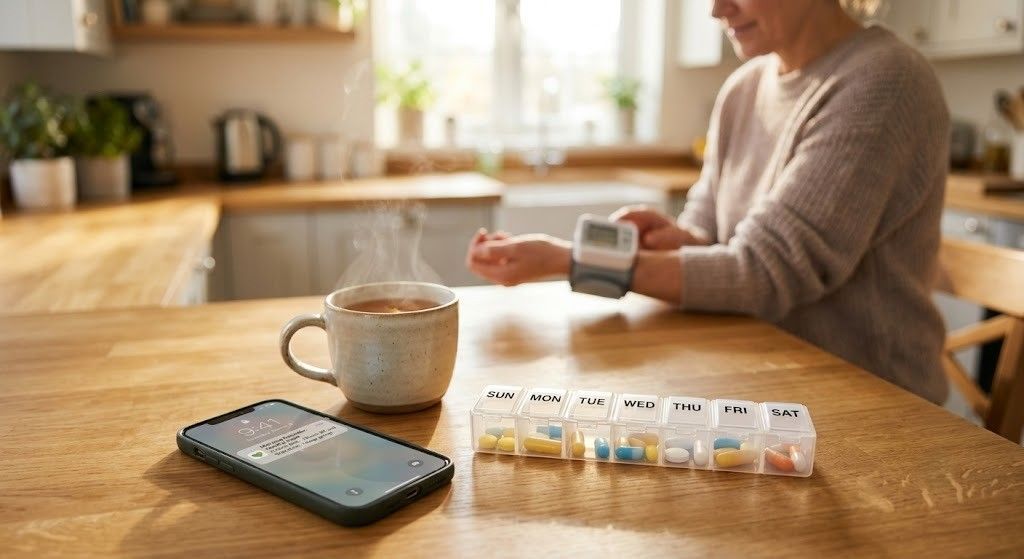
A weekly pill organizer, the kind with seven compartments, takes the guesswork out of whether you took your morning dose
-
A free reminder app on your phone, set to repeat daily at the same time
-
A simple notebook or spreadsheet for tracking symptoms, sleep and any new or worsening symptoms
None of these tools fix the condition. They just remove the mental load of remembering everything yourself, which honestly is half the battle for a lot of patients with chronic illnesses.
Medication Management and Adherence Tips
Medication adherence is one of those terms doctors use a lot and patients tend to gloss over. But the data behind it is sobering. Missed doses are one of the leading reasons chronic conditions spiral out of control, leading to hospitalizations that were largely preventable.
Why do people miss doses? Cost is one reason. Confusion about timing is another. And honestly, sometimes people just feel fine and figure skipping a day or two will not matter. For conditions like high blood pressure, it often does matter more than it seems, because the medication is managing something silent.
A few things help. Ask your pharmacist directly about drug interactions, especially if you are managing more than one chronic health condition at once. Use a pillbox or blister pack so a missed dose is visually obvious. Set phone alarms with labels, not just a generic beep. And if cost is the barrier, say so out loud to your care team. There are often generic options or assistance programs that never get mentioned unless the patient brings it up.
The Hermosa Pharmacy team can also walk through your full medication list with you, which catches a surprising number of overlaps and interactions that slip through the cracks when prescriptions come from different providers.
Living with Diabetes and High Blood Pressure: Home Monitoring Basics
These two conditions show up constantly together and for good reason. Diabetes and heart disease often travel as a pair and both depend heavily on home monitoring to stay controlled.
For diabetes, most people check fasting blood sugar in the morning and sometimes again after meals, depending on what their provider recommends. A general target range for fasting glucose is 80 to 130 mg/dL, though this varies by individual and should always be confirmed with your own care team.
For blood pressure, the routine is simpler but just as important. Sit quietly for five minutes before checking. Use the same arm each time. Log the number, do not just glance and move on.
|
Measurement |
Generally Normal |
Talk to Your Doctor |
Seek Care Now |
|
Fasting blood sugar |
80 to 130 mg/dL |
Above 180 mg/dL repeatedly |
Above 250 mg/dL or symptoms of confusion |
|
Blood pressure |
Below 120/80 |
130/80 to 139/89 consistently |
Above 180/120 or chest pain |
James, a 64 year old retired contractor, started tracking his blood pressure twice daily after a scare landed him in urgent care. Within a few weeks of consistent logging, he noticed his numbers spiked every Sunday evening, right after he watched football and ate takeout. That pattern alone gave his doctor enough information to adjust his plan without guessing.
Numbers tell a story symptoms alone cannot. That is the part most people miss until they start logging consistently.
Nutrition, Physical Activity and Stress Management
Food, movement and stress are the three pillars nobody wants to hear about because they sound like the same advice everyone has heard a thousand times. But the mechanics behind them are real.
Eating for chronic disease management usually means fewer processed foods, less added sugar and sodium and more whole foods built around vegetables, lean protein and fiber. It does not have to mean bland or restrictive. A lot of patients find success just by swapping one or two habits, like replacing soda with sparkling water or cutting back on fast food to once a week instead of three times.
Physical activity does not need to mean a gym membership. Thirty minutes of walking most days does more for blood pressure and blood sugar control than most people expect. For someone managing arthritis or chronic pain, low impact options like swimming or stationary cycling protect joints while still building endurance.
And stress. This one gets overlooked constantly but chronic stress raises cortisol, which can spike blood sugar and blood pressure independent of diet. Simple stuff helps here too. Deep breathing for a few minutes. A short walk outside. Even just naming the stress out loud to someone instead of carrying it silently.
Your primary care team can help build a plan around these three areas that actually fits your life, instead of a generic list pulled off the internet.
When to See a Doctor and Emergency Warning Signs
Most day to day symptoms can be managed at home with the routine you have built. But some signs mean it is time to stop managing and start calling.
When To Seek Emergency Care
-
Chest pain or pressure that does not go away
-
Severe shortness of breath, especially at rest
-
Blood sugar above 250 mg/dL with confusion, nausea or vomiting
-
Sudden vision changes, slurred speech or numbness on one side
-
Blood pressure reading above 180/120 with symptoms
If you notice any of these, do not wait it out. Call 911 or get to the nearest emergency room. For symptoms that feel off but are not clearly an emergency, an urgent care visit is often the right middle step. And if you want a refresher on what counts as a true cardiac emergency, this piece on heart attack warning signs breaks it down further.
Why Choose Hermosa Medical Center for Chronic Disease Management
Chronic disease management works best when it is not scattered across five different offices. That is the whole idea behind a multi specialty center based right here in Chicago. Primary care, internal medicine, cardiology and pharmacy services all sit under one roof, which means your care team can actually talk to each other instead of you playing messenger between offices.
For patients across the Chicago area juggling work, family and a chronic condition, that coordination saves time and catches things that fall through the cracks when records are split across systems. A personalized care plan that addresses your specific condition, your medication list and your lifestyle works a lot better than a generic handout. If you are ready to build that plan, you can schedule an appointment or meet our care team to see who fits your needs best.
Frequently Asked Questions
What is the best way to manage a chronic illness at home?
Consistency matters more than perfection here. Stick to your medication schedule, track your symptoms or vitals daily and stay in regular contact with your care provider. Most people who manage well are not doing anything extreme. They just do the basics every single day instead of occasionally.
How often should I check my blood pressure at home?
For most people managing hypertension, once or twice daily at the same times works well. Morning and evening readings, logged consistently, give your doctor a much clearer picture than a single number checked once a week.
Can chronic illness be managed without medication?
For some conditions, in early stages, lifestyle changes alone can make a real difference. But most chronic conditions need a combination of medication and lifestyle work. Never stop or adjust medication on your own without talking to your provider first.
What apps help with chronic disease management?
There are several solid options for medication reminders, blood sugar logging and blood pressure tracking. Many sync directly with your phone's health app and can be shared with your care team ahead of appointments, which saves time during visits.
How do I know if my symptoms are an emergency?
Chest pain, severe shortness of breath, sudden confusion or a blood pressure reading above 180/120 with symptoms all qualify as emergencies. When in doubt, it is always safer to call 911 or head to the nearest emergency room than to wait and see.
Where can I find chronic disease management near Hermosa in Chicago?
Hermosa Medical Center offers primary care and internal medicine services built specifically around chronic condition management, all located right in Chicago for easy access across the Northwest Side.
How can I improve medication adherence?
Pill organizers, phone alarms and pharmacist check ins all help. So does simplifying your regimen where possible, since fewer daily doses generally means fewer missed ones. Talk to your pharmacist if cost or confusion is part of the problem.
What foods should I avoid with a chronic condition?
This depends a lot on the specific condition but general guidance leans toward limiting processed foods, added sugar and excess sodium. A registered dietitian or your primary care provider can tailor this further based on your labs and history.
Does insurance cover chronic disease management visits?
Most insurance plans cover regular visits tied to chronic condition management, though coverage details vary by plan. It is worth calling your insurer directly or asking our front desk team to verify your specific benefits before your visit.
How often should I see my doctor for a chronic condition?
This varies depending on how stable your condition is. Many patients are seen every three to six months, though newly diagnosed or unstable conditions may need more frequent visits until things settle into a pattern.
A Quick Closing Note
This article is meant to help you understand what managing chronic illness at home looks like in practice, not to replace a conversation with your doctor. Every condition and every patient is different, so talking directly with your healthcare provider is the right next step for anything specific to your situation. If you are having a medical emergency, please call 911 or go to the nearest emergency room right away.
`