


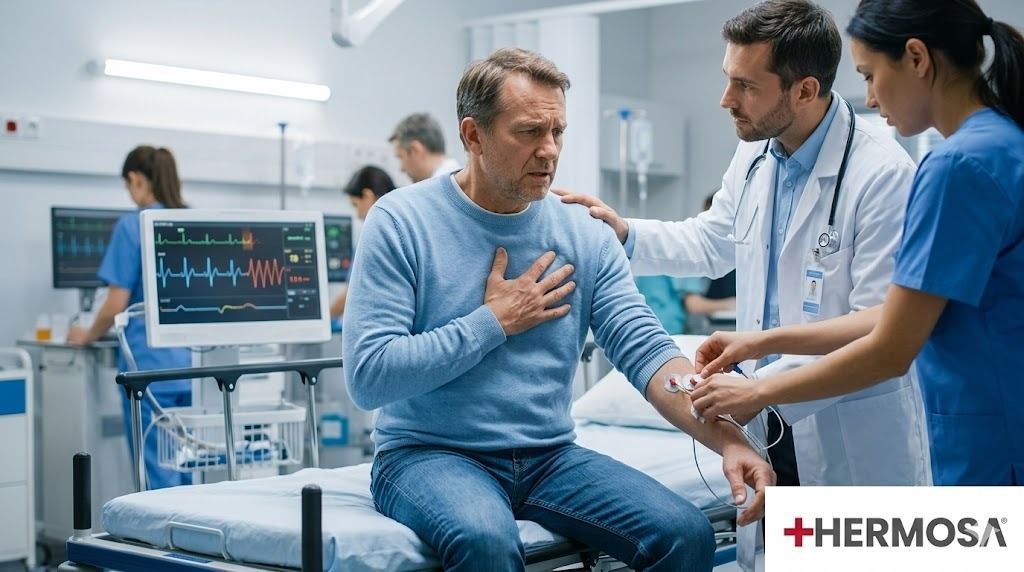
Heart Attack Warning Signs: Know the Signs of a Heart Attack Before It Is Too Late
Heart Attack Warning Signs: Know the Signs of a Heart Attack Before It Is Too Late
`
Someone in the United States has a heart attack every 40 seconds. That number is not meant to frighten you. It is meant to wake you up to the fact that heart attacks happen to real people in normal everyday situations and many of them had warning signs they did not recognize or acted on too slowly.
The problem is not that people do not care about their heart health. The problem is that heart attack warning signs do not always look the way people expect. Not every heart attack comes with dramatic chest-grabbing pain. Many people experience mild discomfort or nausea or unusual fatigue for days or weeks before a cardiac event and never connect it to their heart at all.
Knowing the full range of heart attack symptoms and what to do the moment they appear can genuinely save your life or the life of someone you love. This article covers everything from early warning signs to what happens during a heart attack and how symptoms vary between men and women and what heart attack first aid looks like in real time.
What Actually Happens When a Heart Attack Occurs
A heart attack occurs when a blood clot blocks blood flow through a coronary artery and cuts off oxygen to part of the heart muscle. When the heart muscle stops getting the blood it needs it begins to die. The longer that blockage stays in place the more damage to the heart muscle occurs and the harder recovery becomes.
This is why the phrase used in cardiology is time is muscle. Every minute that passes without treatment causes more damage to the heart. Getting prompt treatment by calling 911 right away is the single most powerful thing anyone can do to limit damage to the heart and improve the outcome of a cardiac event.
A heart attack is not the same as cardiac arrest. A heart attack is a circulation problem where the heart is still beating but not receiving enough blood flow. Cardiac arrest is when the heart stops pumping entirely. A heart attack can lead to cardiac arrest if it is not treated fast enough and that is when CPR becomes necessary to save a life.
Common Heart Attack Warning Signs You Should Never Ignore
The most well-known heart attack symptom is chest pain or pressure but that is only one piece of the picture. The American Heart Association lists a range of common heart attack symptoms that cover the whole upper body and some that have nothing to do with the chest at all.
| Symptom | Where It Feels | What It Feels Like |
|---|---|---|
| Chest discomfort | Center or left side of chest | Pressure or squeezing or fullness or pain |
| Upper body pain | Arm and neck and jaw and back and shoulder | Aching or radiating pain that spreads outward |
| Shortness of breath | Chest and lungs | Difficulty breathing at rest or with mild activity |
| Nausea or vomiting | Stomach | Queasiness or vomiting without obvious cause |
| Lightheadedness | Head | Sudden dizziness or feeling faint |
| Cold sweat | Skin | Breaking out in a sweat for no clear reason |
| Unexplained fatigue | Whole body | Extreme tiredness that comes on suddenly |
Heart attack warning signs to never ignore:
- Chest pain or pressure or discomfort that lasts more than a few minutes or goes away and comes back
- Pain or discomfort spreading to the left arm or both arms or the jaw or neck or back
- Shortness of breath with or without chest discomfort
- Sudden nausea or vomiting with no other explanation
- Lightheadedness or sudden dizziness
- Cold sweat breaking out while at rest
- Unexplained and sudden extreme fatigue
- A strong feeling that something is seriously wrong even without clear pain
Early Signs of Heart Attack: Symptoms That Appear Days or Weeks Before
Many people experience early warning signs of a heart attack days or weeks before the actual cardiac event. These symptoms are often subtle and easy to dismiss and that is exactly what makes them so dangerous. A delay in recognizing them leads directly to a delay in getting help.
Research shows that up to 50 percent of heart attack patients reported symptoms in the days leading up to their event. The symptoms did not feel serious enough to act on at the time. That is the gap that costs lives.
Early signs of heart attack that often get dismissed:
- Unusual fatigue over several days with no clear reason
- Mild chest discomfort that comes and goes and feels easy to ignore
- Slight shortness of breath during normal activity that was not there before
- A feeling of pressure or heaviness in the chest that seems like stress
- Sleep disturbance or waking up feeling short of breath
- Increased anxiety or a general sense that something feels off
- Mild indigestion or stomach discomfort that does not improve with antacids
Any symptom that is new and unexplained and persists for more than a day or two deserves a call to your provider right away. Do not wait to see if it clears up on its own.
Heart Attack Symptoms in Women: How They Vary
Heart attack symptoms in women often vary from the classic picture most people have in their heads. Women are less likely to experience crushing chest pain and more likely to have symptoms that look like something else entirely. This is one of the main reasons heart attacks in women are diagnosed and treated later than in men which leads to worse outcomes.
The American Heart Association has specifically called out this awareness gap. Women and their health care providers both need to know that a heart attack can look completely different depending on the person.
Heart attack warning signs more common in women:
- Nausea or vomiting without any obvious cause
- Pain or pressure in the upper back or between the shoulder blades
- Jaw pain or neck discomfort
- Extreme and sudden unexplained fatigue
- Shortness of breath at rest or with minimal exertion
- Dizziness or lightheadedness
- Indigestion or stomach discomfort that feels different from normal
- Cold sweats without physical effort
The most important thing for women to know is that the absence of chest pain does not mean no heart attack is occurring. If any of these symptoms appear suddenly and feel unusual call 911 immediately and do not wait for more obvious signs to develop.
Signs of Heart Attack in Men: What to Watch For
Men are more likely to experience the classic heart attack presentation including chest pain or pressure that radiates to the left arm or jaw. But men also frequently delay getting help because they attribute symptoms to indigestion or muscle soreness or stress. That delay causes more damage to the heart muscle and reduces the chance of a full recovery.
Common heart attack warning signs in men:
- Chest pain or pressure or tightness in the center or left side of the chest
- Pain radiating down the left arm or both arms
- Jaw pain or upper body discomfort
- Shortness of breath at rest or with light activity
- Cold sweats and nausea together
- Sudden dizziness or lightheadedness
- A feeling of dread or extreme anxiety without a clear cause
Men tend to push through discomfort rather than act on it. That instinct is understandable but when heart attack symptoms are involved it is dangerous. Call 911 right away. Do not wait to see if it passes.
Silent Heart Attack Symptoms: The Cardiac Event You Might Not Feel
A silent heart attack is a real cardiac event that causes damage to the heart muscle but produces symptoms so mild or unusual that the person does not recognize it as a heart attack. These are more common than most people realize and are often only discovered later during a routine EKG or cardiac imaging test.
Silent heart attacks account for roughly 45 percent of all heart attacks. They are especially common in older adults and in people with diabetes and in women. The lack of dramatic pain does not mean the damage is any less serious. A silent heart attack still increases the risk of a second and more serious cardiac event.
Silent heart attack symptoms that are easy to miss:
- Mild discomfort in the chest that feels like heartburn or a pulled muscle
- Unexplained jaw or neck soreness
- Unusual fatigue lasting several days
- Mild shortness of breath during normal activity
- Slight nausea or stomach upset without a clear cause
- A general feeling of being unwell that is hard to explain
If you have any reason to suspect you may have had a silent heart attack see a doctor right away and ask for an EKG and a cardiac evaluation.
Heart Attack vs Panic Attack: How to Tell the Difference
Heart attack and panic attack symptoms overlap enough to cause real confusion especially in younger adults and people with anxiety. Both can cause chest pain and shortness of breath and a racing heart and a strong feeling of fear. Knowing the differences matters but the safest rule is simple: if you cannot tell the difference treat it as a heart attack and call 911.
| Feature | Heart Attack | Panic Attack |
|---|---|---|
| Chest pain | Pressure or squeezing and may radiate | Sharp or stabbing and stays in chest |
| Onset | Can build gradually | Usually peaks within 10 minutes |
| Duration | Continues and worsens | Typically resolves within 20 to 30 minutes |
| Physical activity | Gets worse with exertion | Not related to exertion |
| Radiating pain | Yes to arm and jaw and neck and back | Rarely radiates |
| Nausea and sweat | Common | Less common |
| After rest | Does not improve | Often improves |
It is always better to call 911 and find out it was a panic attack than to wait and delay treatment for a real cardiac event.
Heart Attack Without Chest Pain: When the Classic Sign Is Missing
A heart attack without chest pain is more common than most people realize and it is one of the main reasons people wait too long before calling emergency medical services. Not every heart attack comes with obvious chest pain or pressure and for some people there is no chest symptom at all.
Heart attacks without chest pain are more common in women and in people over 65 and in people with diabetes. These groups are more likely to have only shortness of breath or nausea or back pain or jaw discomfort and nothing in the chest at all. This is why knowing the full range of heart attack warning signs matters so much.
Symptoms that may appear without any chest pain:
- Shortness of breath that comes on suddenly
- Nausea and vomiting
- Upper back pain or jaw pain
- Extreme fatigue with no exertion
- Lightheadedness and dizziness
- Cold sweat at rest
- A general feeling of being seriously unwell
If any of these appear suddenly and feel unusual call 911 immediately. Do not wait for chest pain to confirm your concern.
What to Do During a Heart Attack: Call 911 Right Away
When heart attack warning signs appear every second counts. Damage to the heart muscle starts within minutes of a blocked artery and the longer treatment is delayed the worse the outcome. Here is exactly what to do if you think you or someone near you is having a heart attack.
- Call 911 immediately. Do not drive to the nearest hospital yourself and do not wait to see if symptoms improve. Emergency medical services can begin treatment in the ambulance before you even arrive at the emergency room
- Sit or lie down in a comfortable position and stay as calm as possible while waiting for the ambulance
- If the person is conscious and able to swallow and is not allergic to aspirin chew one adult aspirin (325 mg) or four low-dose aspirin (81 mg each). Aspirin helps slow blood clot formation
- Loosen any tight clothing around the neck and chest to make breathing easier
- If the person becomes unresponsive and stops breathing normally begin hands-only CPR immediately if you are trained or follow the instructions of the 911 operator
- Unlock the front door if you are alone so emergency responders can get in without delay
- Stay on the line with the 911 operator and follow their instructions until EMS arrives
Never delay calling 911 to look up symptoms or call a family member first. Time is muscle and every minute of delay means more damage to the heart.
CPR and Cardiac Arrest: How to Save a Life
If a heart attack leads to cardiac arrest the heart stops pumping entirely and the person becomes unresponsive and stops breathing normally. Hands-only CPR can double or triple a person's chance of surviving cardiac arrest outside of a hospital. You do not need formal resuscitation training to help.
Hands-only CPR steps:
- Call 911 first or have someone else call while you begin compressions
- Place the heel of your hand on the center of the chest just below the nipple line
- Place your other hand on top and lace your fingers together
- Push down hard at least 2 inches and release fully between compressions
- Aim for 100 to 120 compressions per minute which is roughly the rhythm of the song Stayin Alive
- Continue until emergency services arrive or the person shows signs of recovery
If an automated external defibrillator (AED) is nearby use it as soon as possible alongside CPR. Early use of an AED combined with CPR significantly improves survival outcomes for cardiac arrest.
Heart Attack Risk Factors You Can and Cannot Control
Understanding your heart attack risk factors is the foundation of prevention. Some risk factors are fixed. Others are directly within your control through lifestyle changes and working consistently with your health care provider.
| Controllable Risk Factors | Uncontrollable Risk Factors |
|---|---|
| High blood pressure | Age (risk rises after 45 in men and 55 in women) |
| High cholesterol | Family history of heart disease |
| Smoking | Personal history of heart attack |
| Type 2 diabetes | Gender |
| Physical inactivity | Genetic conditions |
| Obesity and excess weight | Ethnicity |
| Poor diet high in saturated fat | Prior cardiac procedures |
| Chronic stress | |
| Excessive alcohol use |
Managing even one or two controllable risk factors through lifestyle and working with a cardiologist or primary care provider can meaningfully reduce your risk of a first or second heart attack.
Common Mistakes People Make When Heart Attack Symptoms Appear
- Waiting to see if symptoms go away on their own which delays treatment and increases damage to the heart muscle
- Driving to the hospital instead of calling 911 because EMS can begin treatment on the way to the emergency room
- Assuming the absence of chest pain means it is not a heart attack especially in women and older adults and people with diabetes
- Mistaking warning signs for indigestion or anxiety or muscle strain and taking antacids instead of calling for help
- Not calling 911 because the symptoms feel mild or come and go
- Ignoring early warning signs in the days before the event because they did not seem serious enough to act on
When to See a Doctor About Cardiac Symptoms
Not every cardiac symptom is an immediate 911 emergency but some symptoms need same-day evaluation with your provider rather than a wait-and-see approach. If you are experiencing active symptoms that feel like a possible heart attack call 911 right away. If symptoms are new and persistent but not severe call your provider the same day.
When to see a doctor without calling 911:
- New shortness of breath during light activity that was not there before
- Chest discomfort that comes and goes over a few days without other severe symptoms
- Unexplained fatigue or lightheadedness lasting more than a day
- A new irregular heartbeat or palpitations
- Jaw or neck discomfort without other active symptoms
- Any new cardiac symptom if you already have known heart disease or risk factors like high blood pressure or diabetes
Why Choose Hermosa Medical Center for Cardiac Care
Hermosa Medical Center offers cardiology services led by Dr. Eliyazar Gaddam MD for adults who want to understand their cardiac risk and take steps to prevent a heart attack before one occurs. Whether you have existing risk factors or a family history of cardiovascular disease or experienced a recent cardiac scare the team at Hermosa has the tools and the expertise to help you.
On-site diagnostics including EKG and Doppler and ultrasound and open MRI and imaging mean that if you come in with cardiac symptoms your provider can evaluate your heart health the same day. The on-site pharmacy means any medications prescribed after your evaluation are filled before you leave.
For patients who have already survived a heart attack Hermosa supports ongoing cardiac management through internal medicine and primary care and cardiology together in the same building. Mental health and psychiatry services are also available for patients managing the stress and anxiety that often follow a cardiac event. For patients with new or urgent symptoms who need to be seen the same day urgent care services are available without an appointment.
Hermosa serves the Chicago community in English and Arabic and Spanish and accepts Medicaid and Medicare and most insurance plans as well as self-pay patients.
Benefits of Cardiac Care at Hermosa Medical Center
- Expert cardiac evaluation: Board-certified cardiologist for thorough assessment of your heart health and risk profile
- Same-day diagnostics: EKG and imaging on-site so you leave with answers and a care plan
- Full risk factor management: High blood pressure and diabetes and cholesterol all managed under one roof
- Coordinated care: Cardiology and internal medicine and pharmacy all communicate about your health together
- Prevention focused: Catch risk factors early and take action before a cardiac event occurs
- Post-heart attack support: Ongoing management and monitoring for patients who have survived a heart attack
- Affordable access: Medicaid and Medicare and insured and self-pay patients are all welcome
Real Patient Stories at Hermosa Medical Center
A 54-year-old Chicago man came in after two days of mild indigestion he had been treating with antacids. His wife insisted he get checked. An EKG at Hermosa showed abnormal readings and he was referred immediately to the hospital where a significant blockage was found. His provider later said the delay could have been far more serious and that coming in when he did helped limit damage to the heart muscle.
A 49-year-old woman visited Hermosa after experiencing extreme fatigue and shortness of breath during housework. She had no chest pain and assumed she was just overworked. Her evaluation revealed high blood pressure and abnormal cholesterol and early cardiac changes on her EKG. A care plan was started immediately and she was connected to Dr. Gaddam for cardiac monitoring. She later said she had no idea her symptoms were related to her heart at all.
A 67-year-old man came in for a routine physical and mentioned in passing that he had been having occasional lightheadedness for a few weeks. Lab work and an EKG revealed signs of a prior silent heart attack he had never known about. His treatment plan was revised right away and his risk factors were managed aggressively. His provider told him that finding it at that visit rather than waiting for a second event was a turning point.
Note: These represent composite patient experiences. Legal review recommended before publishing.
Frequently Asked Questions About Heart Attack Warning Signs
What are the early signs of a heart attack?
Early signs of a heart attack can include mild chest discomfort that comes and goes and unusual fatigue over several days and slight shortness of breath during normal activity and mild nausea or indigestion that does not improve with antacids. These symptoms can appear days or weeks before the actual cardiac event and are frequently dismissed as something minor.
How do heart attack symptoms differ in women?
Heart attack symptoms in women often vary from the classic chest pressure most people expect. Women are more likely to experience nausea and jaw pain and upper back pain and extreme fatigue and shortness of breath without any chest discomfort at all. These symptoms are often mistaken for anxiety or exhaustion which causes dangerous delays in getting prompt treatment.
What is a silent heart attack and how would I know if I had one?
A silent heart attack causes real damage to the heart muscle but produces symptoms so mild that they are not recognized as a cardiac event at the time. Symptoms can include mild fatigue and slight shortness of breath and mild jaw or neck discomfort. They are often only discovered later during a routine EKG or cardiac evaluation.
How do I tell a heart attack apart from a panic attack?
Both can cause chest pain and shortness of breath and a sense of fear. Heart attack symptoms tend to build and persist and worsen with activity and may radiate to the arm or jaw. Panic attack symptoms usually peak within 10 minutes and resolve on their own. When in doubt treat it as a heart attack and call 911 immediately.
What should I do the moment I think I am having a heart attack?
Call 911 right away and do not drive yourself to the nearest hospital. Sit or lie down in a comfortable position and chew an aspirin if you are not allergic. Loosen tight clothing and stay on the phone with the 911 operator. Do not wait to see if symptoms improve and do not call a family member before calling for emergency medical services.
Does Hermosa Medical Center offer cardiac evaluation and heart attack prevention?
Yes. Hermosa Medical Center at 2004 N Pulaski Rd Chicago IL 60639 offers cardiology services with Dr. Eliyazar Gaddam MD alongside on-site EKG and imaging and pharmacy. You can book an appointment online or call 773-772-8876 for a cardiac risk evaluation today.
Know the Warning Signs and Act on Them Right Away
Heart attack warning signs are not always dramatic and they do not always look the same from one person to the next. Symptoms vary by age and gender and health history and sometimes they show up as nothing more than unusual tiredness or mild jaw discomfort. The key is knowing the full range of signs of a heart attack and acting on them immediately without delay.
Every minute matters when blood flow to the heart is blocked. Calling 911 right away is always the right move. And in between emergencies building a relationship with a cardiologist who knows your risk profile is the best prevention available.
For adults in Chicago who want to take their cardiac health seriously Hermosa Medical Center is ready to help. Visit us at 2004 N Pulaski Rd Chicago IL 60639 or call 773-772-8876 or book an appointment online today.
Follow Hermosa Medical Center for health tips and updates and community news:
`