


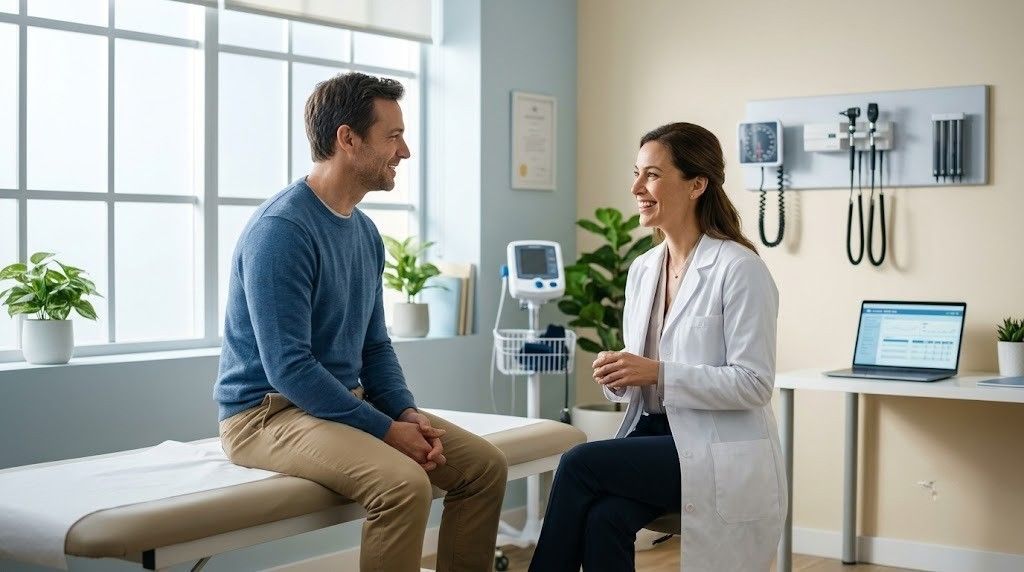
What to Expect at Your Annual Physical: A Complete Checklist
What to Expect at Your Annual Physical: A Complete Checklist
`
You scheduled the appointment three weeks ago. Now it's tomorrow morning and you still don't really know what's going to happen in that room. Will they draw blood? Ask you weird questions about your bowel movements? Make you change into one of those paper gowns?
Here is the thing. Most people put off their annual physical for the exact same reason. Not because they're busy. Not because they forgot. They just don't know what to expect and that uncertainty is enough to make a person reschedule twice and then quietly let the whole thing slide for another year.
That avoidance has a cost though. High blood pressure doesn't announce itself with a headache most of the time. High cholesterol doesn't make you feel tired. Early type 2 diabetes can sit there for years without a single obvious symptom while it slowly does damage. An annual physical is one of the few tools your primary care provider has to catch these things while they're still easy to manage.
So let's walk through it. What actually happens from the moment you check in to the moment you walk out. What tests get run and why. How to prepare so you're not standing in the lobby wondering if you were supposed to fast. And when a routine checkup isn't enough and you need to be seen sooner.
What Is an Annual Physical Exam?
An annual physical exam is a yearly visit with your primary care provider built around prevention rather than treating something that's already wrong. Think of it as a checkpoint. Your provider checks your vital signs, asks about your health history, runs some basic screening tests and looks for early warning signs of conditions like heart disease, diabetes or certain cancers before symptoms show up.
It's not the same thing as going in because your throat hurts or you twisted your ankle. Nobody is treating an active complaint here, in most cases anyway. This is about getting an honest picture of where your health stands right now and what, if anything, needs attention before it becomes a bigger problem.
A lot of people use "annual physical" and "annual wellness visit" interchangeably and honestly, in everyday conversation that's fine. Insurance companies tend to draw a sharper line between the two. A wellness visit, especially under Medicare, often leans more heavily on a health risk assessment and a conversation about prevention. A traditional physical usually involves more hands on examination. Either way the goal is identical. Catch problems early. Build a relationship with a provider who actually knows your history. Stay ahead of whatever might be coming.
How to Prepare for Your Annual Physical
Preparation doesn't need to be complicated. But a little bit of planning makes the visit go faster and gives your provider better information to work with.
Bring your insurance card and a photo ID. Bring a list of every medication and supplement you're currently taking, including dosages if you have them handy. If you're seeing this provider for the first time, get there ten or fifteen minutes early since there will be paperwork.
Fasting matters only if your provider plans to draw blood work that requires it, like a fasting glucose test or a full lipid panel for cholesterol. Some offices will tell you ahead of time. Some won't, so it doesn't hurt to call and ask the day before. If you're not sure, plan to skip breakfast and bring a snack for after, just in case.
What you wear actually matters more than people realize. Comfortable, loose fitting clothes make the exam itself faster, since you may need to roll up a sleeve for a blood pressure check or step on a scale without bulky shoes weighing you down.
And one more thing worth doing the night before. Jot down any health concerns you've been meaning to bring up. The headaches that come and go. The knee that's been bothering you since spring. The fact that you haven't been sleeping well. It's easy to forget these things once you're sitting across from a provider and a quick note on your phone solves that problem completely.
Maria, a 34 year old graphic designer from the Hermosa neighborhood, told her provider she almost canceled her appointment because she didn't think she had anything to talk about. Turns out she'd been having mild chest tightness during her morning runs for weeks and just assumed it was normal. That's exactly the kind of detail an annual physical is designed to surface.
What Happens During an Annual Physical Exam (Step by Step)
This is usually the part people are most curious and most nervous about. So let's go through it in order.
Check in and vital signs. A medical assistant will check your blood pressure and temperature, measure your height and weight to calculate your body mass index and check your heart rate. This part takes maybe five minutes and nothing about it is invasive.
The physical examination itself. Your provider will conduct a thorough physical examination that typically includes listening to your heart and lungs, checking your abdomen, examining your skin and testing your reflexes. They'll also check your vision and hearing in a basic way, look in your ears, throat and nose and feel your neck and lymph nodes for anything unusual. Depending on your age and sex, this may also include a pelvic exam, a breast exam or a prostate exam, though these aren't done at every visit and your provider will explain what's relevant for you specifically.
The conversation part. This is where a lot of the real value happens, honestly. Your provider may ask about your family health history, any new health concerns since your last visit, your sleep, stress levels, alcohol use, exercise habits and diet. They'll also review your medical history and ask whether anything has changed. Don't be surprised if the questions feel personal. They need that information to spot risk factors you might not even realize you have.
Vaccinations. Your provider will review your vaccination history and may recommend updates based on your age, like a flu shot, a tetanus booster or others depending on your situation. You can always ask questions or decline but it's worth at least having the conversation.
David, a 52 year old contractor, mentioned to his provider during this part of the visit that his father had a heart attack at 58. That single sentence changed the rest of his appointment. His provider added a more detailed cardiovascular screening to the visit that he wouldn't have otherwise gotten that day.
By the end of this step you'll usually have a clear sense of whether anything needs further testing, a referral or just some lifestyle changes to work on before next year.
Common Blood Tests and Lab Work at a Physical
Blood work is often the part people worry about most, even though it's usually the quickest part of the entire visit.
A complete blood count checks your red and white blood cells and platelets, which can flag anemia, infection or other blood disorders. A metabolic panel looks at kidney and liver function along with electrolyte levels. A lipid panel measures cholesterol, including the LDL and HDL breakdown that matters for heart disease risk. And a fasting glucose or A1C test screens for blood sugar problems, including prediabetes and type 2 diabetes.
|
Test |
What It Checks For |
|
Complete Blood Count (CBC) |
Anemia, infection, blood disorders |
|
Comprehensive Metabolic Panel |
Kidney function, liver function, electrolytes |
|
Lipid Panel |
Cholesterol levels, heart disease risk |
|
Fasting Glucose / A1C |
Blood sugar levels, diabetes risk |
|
Thyroid Panel (if indicated) |
Thyroid function and hormone levels |
Not everyone needs every single one of these every year. Your provider decides based on your age, your family history and whatever risk factors came up during the conversation part of the visit. If you have a chronic condition like high blood pressure or a chronic illness that needs monitoring, additional labs are often added without much discussion since they're considered part of standard management.
Results usually come back within a few days and most offices now post them straight to a patient portal so you don't have to wait for a phone call.
Age and Gender Specific Screenings to Expect
Here's where things start to vary quite a bit depending on how old you are and what your biological sex is.
In your twenties and thirties, screenings tend to focus on baseline blood pressure, cholesterol if there's family history and for women, a Pap smear every three years or so depending on guidelines. In your forties and fifties, things expand. Cholesterol screening becomes standard for nearly everyone. Colorectal cancer screening typically starts around age 45. Mammograms generally begin somewhere in this range too, depending on personal and family risk. At 60 and beyond, screenings often increase in frequency and conversations about bone density, vision changes and cognitive health start showing up more regularly.
For women specifically, breast exams and cervical cancer screenings remain a regular part of preventive care throughout adulthood. For men, prostate exam discussions usually start being raised somewhere in the late 40s or 50s depending on risk factors, though guidelines on this have shifted over the years and your provider is the best source for current recommendations specific to you.
None of this is one size fits all. A 30 year old with a strong family history of colon cancer may get screened far earlier than the general guidelines suggest. That's the entire point of the conversation portion of the visit. It's not a script. It's tailored.
How Often Should You Get a Physical?
Most healthy adults benefit from one annual physical exam per year. That's the short answer. The longer answer depends a bit on your situation.
If you're managing a chronic condition, diabetes, high blood pressure, asthma, something along those lines, your primary care provider may want to see you more than once a year to keep things on track. If you're young and healthy with no real risk factors, some providers are comfortable spacing things out slightly, though yearly remains the standard recommendation almost everywhere.
It's also worth knowing the difference between a scheduled annual physical and an urgent care visit. A physical is planned, preventive and not meant for active symptoms. If you wake up with a fever, a bad cough or you sprained something over the weekend, that's an urgent care situation, not something to save for your yearly checkup.
When to See a Doctor Sooner Than Your Next Annual
Some things genuinely cannot wait until your next scheduled visit. If new symptoms show up between physicals, especially ones tied to your heart, breathing or anything that feels sudden and severe, don't sit on it hoping it resolves on its own.
When To Seek Emergency Care
-
Chest pain or pressure, especially with shortness of breath, sweating or pain spreading to the arm or jaw
-
Sudden difficulty breathing or severe shortness of breath
-
Sudden weakness, numbness or confusion, particularly on one side of the body
-
Unexplained, rapid weight loss
-
Severe abdominal pain that comes on suddenly
-
Coughing up or vomiting blood
-
A fever that won't come down combined with confusion or extreme weakness
If any of these apply to you right now, this isn't something to research further online. Call 911 or get to the nearest emergency room.
For anything less urgent but still concerning, like a persistent cough, ongoing fatigue or a symptom that's just sticking around longer than it should, that's a good reason to call your provider and get seen sooner rather than waiting for your next annual.
Why Choose Hermosa Medical Center for Your Annual Physical
There's something to be said for not having to bounce between five different offices every time something comes up. Hermosa Medical Center brings primary care services together with cardiology, gynecology, internal medicine, imaging and pharmacy under one roof, which matters more than people expect once they actually need a referral.
Say your physical turns up something on your cholesterol panel that needs a closer look. Instead of waiting weeks for an outside referral, that conversation with cardiology services can often happen right down the hall. Same goes for imaging if something needs a closer look or pharmacy if a new prescription comes out of the visit.
For Hermosa and Northwest Side residents, that local convenience adds up. Appointments tend to be easier to get, the lab work happens on site and you're not driving across Chicago just to follow up on a routine result.
Frequently Asked Questions
What should I bring to my annual physical?
Bring a photo ID, your insurance card and a current list of medications and supplements, including dosages if you have them. If you're a new patient, arriving ten to fifteen minutes early helps since there's usually paperwork to fill out. Writing down any questions or concerns beforehand also helps you get more out of the actual appointment.
Do I need to fast before a physical exam?
Only if bloodwork like a fasting glucose test or a full lipid panel is planned for that visit. Some offices confirm this ahead of time and some don't, so calling the day before is a safe bet. If you're not sure, skip breakfast and bring a snack just in case.
How long does an annual physical take?
Most physicals run somewhere between 30 and 60 minutes depending on how much there is to discuss. First time visits or ones where new health concerns come up, tend to run a bit longer. Blood draws are usually quick and often happen the same day, separate from the exam itself.
Is an annual physical free with insurance?
Many insurance plans, including most health insurance plans and Medicare, cover one annual wellness visit per year at no cost as part of preventive care benefits. Coverage details vary depending on your specific plan though, so it's worth a quick call to confirm. Hermosa Medical Center's front desk can also help verify benefits before your appointment.
What's the difference between a physical and a wellness visit?
A physical usually includes more hands on examination alongside lab work and screening tests, while a wellness visit, especially under Medicare, leans more toward a health risk assessment and a forward looking conversation about prevention. In everyday use most people just call both of them a checkup. Either way the underlying goal is the same.
What blood tests are usually done at a physical?
Common ones include a complete blood count, a metabolic panel, a cholesterol or lipid panel and a fasting glucose or A1C test for blood sugar. Your provider may add more depending on your age, symptoms or family health history. Results typically show up within a few days through a patient portal.
Can I get a physical exam near Hermosa in Chicago the same week I call?
In most cases, yes. Hermosa Medical Center offers convenient scheduling for patients across Chicago and the Northwest Side, often with availability within the same week. Online booking and on site lab services help speed things along. For more urgent needs, it's worth asking specifically about urgent care availability rather than waiting on a scheduled physical slot.
Do I need a physical if I feel completely healthy?
Yes and this is actually one of the more important reasons to go. Conditions like high blood pressure, high cholesterol and early type 2 diabetes often have zero noticeable symptoms until they've already caused damage. Feeling fine is exactly why screening matters. It's the only way to know what's actually going on underneath that feeling.
Will I get a vaccine at my annual physical?
Your provider will review your vaccination history and may suggest updates based on your age and risk factors, things like a flu shot or a tetanus booster. Nothing gets administered without a conversation first. You're always free to ask questions or decline if you'd rather hold off.
What happens after my annual physical?
If labs were drawn, results usually post to a patient portal within a few days, sometimes with a follow up call if anything needs attention. Your provider may recommend a referral to a specialist, cardiology or gynecology for example, depending on what came up. Any necessary follow up appointments or additional screenings get scheduled from there.
A Closing Note
Reading about what to expect at your annual physical can take away a lot of the uncertainty but it's not a substitute for actually sitting down with a provider who knows your history. If something in this article made you think twice about a symptom you've been brushing off, that's worth a phone call. And if you're ever dealing with a medical emergency, don't wait around. Call 911 or get to the nearest emergency room right away.
`