

Urgent Care vs Emergency Room: How to Know Which One You Actually Need
Urgent Care vs Emergency Room: How to Know Which One You Actually Need
`
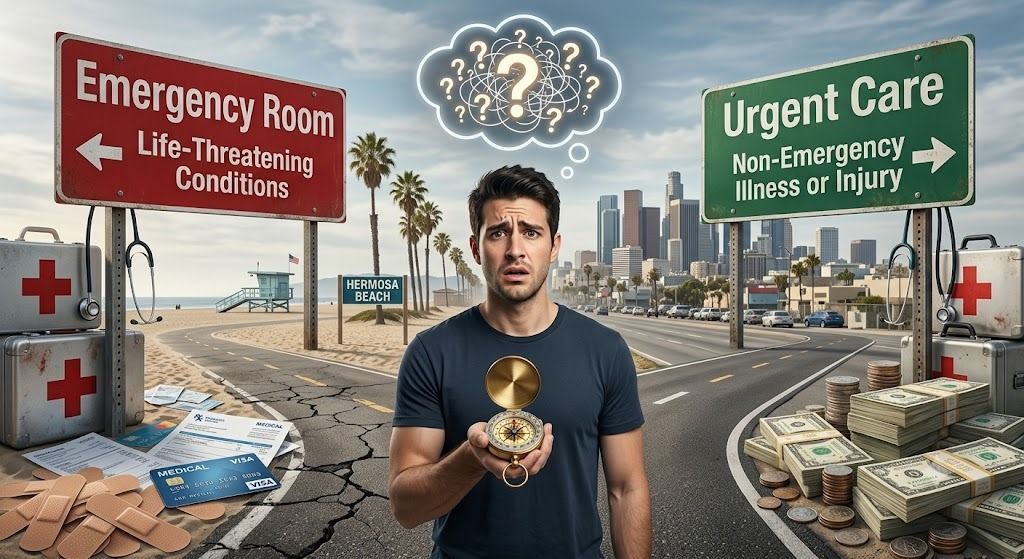
Chest tightens at 2am. Or your kid takes a spill off his bike and his wrist bends in a way wrists shouldn't bend. The pain registers first. The question comes right after where do I even go?
Most people freeze on that question longer than they should. And the choice isn't trivial. It can mean the difference between a 20 minute visit and a four hour wait. Between a copay you barely notice and a bill that lands like a gut punch. Plenty of folks across Hermosa Beach and the wider Los Angeles area end up parked in the wrong waiting room simply because no one ever broke the difference down in plain English.
So here it is. No scare tactics, no fluff just a straight walkthrough of when urgent care gets the job done, when the emergency room is the only acceptable answer and what you can actually expect on cost, wait time and the kinds of conditions each one handles.
What Is the Difference Between Urgent Care and the Emergency Room
Urgent care exists for the stuff that needs eyes on it soon but won't kill you if you wait a few hours. A twisted ankle. An ear infection that's kept your kid up three nights running. A gash that needs three stitches. The emergency room exists for the stuff that could turn fatal or at least catastrophic without help right now. Chest pain. Stroke symptoms. Bleeding that won't stop.
Here's the blunt version. Urgent care covers urgent not dangerous. The ER covers dangerous, full stop, no exceptions. Most urgent care centers run extended hours, often seven days a week and they're built for shorter waits and smaller copays than a hospital ER. Emergency rooms never close. They're staffed around the clock for trauma and life saving intervention which is exactly why a visit costs more and why your wait can stretch on if someone rolls in with something worse than what brought you there.
When Should You Go to Urgent Care
Picture a random Tuesday. Your primary care doctor's office is booked out two weeks and the sinus infection you've been nursing has turned into something that feels like a railroad spike behind your eye. That's urgent care territory not the ER, not "wait it out and hope."
Sprains, small fractures, lacerations that need closing. Fevers, flu symptoms, sore throats, ear infections that won't quit. Mild allergic reactions, rashes, minor burns. Urinary tract infections that need a same day diagnosis instead of a two week wait. All of that fits squarely under urgent care's roof.
What a lot of people don't realize? Urgent care can often run X rays for a suspected fracture right on site, plus basic lab work, plus certain STD testing at a fraction of the hospital price tag. If your regular provider's calendar is full and nothing about your symptoms screams danger, urgent care is almost always the faster, cheaper, smarter move.
It's the bridge between your primary care doctor and the hospital built for exactly the moments that feel urgent without actually threatening your life.
When Should You Go to the Emergency Room
Now flip the scenario. A man in his fifties is sitting on his couch when his chest tightens like someone's standing on it. Breathing gets shallow. Sweat breaks out for no reason. That man does not need an urgent care appointment. He needs 911 or the nearest emergency room, immediately.
Emergency rooms exist for conditions where minutes matter chest pain, trouble breathing, signs of stroke (think facial drooping, slurred speech, sudden confusion), severe allergic reactions, major trauma from a car crash or a bad fall, bleeding that pressure won't stop. Hospitals carry surgeons, cardiac specialists and imaging equipment on standby that most urgent care clinics simply don't have under one roof.
Why does urgent care for chest pain keep showing up in search bars? Because people want it to be nothing. But here's the truth nobody wants to hear chest pain is sometimes just heartburn and sometimes it's the opening act of a heart attack and there's no way to tell the difference from your couch. Worth a read: our breakdown of early heart attack warning signs. An ER can run the tests that separate the two within minutes. That speed is the entire point.
Urgent Care vs Emergency Room Cost Comparison
Money tends to be the thing people obsess over once the adrenaline wears off. And the gap here isn't small.
|
Urgent Care |
Emergency Room | |
|
Average copay |
Often $50 to $150 |
Often $500 to $3000 or more |
|
Typical wait time |
Usually under an hour |
Can stretch several hours depending on who else is there |
|
Hours |
Extended many open evenings and weekends |
Open 24 hours a day, every day |
|
Best for |
Non emergency illness or injury |
Life threatening conditions |
Hospitals stay staffed and equipped for the worst case scenario around the clock that's why ER bills run higher. Urgent care clinics run leaner. That's exactly how they manage same day visits without the hospital level price tag attached. Not sure if your insurance treats a visit as in network? Check before you go especially for the ER, where out of pocket costs can spiral fast.
Nobody thinks about cost until the bill lands in the mailbox three weeks later. Knowing the difference ahead of time before you're standing there in pain trying to make a snap decision saves both money and a headache you don't need on top of everything else.
Common Conditions Treated at Urgent Care and the Emergency Room
Sprains. Strains. Mild fractures. Cuts. Burns. Infections. Allergic flare ups. Flu like symptoms that won't let up. That's the bread and butter of urgent care. Plenty of locations ours included also run diagnostic imaging like X rays on site, so a suspected broken bone doesn't automatically mean a trip to the hospital.
The ER handles the heavier stuff. Chest pain. Stroke symptoms. Severe abdominal pain that doubles you over. Major burns, deep wounds, seizures, any injury involving real blood loss. If there's even a flicker of doubt about whether something's life threatening, the emergency room is the safer call. Every single time.
It really comes down to one gut check question. Can this wait a few hours without getting worse? If yes urgent care's your spot. If there's any real chance the answer is no go to the ER or call 911 and skip the second guessing.
Prevention Tips to Avoid Unnecessary ER Visits
A surprising number of ER visits never needed to be ER visits at all. A few habits that actually move the needle:
Stay connected to a primary care doctor, so chronic conditions get managed before they spiral into emergencies. Know your own medical history allergies, current medications, the works because that information speeds everything up no matter where you land. Lean on virtual care or a nurse line when you're genuinely unsure what level of care you need. And don't shrug off early symptoms. Catching an infection early often means a same day urgent care visit instead of three nights in a hospital bed later.
None of this guarantees you'll dodge the ER forever. Nobody can promise that. But it does cut down the number of trips that never needed to happen in the first place.
When to See a Doctor and Emergency Warning Signs
When To Seek Emergency Care
-
Chest pain or pressure, especially paired with shortness of breath
-
Sudden numbness or weakness, particularly on one side of the body
-
Slurred speech or confusion that comes on out of nowhere
-
Severe bleeding that direct pressure won't stop
-
Difficulty breathing or choking
-
Major trauma from a car accident, a hard fall or a deep wound
-
A severe allergic reaction with swelling in the face or throat
-
A seizure especially a first one or one running past five minutes
If you or someone next to you is showing any of these, call 911 or get to the nearest emergency room right away. Don't sit around hoping it passes on its own.
Why Choose Hermosa Medical Center
Hermosa Medical Center stacks urgent care, primary care, cardiology, gynecology, psychiatry, allergy and immunotherapy, diagnostic imaging, dentistry, STD testing and pharmacy services under one roof in Hermosa Beach. Why does that matter beyond the convenience factor? Because if you walk in for what looks like a minor injury and it turns into something that needs a specialist or imaging, you're not getting shipped across town to start the whole process over.
Our urgent care team knows how to spot the line between what can be handled on site and what needs an immediate emergency transfer and they won't hesitate to make that call when it counts. For anyone across Los Angeles hunting for a provider that actually connects urgent, primary and specialty care instead of scattering it across three different buildings, that kind of continuity is rare.
Frequently Asked Questions
What's the difference between urgent care and the emergency room?
Urgent care treats illness or injury that needs same day attention but isn't life threatening. The emergency room handles conditions that could be life threatening or could worsen fast without immediate care.
Should I go to urgent care or the ER for chest pain?
The ER almost always. Chest pain can sometimes signal a heart attack and that's not a guess worth making in an urgent care waiting room.
Is urgent care cheaper than the emergency room?
Yes. In most cases the copay and out of pocket cost run significantly lower sometimes by hundreds, sometimes by thousands, depending on your insurance.
How long is the wait time at urgent care versus the ER?
Urgent care is typically under an hour. ER wait times swing wildly since the sickest patients get seen first, which can mean a long wait for something non emergency.
Can urgent care treat broken bones?
Many locations, including Hermosa Medical Center, run on site X rays and treat minor fractures. Severe or complex breaks usually need an ER or an orthopedic referral.
Is urgent care open 24 hours?
Most urgent care centers run extended hours evenings, weekends but not around the clock. The ER is the one that never closes.
What should I do if I'm not sure it's an emergency?
When in doubt, lean toward the emergency room or 911. If it feels non emergency but you're still unsure, calling your provider or using virtual care can help sort out the right level of care.
Will my insurance cover urgent care?
Most plans cover it, usually with a lower copay than an ER visit. Worth a quick call to confirm your specific plan, since coverage varies.
What conditions are considered emergencies that need 911?
Severe chest pain, stroke symptoms, difficulty breathing, uncontrolled bleeding, major trauma and loss of consciousness all call for immediate emergency care.
Is there an urgent care near me in Hermosa Beach?
Hermosa Medical Center runs urgent care services in Hermosa Beach with convenient hours and same day visits for non emergency illness or injury.
A Final Note
Knowing the difference between urgent care and the emergency room isn't about memorizing a flowchart. It's about having a rough internal compass before you're standing there scared, trying to make a fast call. The gut check is usually simple if it feels dangerous, it probably is and the ER is the right answer. If it's painful or annoying but not threatening your life, urgent care will likely get you seen the same day for a lot less money and a lot less waiting around.
This piece is meant to help you understand the difference not replace an actual conversation with a doctor about your specific situation. If you or someone near you is having a medical emergency, call 911 or get to the nearest emergency room right away.
`