

How to Prepare for an MRI A Complete Guide for Patients
How to Prepare for an MRI A Complete Guide for Patients
`
It is the night before your scan and you are standing in front of your closet wondering what counts as metal free clothing. Or maybe you already ate lunch and now you are worried you were not supposed to. Most people who search for how to prepare for an MRI are not doing it out of curiosity. They have a scan booked in the next day or two and they want a straight answer instead of five different articles saying five different things.
Here is the plain truth. MRI prep is simple once someone walks you through it once. The bigger worry for a lot of patients is not food or clothing at all. It is the machine itself. The tight space the noise the idea of lying still for half an hour. So this guide covers both sides. The practical checklist and the part nobody tells you about how to actually get through the scan without spiraling.
What Is an MRI and Why Would You Need One
An MRI or magnetic resonance imaging scan uses a powerful magnet and radio waves to build detailed images of the organs and tissues inside your body. Unlike an X ray it does not use ionizing radiation which is why doctors often choose it when they need to look closely at soft tissue like the brain spinal cord joints or internal organs.
Doctors order MRIs for a wide range of reasons. A patient with ongoing joint pain that has not improved with basic treatment might need one to check for torn ligaments or cartilage damage. Someone with unexplained headaches or neurological symptoms may get a brain MRI to rule out serious causes. Back and spine issues are another common reason since MRI shows the discs and nerves in a way other imaging simply cannot.
How to Prepare for an MRI Step by Step
Preparing for an MRI mostly comes down to four things. What you wear what you eat what medications you are taking and what metal is on or in your body. Get those four right and the rest of the visit takes care of itself.
- Tell your doctor or the imaging staff about any implants pacemakers or metal devices in your body before the day of your scan
- Wear loose comfortable clothing without metal snaps zippers or buttons or plan to change into a gown at the center
- Follow any eating or drinking instructions you are given especially if your scan involves contrast dye
- Bring a list of your current medications and mention any allergies particularly to contrast agents
- Remove jewelry watches hair clips and anything metal including hearing aids before you go into the scan room
- Arrive a little early so there is time to fill out paperwork and ask the technologist any last questions
What to Wear to Your MRI Appointment
The safest bet is loose clothing with no metal anywhere on it. That means no clothing with metal snaps zippers buttons or underwire. A lot of imaging centers will simply ask you to change into a gown anyway since it takes the guesswork out for everyone. If you are told to wear your own clothes stick to something soft and comfortable like sweatpants and a plain shirt. Leave the belt at home too.
Eating and Drinking Before an MRI
For most standard MRIs you can eat and drink as normal right up until your appointment. The exception is when contrast dye called gadolinium is being used. In that case your doctor may ask you to avoid food for a few hours beforehand. If nobody has told you to fast then you probably do not need to. When in doubt call ahead and ask.
Medications and Supplements: What to Tell Your Doctor
You can usually take your regular medications as normal before an MRI. Where this gets more specific is if you have kidney issues or you are getting contrast dye since your provider will want to know your kidney function beforehand. Mention any supplements too even if they seem unrelated. It only takes a minute and it can save a headache later.
Metal Objects Jewelry and Implants to Remove or Report
This is the part patients underestimate the most. The MRI machine uses a strong magnetic field which means anything metal needs to either come off or be reported ahead of time. That includes rings watches hairpins piercings and hearing aids. Pacemakers cochlear implants and certain older surgical clips can be a real safety issue so this is not something to guess about. If you have any kind of implant tell the staff when you schedule the appointment not when you are already on the table.
What to Expect During an MRI
Knowing the checklist is one thing. Knowing what actually happens once you walk into that room is what settles most of the nerves.
- You will be asked to change into a gown if needed and remove all metal
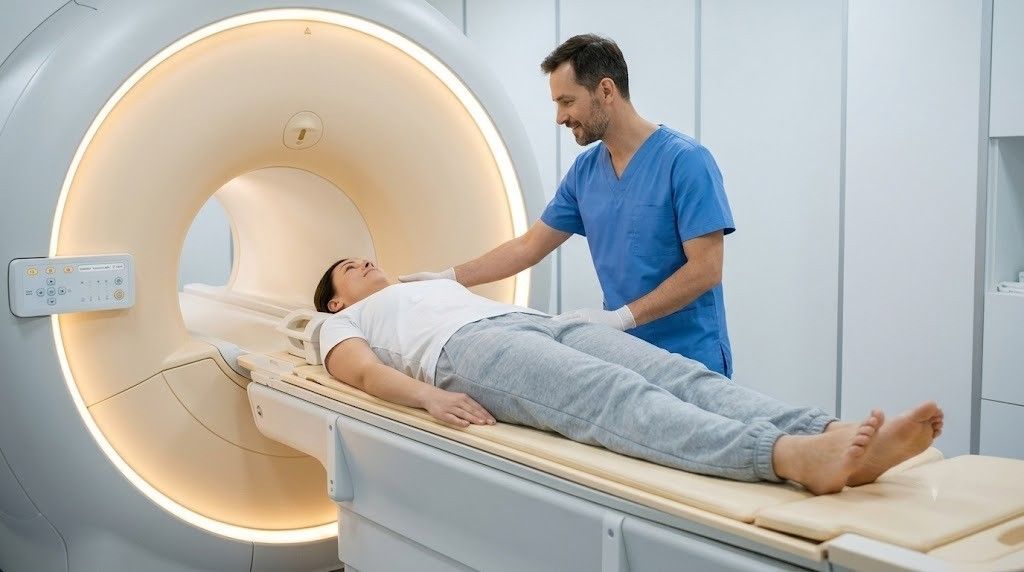
- A technologist will help you lie on a padded table and may use pillows or straps to keep you comfortable and still
- You will be given headphones or earplugs since the machine makes loud thumping and knocking sounds
- The table slides into the scanner and the technologist can see and hear you the entire time
- You may be asked to hold your breath briefly for certain images since movement can blur the results
- Once the series of scans is done the table slides back out and you can get dressed and resume your normal activities
Changing Into a Gown
Most centers will hand you a gown before you even see the machine. It is quick and it removes any doubt about metal snaps or zippers hiding somewhere in your outfit. You will usually have a private space to change and a locker or bin for your belongings.
Getting Positioned on the Table
The technologist will help you get comfortable on the table using pillows or padding under your knees or head depending on what part of your body is being scanned. Staying still matters here since even small movement can blur the images and mean redoing parts of the scan.
The Sounds and Sensations Inside the Machine
This is usually the part people worry about most and it is also the part that surprises people the least once they are actually in it. The machine makes loud thumping buzzing and knocking sounds as it takes pictures. You will be given headphones or earplugs and at some centers you can even listen to music. The scan itself is painless. You might feel warmth in the area being scanned which is completely normal.
How Long Does an MRI Take
Most MRI scans take between twenty and sixty minutes depending on the body part and whether contrast is being used. A knee or wrist MRI tends to run shorter while a full spine or detailed brain scan can take longer.
Dealing With MRI Claustrophobia and Anxiety
MRI claustrophobia is real and it is common enough that every technologist has seen it many times before. The tight tube and the loud noise can trigger anxiety even in patients who do not normally feel claustrophobic anywhere else. The good news is there are real ways to manage it from breathing techniques to open MRI machines to short acting sedation when needed.
Signs You Might Feel Anxious During a Scan
Some patients notice their heart racing the moment they see the machine. Others feel fine until they are actually inside and then feel a wave of panic a few minutes in. Sweating shallow breathing and the urge to get up right away are all normal anxiety responses and nothing to be embarrassed about.
Tips to Stay Calm Inside the Machine
Closing your eyes before you go in can help a surprising amount since it removes the visual trigger of the tube closing around you. Slow steady breathing keeps your body calmer than shallow rapid breaths. Music through the headphones gives your mind something to focus on besides the noise. And it helps to remember the technologist can see and hear you at all times through a microphone so you are never truly alone in there.
When to Ask About Sedation
If you already know from past experience that enclosed spaces are hard for you it is worth mentioning this when you schedule the appointment rather than showing up and hoping for the best. Your doctor may be able to prescribe a mild medication to help you feel sleepy and less anxious before the scan. This is common and nothing to feel awkward about asking for.
Open MRI vs Closed MRI Which Is Right for You
| Feature | Closed MRI | Open MRI |
|---|---|---|
| Image quality | Generally sharper and more detailed | Slightly lower in some cases |
| Space | Fully enclosed tube | Open on both ends or sides |
| Best for | Detailed brain and spine imaging | Patients with claustrophobia or larger body size |
| Scan time | Often shorter | Can take longer for the same detail |
Benefits of a Closed MRI
A closed MRI uses a stronger and more uniform magnetic field which usually means clearer images in less time. For detailed brain spine or small joint imaging doctors often prefer this option since the quality of the images tends to be higher.
Benefits of an Open MRI
An open MRI is open on both ends or along the sides which makes it a lot easier for patients who feel anxious in enclosed spaces. It can also be a better fit for larger patients who may not comfortably fit in a standard closed tube. The tradeoff is that scans can sometimes take a little longer to get the same level of detail.
MRI vs CT Scan What Is the Difference
| Feature | MRI | CT Scan |
|---|---|---|
| How it works | Magnetic fields and radio waves | Ionizing radiation |
| Best for | Soft tissue brain spinal cord and joints | Bones internal bleeding and quick trauma imaging |
| Scan time | Twenty to sixty minutes | A few minutes |
| Radiation | None | Yes |
When Doctors Choose an MRI Over a CT Scan
MRI is usually the better choice when a doctor needs a detailed look at soft tissue such as the brain spinal cord ligaments or organs. Since it does not use radiation it is also often preferred for patients who may need repeated imaging over time.
When a CT Scan Makes More Sense
A CT scan is faster and often the better option in urgent situations like suspected internal bleeding a bad fracture or a stroke where every minute counts. It is also more widely used for chest and abdominal imaging where speed and bone detail matter more than soft tissue contrast.
How Much Does an MRI Cost
MRI pricing varies quite a bit depending on the body part being scanned whether contrast dye is used and your insurance coverage. Many patients with insurance pay a copay or coinsurance amount while cash pay patients can expect a set rate that is usually discussed and confirmed before the appointment.
Does Insurance Cover an MRI
Most major insurance plans cover MRI scans when they are ordered by a doctor as medically necessary. Hermosa Medical Center accepts Medicaid Medicare BCBS Aetna Cigna Tricare and Wellcare so most patients can get a referral and scan handled through their existing coverage.
Paying for an MRI Without Insurance
If you do not have insurance or you are paying out of pocket Hermosa Medical Center also accepts cash patients. It is worth calling ahead to ask about pricing for your specific type of scan so there are no surprises on the day of your appointment.
Special Situations to Know Before Your Scan
Getting an MRI While Pregnant
MRI is generally considered safe for most people including many pregnant patients but it is still something your doctor should evaluate on a case by case basis especially in the first trimester or when contrast dye is being considered. Always tell your provider if there is any chance you are pregnant before scheduling.
MRI Safety With Pacemakers or Metal Implants
Certain pacemakers cochlear implants and older metal implants can be a serious safety concern inside an MRI machine because of the strong magnetic field. Newer devices are often MRI compatible but this always needs to be confirmed ahead of time rather than assumed.
MRI for Children: What Parents Should Know
Children sometimes need extra reassurance or even mild sedation to stay still long enough for clear images. Bringing a comfort item or talking through what to expect ahead of time can make a real difference in how a child handles the appointment.
Why Choose Hermosa Medical Center for Your MRI in Chicago
Hermosa Medical Center has been part of the Chicago community for more than thirty three years and one thing that sets it apart is having so many services under one roof. If your MRI shows something that needs follow up you do not have to be sent somewhere else across town. You can see a cardiology specialist or an internal medicine doctor right in the same building the same day in many cases.
Hermosa also accepts a wide range of insurance including Medicaid Medicare BCBS Aetna Cigna Tricare and Wellcare along with cash patients so cost does not have to be a barrier to getting the imaging you need. And with walk in availability alongside scheduled MRI appointments the process tends to move a lot faster than bouncing between separate clinics for a referral and then a scan.
When You Might Need Walk In Care Instead
If you are dealing with sudden pain a possible fracture or an injury that needs same day attention Hermosa's urgent care services can often get you seen and started on the imaging process without waiting days for a scheduled appointment. And if the anxiety around your scan feels like more than nerves it is worth mentioning that to a provider through psychiatry services as well since that kind of support is available on site too.
Schedule Your MRI at Hermosa Medical Center
If you have a referral in hand or you think you might need an MRI Hermosa Medical Center makes the process straightforward from the first appointment through any follow up care. You can start with a visit to primary care for a referral or go straight to scheduling your MRI and imaging appointment. Patients managing ongoing conditions like allergies can also connect with allergy and immunotherapy care or pick up prescriptions through the on site pharmacy the same day.
Hermosa Medical Center is located at 2004 N Pulaski Rd Chicago IL 60639 and is open 9 AM to 5 PM. Call 773 772 8876 to schedule your MRI or walk in during business hours.
Frequently Asked Questions
Can I eat before an MRI?
For most standard MRIs you can eat and drink normally beforehand. If your scan involves contrast dye your provider may ask you to avoid food for a few hours ahead of time.
How long does an MRI scan take?
Most scans take between twenty and sixty minutes depending on the body part being imaged and whether contrast dye is used.
What should I wear to an MRI appointment?
Loose comfortable clothing without metal snaps zippers or buttons works best. Many centers will still ask you to change into a gown just to be safe.
Is an MRI painful?
No the scan itself is painless. Some patients feel warmth in the area being scanned and the machine can be loud but there is no actual pain involved.
Can I bring someone with me to my MRI?
In most cases a support person can wait in the reception area and in some situations even stay nearby during the scan. It is worth asking ahead of time if this matters to you.
What happens if I am claustrophobic and need an MRI?
There are several options including breathing techniques music through headphones an open MRI machine or mild sedation prescribed by your doctor. Mentioning your concerns when you schedule the appointment helps staff prepare accordingly.
Do I need a referral for an MRI at Hermosa Medical Center?
A doctor referral is generally needed for an MRI. Hermosa's own primary care and specialist providers can evaluate your symptoms and provide that referral on site.
How much does an MRI cost without insurance?
Cash pricing depends on the type of scan being done. Hermosa Medical Center accepts cash patients and can confirm pricing for your specific scan before your appointment.
Can metal implants or braces affect an MRI?
Many modern implants are considered MRI safe but this always needs to be confirmed based on the specific device. Dental braces and fillings are generally not a problem but you should still mention any implants or devices to your provider beforehand.
What is the difference between an MRI and an X ray?
An X ray uses a small amount of radiation and is best for viewing bones quickly. An MRI uses magnetic fields and radio waves instead of radiation and provides much more detailed images of soft tissue like the brain spinal cord and joints.
`