

What to Expect at an Allergy Test: Types, Results, and How the Process Works
What to Expect at an Allergy Test: Types, Results, and How the Process Works
If you have been sneezing every spring for years or breaking out in hives after certain foods or waking up congested night after night you have probably wondered at some point what is actually causing it. The answer is not going to come from guessing or switching antihistamines every few months. Getting an allergy test is how you find out exactly which allergens are triggering your symptoms so you and your healthcare provider can put together a treatment plan that actually targets the problem.
A lot of people put off allergy testing because they are not sure what to expect or they assume it will be painful or complicated. The reality is that allergy testing is one of the more straightforward diagnostic processes in medicine. Most types of allergy testing are quick and give accurate results the same day and they are not nearly as uncomfortable as most people imagine before they go.
This article walks you through how allergy testing works and the different types of allergy tests and what happens during your appointment and how long it takes and how to prepare and what your results mean and what comes next including allergy immunotherapy.
Why Getting an Allergy Test Actually Matters
Many people spend years managing allergy symptoms without ever knowing exactly what is causing them. They take daily allergy medications like antihistamines without a clear diagnosis and end up managing symptoms rather than addressing the cause of their allergy. An allergy test changes that by identifying the specific allergens your immune system is reacting to.
Allergy testing identifies conditions ranging from seasonal allergies to pollen and pet dander and mold to food allergies and contact dermatitis and penicillin allergies and insect venom reactions. Knowing exactly what you are allergic to allows your provider to give you targeted avoidance advice and choose the most effective medications for your specific allergen profile and determine whether allergy shots or immunotherapy would benefit you.
According to the American Academy of Allergy Asthma and Immunology more than 50 million Americans have some form of allergy and many have never been properly tested. Without testing it is easy to mismanage symptoms and miss treatment options that could significantly improve quality of life.
Types of Allergy Tests: What the Different Options Involve
There is more than one type of allergy test and the right one depends on your symptoms and age and medical history and what allergens are being investigated. Here is a clear breakdown of the main ways to test for allergies.
Skin Prick Test: The Most Common Type
The skin prick test is the most widely used allergy test for diagnosing allergic reactions to airborne and food allergens. It is fast and gives accurate results within 15 to 20 minutes and is considered the gold standard for diagnosing IgE-mediated allergies by the American College of Allergy Asthma and Immunology.
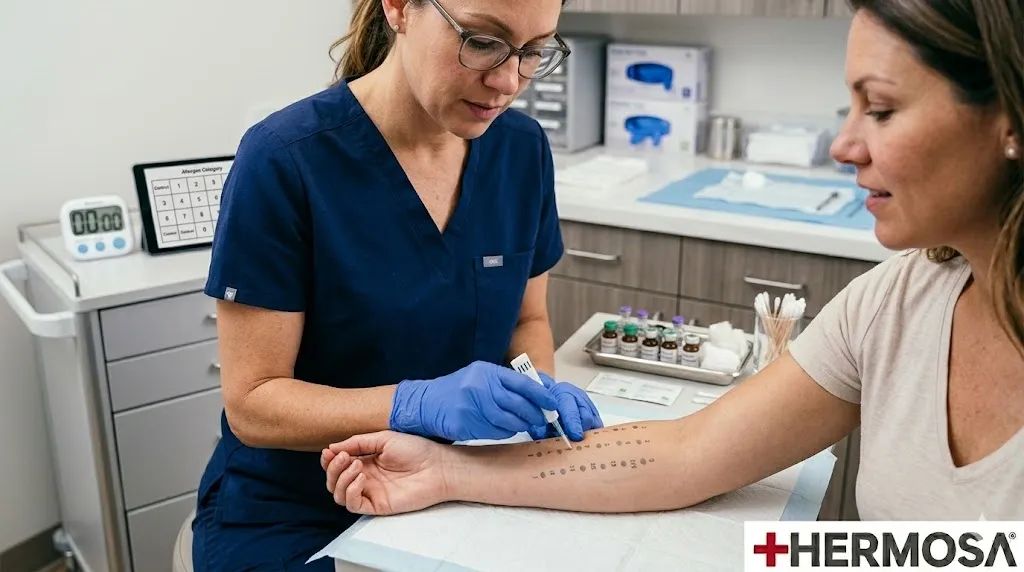
During a skin prick test small drops of different allergens are placed on the forearm or back. A thin needle is used to prick your skin lightly at each site so the skin is exposed to each allergen just below the surface. If your immune system recognizes a particular allergen it releases immunoglobulin E (IgE) antibodies and small raised bumps called wheals form at those sites within about 15 minutes.
The skin prick test can test for allergies to pollen from trees and grass and weeds and pet dander and mold spores and dust mites and common food allergens like peanuts and tree nuts and milk and eggs and wheat and shellfish. It can test for 40 to 50 allergens in a single session which makes it one of the most efficient ways to test for allergies available.
Intradermal Skin Test
An intradermal test is used when the skin prick test comes back negative but your provider still suspects an allergy based on your symptoms and history. In this test a small amount of allergen is injected into your skin using a thin needle. It is more sensitive than the prick test and is most often used for diagnosing penicillin allergies and insect venom allergies.
The intradermal skin test is not used as a first-line test because it carries a slightly higher risk of triggering a more significant allergic reaction. It is always performed in a clinical setting so that any severe allergic reaction or signs of anaphylaxis can be managed immediately.
Allergy Blood Test vs Skin Test: When Each One Is Used
An allergy blood test measures the level of specific IgE antibodies in your blood that correspond to particular allergens. The most common version is the specific IgE test also called an ImmunoCAP test. A blood sample is drawn and sent to a lab and results are available within a few days rather than the same day.
Blood allergy tests are used when skin testing is not possible. This includes patients with severe eczema or psoriasis that covers large skin areas and patients who cannot stop taking allergy medications like antihistamines long enough for a skin test and patients with a history of anaphylaxis where skin exposure could be risky. Blood tests do not interfere with medications the way skin tests do but they are slightly less sensitive than a well-done skin prick test.
When blood testing is preferred over skin testing:
- Widespread eczema or psoriasis that covers the skin where testing would be done
- Patients who cannot safely stop daily allergy medications before testing
- Very young children who may not tolerate multiple skin pricks
- Patients with a history of severe allergic reaction or anaphylaxis
- Situations where skin prick test results are unclear or inconclusive
Patch Test for Contact Dermatitis
A patch test involves placing small adhesive patches containing various potential allergens directly onto the back. The patches stay in place for 48 hours and then they are removed and the test site is read. A second reading is done at 96 hours to look for delayed reactions.
The patch test is used to diagnose contact dermatitis which is a delayed allergic reaction caused by something touching the skin directly. Common triggers include nickel in jewelry and fragrances and preservatives in cosmetics and personal care products and latex. The patch test involves no pricking and no injections. It is simply placing the patches on the skin and checking for reactions over time.
Food Allergy Test Types and Oral Food Challenges
Food allergies can be investigated through skin prick tests and blood tests but in some cases an oral food challenge is the most accurate way to confirm or rule out a food allergy. An oral food challenge involves eating small and gradually increasing amounts of a suspected food allergen under direct medical supervision.
Food challenges are considered the gold standard for diagnosing food allergies because they show exactly how the body responds to a real exposure. They are used when previous test results are unclear or when a patient wants to find out whether they have outgrown a childhood food allergy. Because of the risk of a severe allergic reaction food challenges are only done in a clinical setting where anaphylaxis and other reactions can be treated immediately.
Food allergy test types at a glance:
- Skin prick test for common food allergens with results in 15 to 20 minutes
- IgE blood test measuring specific antibody levels to food allergens
- Elimination diet followed by supervised food reintroduction
- Oral food challenge under medical supervision which is the most definitive test
| Factor | Skin Prick Test | Blood Test | Patch Test |
|---|---|---|---|
| Best for | Airborne and food allergens | When skin testing not possible | Contact dermatitis |
| Results timing | 15 to 20 minutes | 3 to 5 business days | 48 to 96 hours |
| Allergens tested at once | Up to 40 to 50 | Multiple via blood panel | Up to 30 to 40 |
| Medication restrictions | Stop antihistamines beforehand | No restrictions needed | No restrictions needed |
| Comfort level | Mild prickling sensation | Single blood draw | Patches worn on back |
| Age suitability | Adults and children over 2 | All ages including infants | Primarily adults |
What to Expect During Your Allergy Test Appointment
Knowing what happens during your appointment makes the whole experience much less stressful. Here is a step-by-step picture of a typical allergy testing visit.
- Your healthcare provider reviews your full symptom history and any medications you are currently taking and what reactions you have experienced in the past
- You are told which medications to stop before the test if a skin test is being done since taking allergy medications like antihistamines can interfere with test results and produce a negative allergy test even when an allergy is present
- The test site on your forearm or back is cleaned and marked
- For a skin prick test small drops of each allergen are applied and a thin needle is used to prick your skin at each marked site
- You wait 15 to 20 minutes while the skin is checked for reactions. A nurse or provider monitors you during this time for any signs of an allergic reaction
- Positive reactions appear as small raised wheals at certain test sites. Your provider measures each wheal and records the results
- Your provider explains which allergens produced a positive reaction and what those results mean for your allergy diagnosis
- A treatment plan is discussed including avoidance strategies and medication options and whether allergy shots or immunotherapy would be appropriate for your specific situation
Is Allergy Testing Painful?
This is the most common question people have before their first allergy test and the straightforward answer is no. A skin prick test causes a very light scratching or pricking sensation. Most people describe it as feeling more like a tickle than actual pain. It is nothing like a blood draw or a vaccine injection.
The intradermal skin test involves a small amount of allergen injected into your skin using a thin needle which feels like a small pinch at most. The patch test involves no needles at all. A blood allergy test involves a standard blood draw from a vein in the arm which most adults and older children handle without any issue.
Any mild allergy symptoms like itchy skin or slight swelling at positive test sites during a skin prick test are normal and expected. They typically fade within 30 to 60 minutes after the test is complete. Your provider will check on you throughout the process and have medications ready in the unlikely event of a more significant reaction.
Allergy Testing for Children: What Parents Need to Know
Allergy testing for children is safe from a young age. Blood testing for IgE antibodies can be done in infants. Skin prick testing is generally reliable in children over 2 years old though positive reactions may appear smaller in very young children than in adults.
Food allergies are among the most common allergies in children and testing early helps families make accurate and safe dietary decisions rather than guessing. Many children who test positive for food allergens as toddlers outgrow them by school age and repeat testing can confirm when an oral food challenge is appropriate to try the food again safely.
For parents who are worried about whether their child will tolerate the test it helps to know that most children handle the skin prick test well especially when the provider explains each step before starting. The most uncomfortable part for most kids is the waiting period not the pricking itself.
What parents should do before their child's allergy test appointment:
- Stop all antihistamines and daily allergy medications at least 5 to 7 days before a skin test
- Bring a list of all current medications and supplements your child takes
- Keep a food diary if a food allergy is suspected and bring it to the appointment
- Describe any previous allergic reactions in detail including what happened and how quickly it came on
- Dress your child in a short-sleeve shirt if forearm testing is planned
Allergy Test Results Explained: What the Numbers Mean
After a skin prick test your provider measures the wheals that formed at each test site. A wheal of 3 mm or more in diameter compared to the negative control site is generally considered a positive result. The size of the wheal gives some indication of how strongly you are sensitized to that allergen but it does not predict how severe a reaction you would have in real life.
For blood allergy tests results are reported as specific IgE levels measured in kilounits per liter (kUA/L). Higher values suggest a greater likelihood of clinical allergy but the number alone does not determine the severity of a real-world reaction. Your healthcare provider interprets blood allergy test results alongside your symptom history and physical examination to make a complete allergy diagnosis.
| Wheal Size | Classification | Meaning |
|---|---|---|
| Less than 3 mm | Negative | No significant sensitization detected |
| 3 to 5 mm | Mild positive | Low-level sensitization possible |
| 5 to 10 mm | Moderate positive | Likely clinical allergy |
| Greater than 10 mm | Strong positive | High likelihood of significant allergy |
What happens after your allergy test results come back:
- Your provider explains which specific allergens triggered a positive response
- You receive specific avoidance guidance for your confirmed allergens
- Medications are reviewed or prescribed based on your allergen profile
- A referral to immunotherapy is discussed if you have multiple triggers or severe allergy symptoms
- A follow-up schedule is set to monitor how well the treatment plan is working
How Long Does an Allergy Test Take
A skin prick allergy test appointment typically takes between 60 and 90 minutes from start to finish. The actual application of allergens takes only a few minutes. The 15 to 20 minute waiting period while reactions develop is the longest part. The rest of the time is spent reviewing results and discussing your treatment plan with your provider.
Patch testing takes longer because the patches stay on your back for 48 hours before the first reading and then a second reading is done at 96 hours. This means the full patch test process spans about 4 days though you are only in the clinic for brief visits on each reading day. Blood allergy test results are not available the same day and typically return within 3 to 5 business days.
How Much Does an Allergy Test Cost
The cost of an allergy test depends on the type of test and the number of allergens tested and your insurance coverage. Most standard allergy testing is covered by insurance including Medicaid and Medicare when ordered for diagnostic purposes by a licensed provider.
For self-pay patients a comprehensive skin prick test panel typically costs between $150 and $300. A blood test panel may range from $200 to $500 depending on the number of allergens tested. Patch tests and oral food challenges vary in cost. Hermosa Medical Center offers transparent pricing and accepts Medicaid and Medicare and most insurance plans as well as self-pay patients.
| Test Type | With Insurance | Self-Pay Estimate |
|---|---|---|
| Skin prick test (comprehensive) | Copay or deductible | $150 to $300 |
| Allergy blood test | Copay or deductible | $200 to $500 |
| Patch test | Copay or deductible | $150 to $350 |
| Oral food challenge | Copay or deductible | $300 to $600 |
| Initial consultation | Copay | $100 to $200 |
How to Prepare for Allergy Testing
Good preparation makes a real difference in getting accurate results. The most common reason for a negative allergy test in someone who does actually have allergies is that they did not stop their antihistamines before a skin test. Antihistamines and some other medications can interfere with test results by suppressing the skin reaction even when an allergy is present.
Steps to prepare for your allergy test appointment:
- Stop taking antihistamines and daily allergy medications like antihistamines at least 5 to 7 days before a skin prick test. Ask your provider exactly which medications need to be stopped
- Do not stop asthma medications since those are not the type that interfere with test results and stopping them can be dangerous
- Avoid applying any lotions or creams to the test site on the day of your appointment
- Write down a detailed list of your allergy symptoms and when they occur and what seems to trigger them
- Bring a complete list of all medications and supplements you currently take
- Wear a short-sleeve or sleeveless top if your forearms will be tested
- Eat normally before your appointment since fasting is not required for allergy testing
Allergy Immunotherapy How It Works: What Comes After Testing
Once allergy testing identifies your specific allergen triggers your provider builds a treatment plan. For mild allergies this may simply mean targeted avoidance and the right antihistamine matched to your actual allergen profile. For more significant or multiple allergies the next step is usually a conversation about allergy immunotherapy.
Allergy immunotherapy works by exposing your immune system to gradually increasing doses of the allergen over time. The goal is to desensitize your immune system so it stops producing an exaggerated allergic reaction when you encounter that allergen in daily life. Allergy shots are the most common form of immunotherapy and they are the only treatment available that actually changes how the immune system responds rather than just masking allergy symptoms with medication.
How allergy shots work in practice:
- Allergy testing confirms the specific allergens and their severity
- A custom allergen extract is created based on your results
- Injections begin at a very low dose given weekly in the clinic
- Doses increase gradually during the build-up phase which takes 6 to 12 months
- Once the maintenance dose is reached injections move to monthly visits
- Most patients complete 3 to 5 years of immunotherapy for lasting results
- Many patients notice real symptom reduction within the first year of treatment
Common Mistakes People Make Before and During Allergy Testing
- Taking antihistamines right up until the day of a skin test without knowing they need to be stopped several days earlier which suppresses skin reactions and leads to inaccurate negative results
- Assuming a negative allergy test means no allergy without asking whether medications taken beforehand could have interfered with test results
- Not bringing a detailed symptom history to the appointment which makes it harder for the provider to select the right allergens to test for
- Using at-home allergy test kits instead of clinical testing which are generally far less accurate and not appropriate for building a proper treatment plan
- Interpreting a positive skin test as a definitive diagnosis without understanding that sensitization does not always equal a clinically significant allergy
- Stopping allergy shots early when the full course is what delivers long-lasting benefit
Why Choose Hermosa Medical Center for Allergy Testing and Treatment
Hermosa Medical Center offers allergy testing and immunotherapy services for adults and children in Chicago. Whether you are trying to identify the cause of seasonal symptoms or investigating a suspected food allergy or starting the conversation about allergy shots the team at Hermosa guides you through the full process from testing to treatment without referring you out to multiple different locations.
On-site allergy services at Hermosa include skin prick testing and evaluation and immunotherapy planning and management. The on-site pharmacy means any medications recommended after your allergy evaluation are filled before you leave the building. For patients who develop an acute allergic reaction urgent care services are available without an appointment during operating hours.
For children needing allergy evaluation the primary care and pediatric team at Hermosa handles allergy testing and management for every age group. For patients whose allergies are also affecting asthma or respiratory health the internal medicine team coordinates that care in the same building. Hermosa serves Chicago patients in English and Arabic and Spanish and accepts Medicaid and Medicare and most insurance plans as well as self-pay patients.
Benefits of Allergy Testing at Hermosa Medical Center
- Accurate same-day results: Skin prick test results are available within 15 to 20 minutes so you leave your appointment knowing your specific allergens
- Personalized treatment plan: Treatment is built around your exact allergen profile not a generic approach
- Immunotherapy available: Allergy shots and long-term desensitization planning for patients who want lasting relief
- All ages welcome: Allergy testing and treatment for children and adults handled by experienced providers
- Same-day prescriptions: The on-site pharmacy fills nasal sprays and antihistamines and prescription allergy medications before you leave
- Affordable for everyone: Medicaid and Medicare and insured and self-pay patients are all welcome
Real Patient Stories at Hermosa Medical Center
A 35-year-old Chicago woman had been dealing with unexplained hives and facial swelling for over a year. She had tried multiple over-the-counter antihistamines with limited success and no one had ever suggested allergy testing. At Hermosa a skin prick test identified a significant allergy to latex and certain tree nuts she had been eating regularly. With a clear diagnosis she was able to make targeted changes and her episodes of hives became rare. She said knowing exactly what was causing it changed everything for her.
A mother brought her 7-year-old in after two reactions that seemed to follow eating certain foods at school. The skin prick test identified a positive result for peanuts. The family was counseled on avoidance and the child was prescribed an epinephrine auto-injector. The mother said having a definitive result and a clear plan made her feel far more confident about managing her child's safety at school and at parties and on playdates.
A 42-year-old man had been taking a daily antihistamine every spring and summer for ten years without ever getting tested to find out what he was actually reacting to. After allergy testing at Hermosa he was found to be sensitized to oak tree pollen and grass pollen and ragweed. He started immunotherapy and within two allergy seasons his symptoms had reduced enough that he was no longer reaching for daily medication. He said the testing appointment itself was nothing like what he had imagined and he wished he had done it years ago.
Note: These represent composite patient experiences. Legal review recommended before publishing.
Frequently Asked Questions About Allergy Testing
What should I expect at an allergy test appointment?
At a skin prick allergy test you can expect a short consultation followed by allergen drops being placed on your forearm or back and a thin needle used to lightly prick each site. You wait 15 to 20 minutes for reactions to develop and your provider reads and explains the results. The whole appointment takes about 60 to 90 minutes.
Is allergy testing painful?
Allergy testing is not painful in any significant way. A skin prick test causes a mild pricking or tickling sensation. Positive test sites may itch slightly for 20 to 30 minutes afterward. Most patients including children find the experience much easier than they expected before going in.
What is the difference between a skin test and a blood test for allergies?
A skin prick test gives results within 15 to 20 minutes and can test up to 40 to 50 allergens at once. A blood allergy test requires a single blood draw and results come back in a few days. Skin testing is generally more accurate but blood testing is used when skin testing is not suitable due to medications or skin conditions.
How do I prepare for an allergy skin test?
Stop antihistamines and daily allergy medications at least 5 to 7 days before a skin test since these interfere with test results. Do not stop asthma medications. Wear short sleeves if forearm testing is planned. Bring a list of your current medications and a description of your symptoms and when they occur.
Is allergy testing covered by insurance?
Most health insurance plans including Medicaid and Medicare cover allergy testing when ordered for diagnostic purposes by a licensed provider. Hermosa Medical Center accepts most insurance plans and also works with self-pay patients at transparent rates.
Does Hermosa Medical Center offer allergy testing for children and adults?
Yes. Hermosa Medical Center at 2004 N Pulaski Rd Chicago IL 60639 offers allergy testing and immunotherapy services for patients of all ages. You can book an appointment online or call 773-772-8876 to schedule your allergy evaluation today.
Get Your Allergy Test Done and Stop Guessing
Knowing what to expect at an allergy test removes the uncertainty that keeps so many people from getting tested for years. The process is fast and not painful and gives you accurate results that allow your healthcare provider to build a treatment plan around exactly what is triggering your symptoms rather than a generic approach that may or may not work.
Whether you are dealing with seasonal allergy symptoms or a suspected food allergy or unexplained hives or itchy skin that comes and goes getting an allergy test is the first real step toward feeling better. Hermosa Medical Center is ready to help. Visit us at 2004 N Pulaski Rd Chicago IL 60639 or call 773-772-8876 or book an appointment online today.
Follow Hermosa Medical Center for allergy tips and health updates and community news: